Innovation becomes manageable when an organization has a repeatable way to identify opportunities, evaluate ideas, test assumptions, decide what to fund, and learn from results. Without that process, promising ideas can stall between teams, weak concepts may consume resources, and evidence from experiments can be lost before the next decision.
This guide explains the innovation management process, its key pillars and stages, practical management principles, and visual templates for ideation, evaluation, testing, planning, and implementation.
What is Innovation Management
Innovation management is the systematic practice of guiding ideas from opportunity identification through evaluation, experimentation, implementation, and learning. It combines strategy, governance, people, resources, and repeatable workflows so an organization can decide which ideas to explore, which evidence is required at each stage, and when to continue, revise, pause, or stop an initiative.
Innovation may involve a product, service, business model, customer experience, or internal process. Effective management does not guarantee that every idea succeeds. It creates a disciplined way to test uncertainty, limit avoidable investment, preserve learning, and direct resources toward initiatives that support customer needs and organizational priorities.
The Key Pillars of Innovation Management
The following four pillars provide one practical way to examine whether an organization can support innovation consistently:
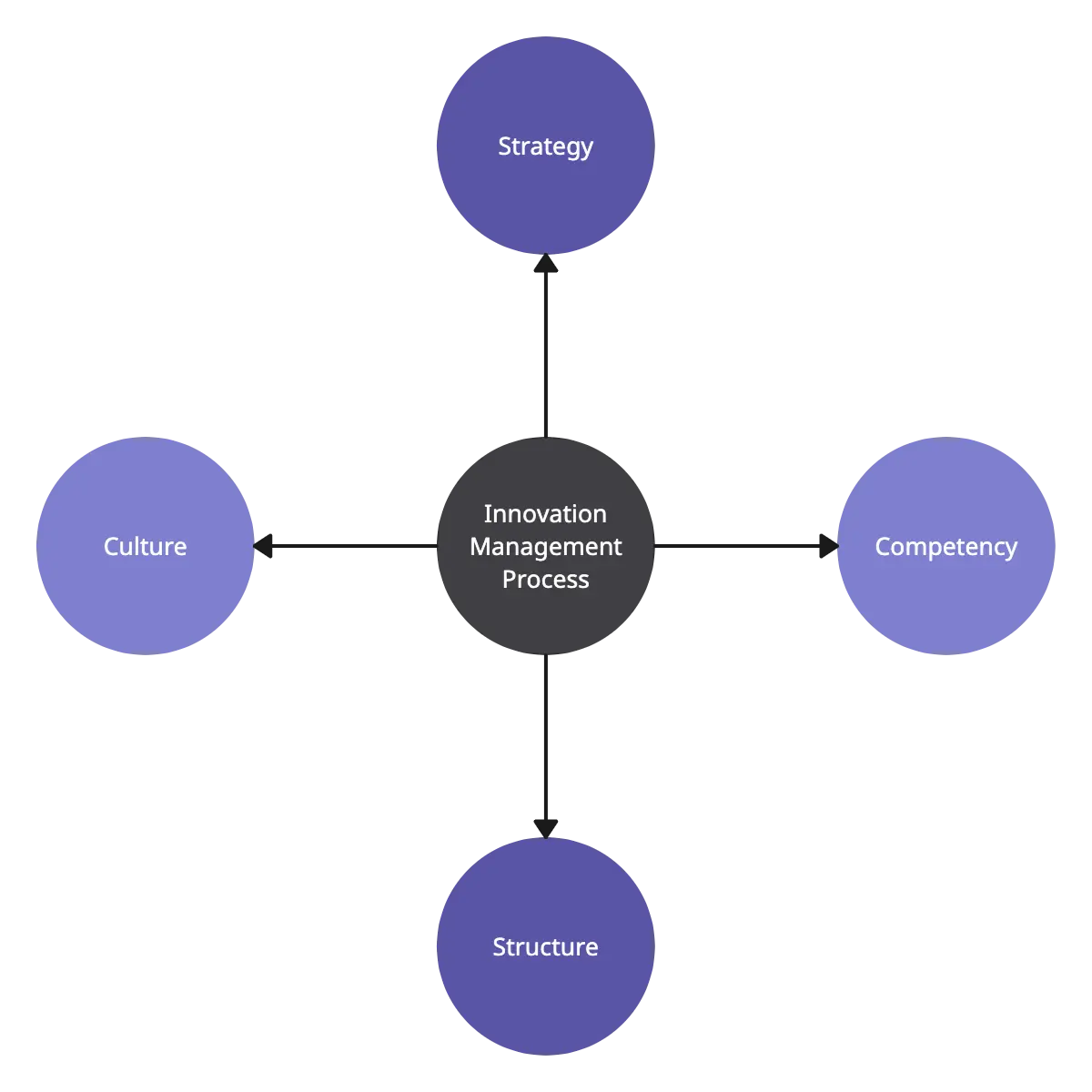
Competency: The skills, knowledge, and capabilities needed to discover opportunities, run experiments, evaluate evidence, and implement change. This includes technical expertise, customer research, commercial judgment, and creative problem-solving.
Structure: How teams are organized, decisions are governed, resources are allocated, and information moves between functions. The structure should clarify accountable owners, review responsibilities, escalation routes, and handoffs between discovery, testing, and delivery.
Culture: The behaviors and incentives that determine whether people share ideas, challenge assumptions, report failed experiments honestly, and learn from evidence. Psychological safety should support responsible experimentation, not remove accountability for risk or results.
Strategy: The priorities, opportunity areas, investment boundaries, and outcomes that connect innovation activity to organizational goals. A clear strategy helps teams compare ideas consistently and avoid spreading resources across unrelated initiatives.
Innovation Management Process
The innovation management process is a structured approach for moving an opportunity or idea through discovery, evaluation, experimentation, implementation, and post-launch learning. It defines the information required at each stage, who owns the initiative, who contributes specialist input, and which decision criteria determine the next route.
Although the stages are often presented in sequence, innovation is iterative. Testing can return a concept to discovery, new evidence can change the problem definition, and a review may stop an initiative that no longer justifies further investment. Keeping assumptions, evidence, decisions, and ownership connected across these handoffs makes the process easier to review and improve.
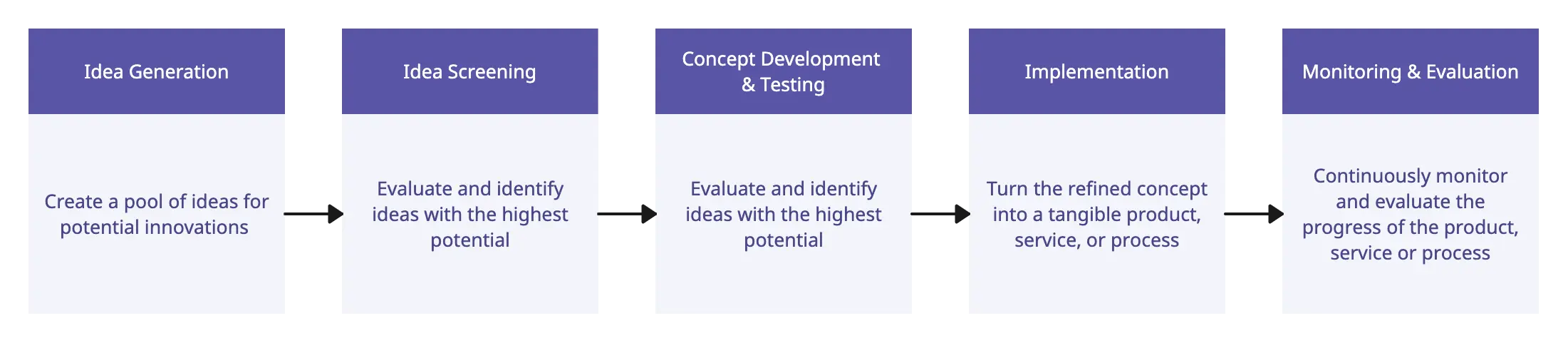
Innovation Management Process Steps
1. Idea Generation
Idea generation begins with a defined problem, opportunity area, or strategic theme. Teams can combine employee insight, customer research, operational data, market changes, and technology trends to generate possible responses. Capture enough context to explain the need, intended user, assumption, expected value, and source of the idea rather than collecting titles without evidence.
2. Idea Screening
During screening, evaluate ideas against transparent criteria such as strategic alignment, customer desirability, technical feasibility, commercial viability, risk, expected impact, and evidence quality. Define who makes the decision and record whether an idea advances, needs more research, is deferred, or is stopped. Consistent criteria reduce the influence of seniority, presentation quality, or enthusiasm alone.
3. Concept Development and Testing
Promising ideas are translated into testable concepts, prototypes, experiments, or pilots. Start with the riskiest assumption and choose the least costly test that can produce useful evidence. Define the hypothesis, audience, method, success threshold, constraints, and owner before testing. Review the findings with relevant stakeholders and either refine the concept, run another test, prepare for implementation, or stop the initiative.
4. Implementation
Implementation turns a validated concept into an operational product, service, business model, or process change. Create a delivery plan covering scope, resources, dependencies, controls, ownership, adoption, training, measurement, and transition risks. Define the handoff from the innovation team to the people who will operate, support, or scale the result so learning and accountability are not lost at launch.
5. Monitoring and Evaluation
Measure the implemented innovation against the baseline, expected outcome, cost, adoption, quality, customer impact, and risk assumptions defined earlier. Separate delivery metrics—such as whether the launch occurred on time—from outcome metrics that show whether the innovation created the intended value. Document lessons, update the operating process, and feed new opportunities or unresolved problems back into the next innovation cycle.
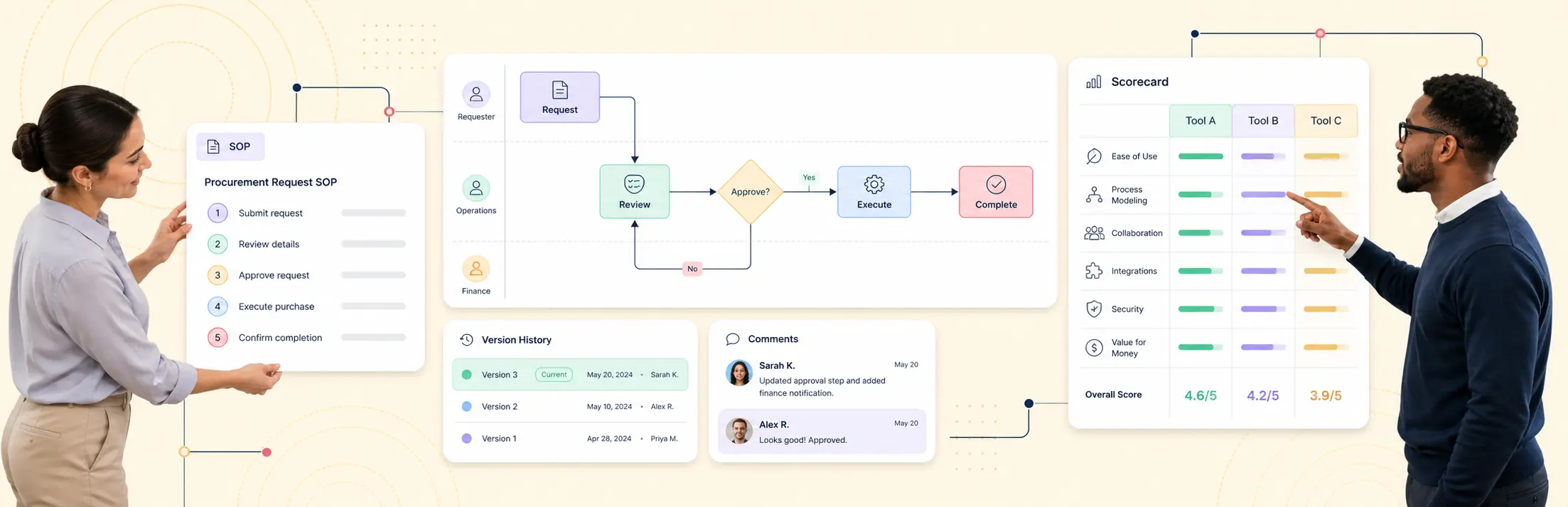
Creately’s process mapping software can help teams document this innovation workflow, clarify ownership and stage handoffs, and keep notes, evidence, files, links, systems, status, and related subprocesses connected to the relevant steps. Real-time editing, live cursors, and threaded comments with @mentions support discussion of the process and proposed changes. The map provides shared process context; formal portfolio decisions, approvals, investment records, and execution remain in the organization’s designated systems.
Innovation Management Toolkit
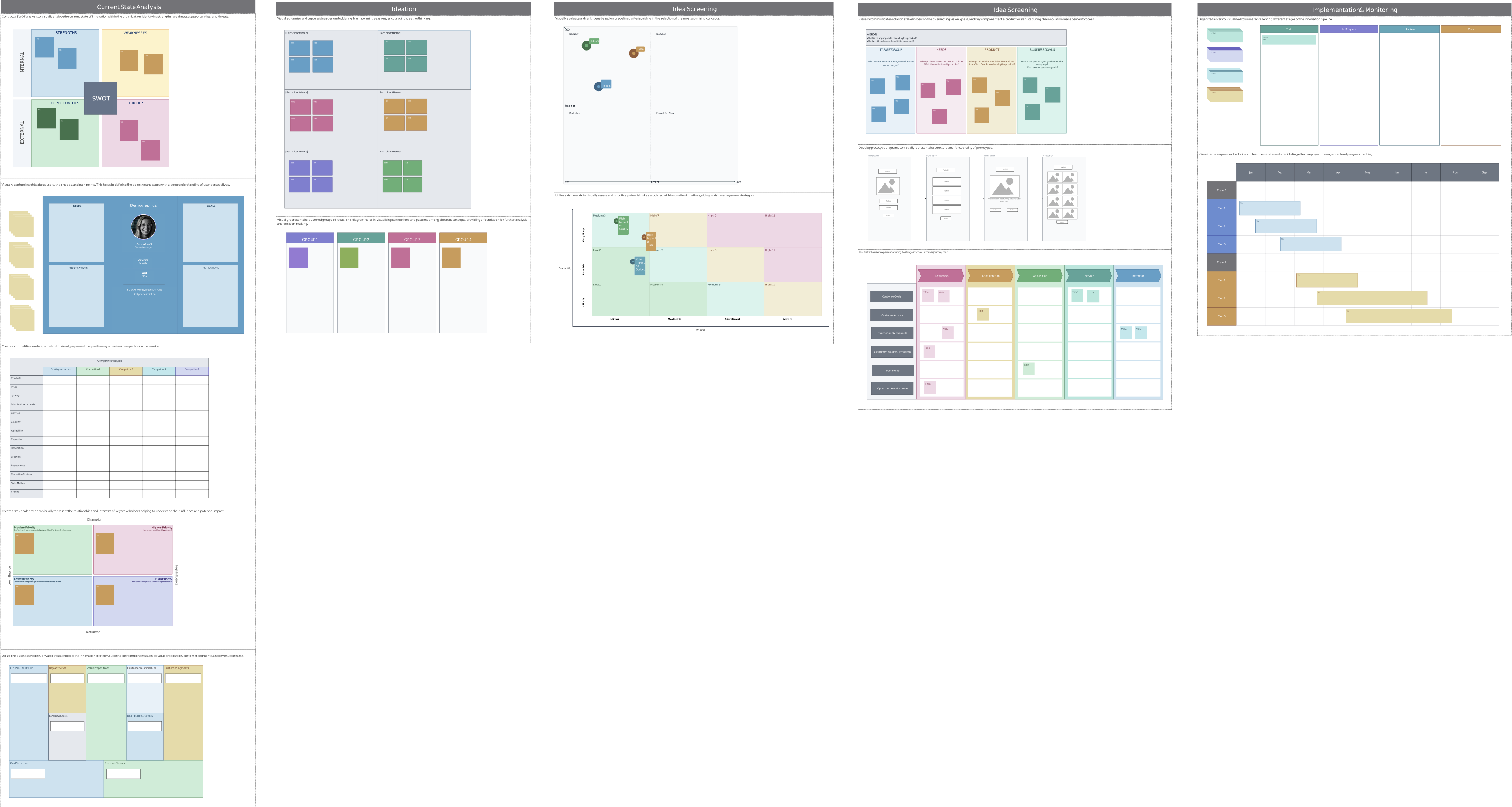
This innovation management toolkit brings together visual methods for generating ideas, analyzing problems, testing value, defining a business model, planning implementation, and communicating progress. Select a tool according to the question the team needs to answer rather than using every template for every initiative.

Why is Innovation Management Important
Innovation management is important for several key reasons:
New sources of value: A managed innovation portfolio can help an organization explore new products, services, business models, and process improvements without assuming that every initiative will create growth.
Competitive differentiation: Validated innovations may help an organization address customer needs in a way competitors do not, although that advantage depends on execution and can change over time.
Adaptation to change: A repeatable discovery and experimentation process helps teams respond to changes in customers, technology, regulation, or operations with evidence rather than assumption.
Operational improvement: Process innovation can reduce waste, improve quality, or remove delays when changes are based on verified causes and measured after implementation.
Employee participation: Clear channels for contributing ideas and evidence can involve employees in improvement, provided the organization explains how submissions are evaluated and gives useful feedback.
Customer outcomes: Customer research and testing can improve the likelihood that a solution addresses a real need, but satisfaction and loyalty should be measured rather than assumed.
Managed uncertainty: Small experiments can test critical assumptions before large-scale investment. They reduce uncertainty; they do not eliminate the possibility of failure.
Innovation Management Best Practices
- Set strategic boundaries: Define opportunity areas, desired outcomes, risk constraints, and the types of innovation the organization is prepared to support.
- Use transparent decision criteria: Explain how ideas are screened, what evidence is required at each stage, who decides, and how deferred or rejected ideas are recorded.
- Assign accountable ownership: Give every active initiative an owner responsible for evidence, handoffs, decisions, updates, and the next review point.
- Build cross-functional reviews into the process: Involve customer, technical, commercial, operational, legal, security, or regulatory perspectives when relevant to the initiative.
- Fund learning in stages: Match resources to the uncertainty and evidence available instead of committing the full implementation budget before core assumptions are tested.
- Make responsible experimentation safe: Encourage teams to report disconfirming evidence and failed tests while preserving ethical, legal, safety, and financial controls.
- Maintain connected documentation: Keep assumptions, research, experiment results, decisions, owners, and current status linked to the initiative so later teams can understand why a route was chosen.
- Review the process itself: Measure decision time, stalled initiatives, experiment throughput, portfolio balance, and realized outcomes. Have the process owner incorporate agreed improvements and communicate the current workflow.
Effective Innovation Management Process Templates
Mind Maps
Use: Idea generation and concept development
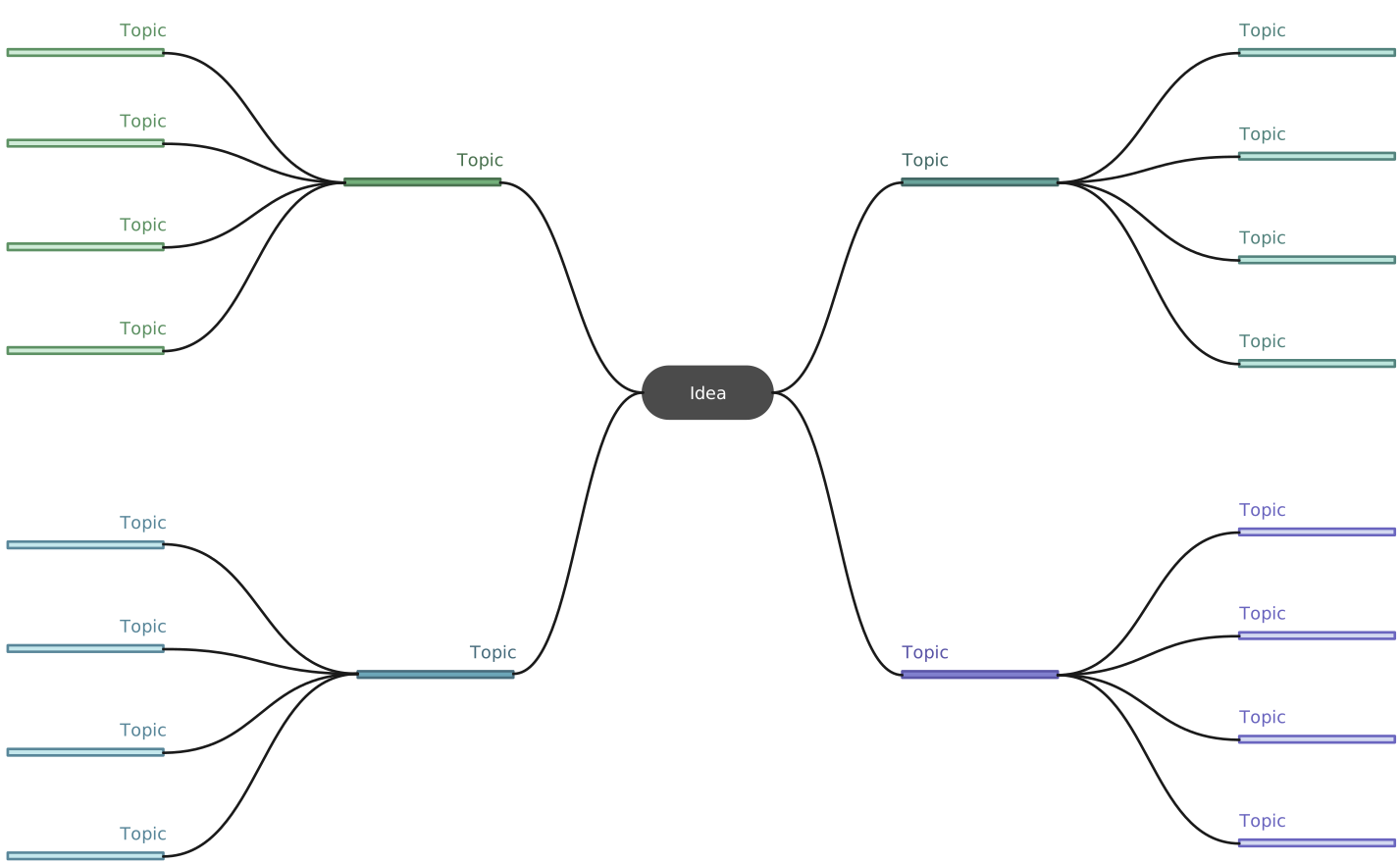
Mind maps visually represent interconnected ideas and concepts. They are effective for brainstorming sessions, capturing diverse thoughts, and organizing complex relationships, fostering creative thinking during the early stages of innovation.
SCAMPER
Use: Idea generation and concept Development
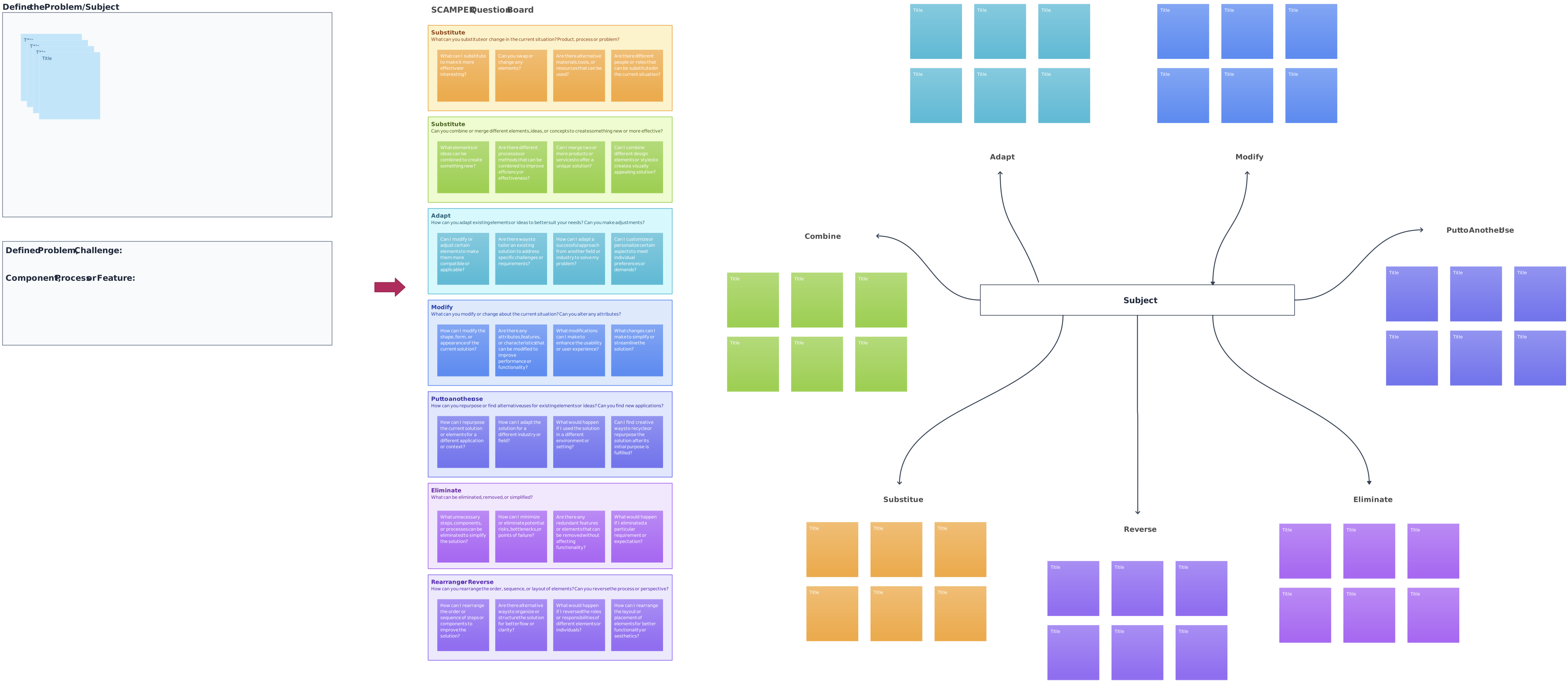
SCAMPER is a creative thinking technique that stands for Substitute, Combine, Adapt, Modify, Put to another use, Eliminate, and Reverse. It encourages innovative thinking by prompting users to explore different ways of approaching a problem or idea.
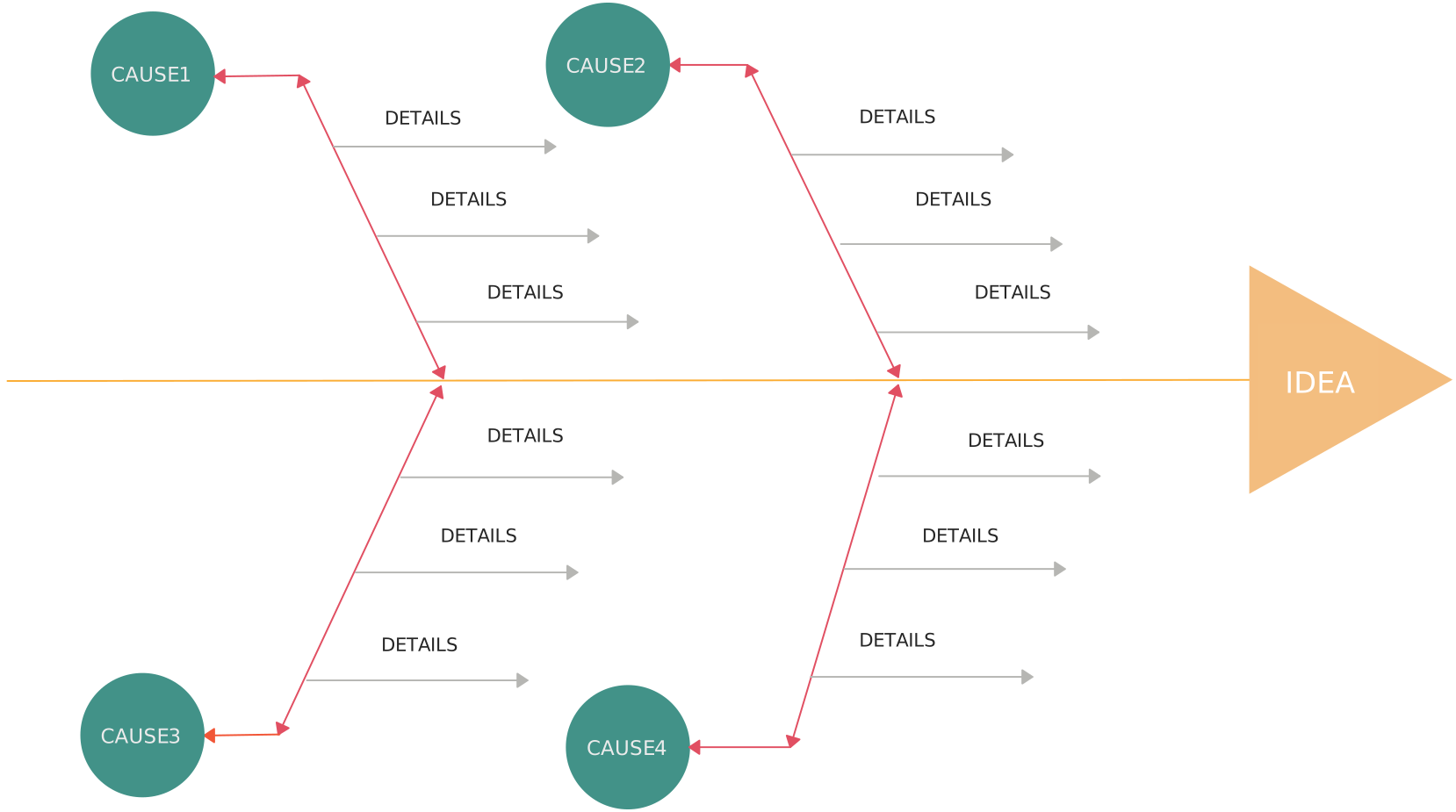
Fishbone Diagrams (Ishikawa or Cause-and-Effect Diagrams)
Use: Problem analysis and root cause identification
Fishbone diagrams help identify potential causes of a problem influencing an outcome. In the innovation process, they are useful for analyzing challenges, understanding their root causes, and devising innovative solutions.
SWOT Analysis
Use: Strategic planning
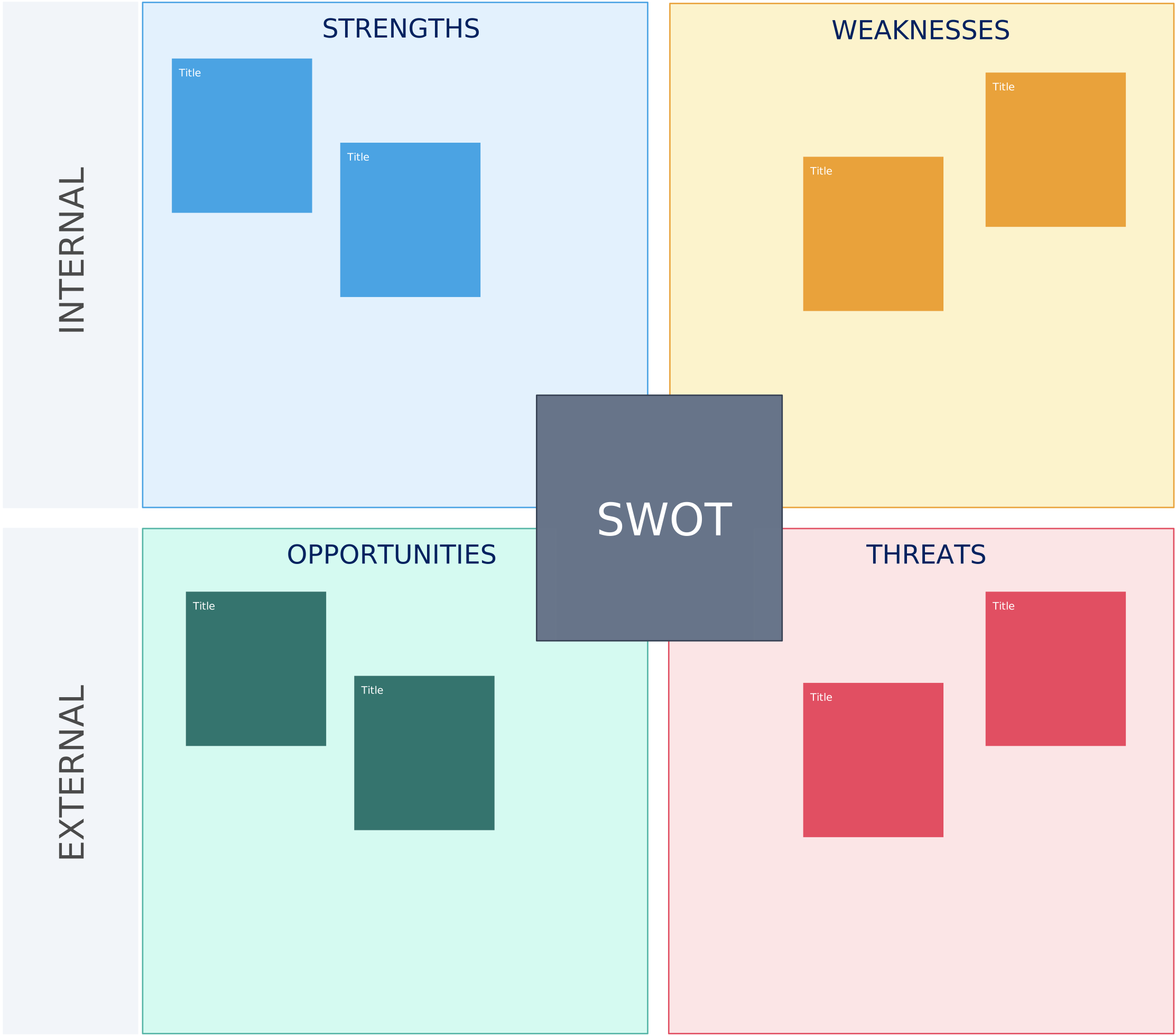
SWOT analysis evaluates internal Strengths and Weaknesses, and external Opportunities and Threats. During the innovation management process, it can be used to identify areas for improvement, potential avenues for innovation, and understanding the external landscape.
Gantt Charts
Use: Project planning and implementation
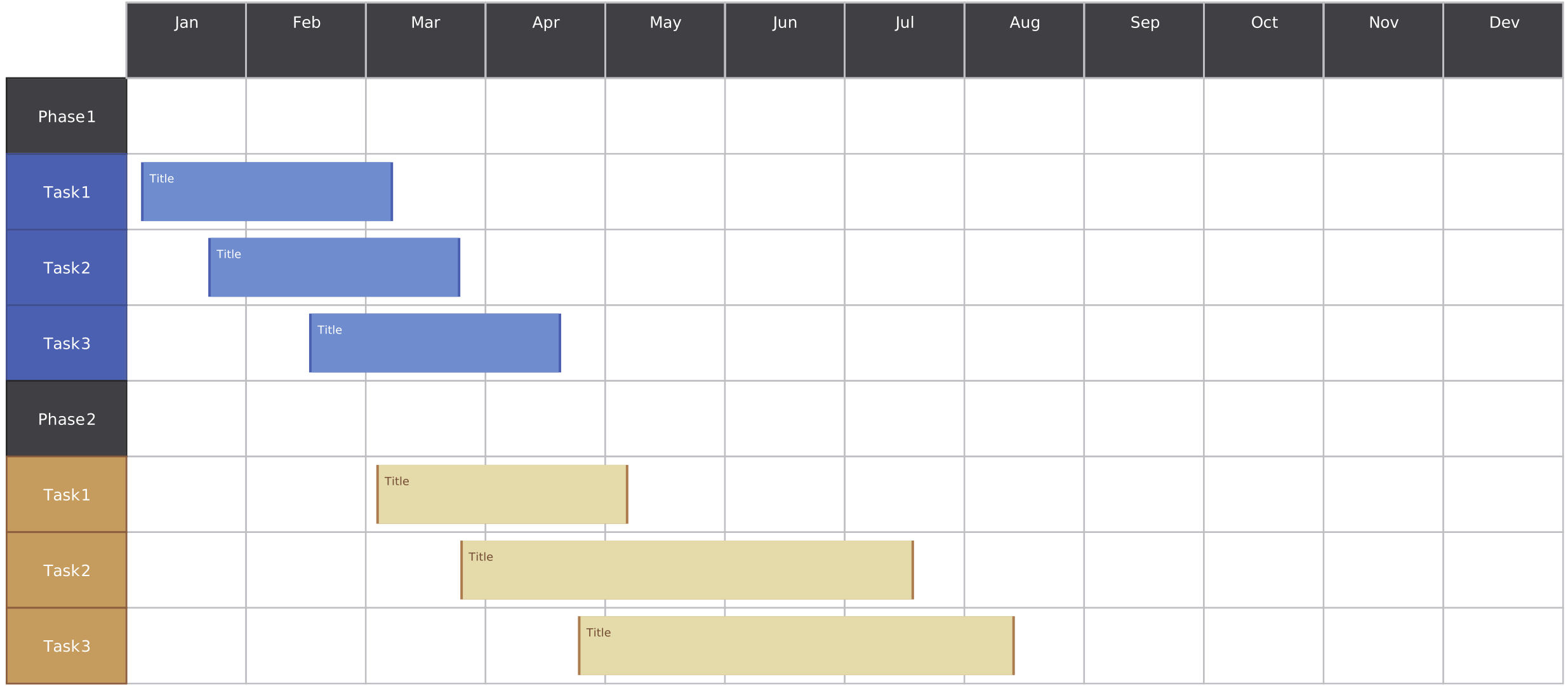
Gantt charts visualize project timelines, tasks, and dependencies. They help innovation managers plan and track the progress of innovation initiatives, ensuring timely execution and efficient resource allocation.
Value Proposition Canvas
Use: Concept development and customer-centric innovation
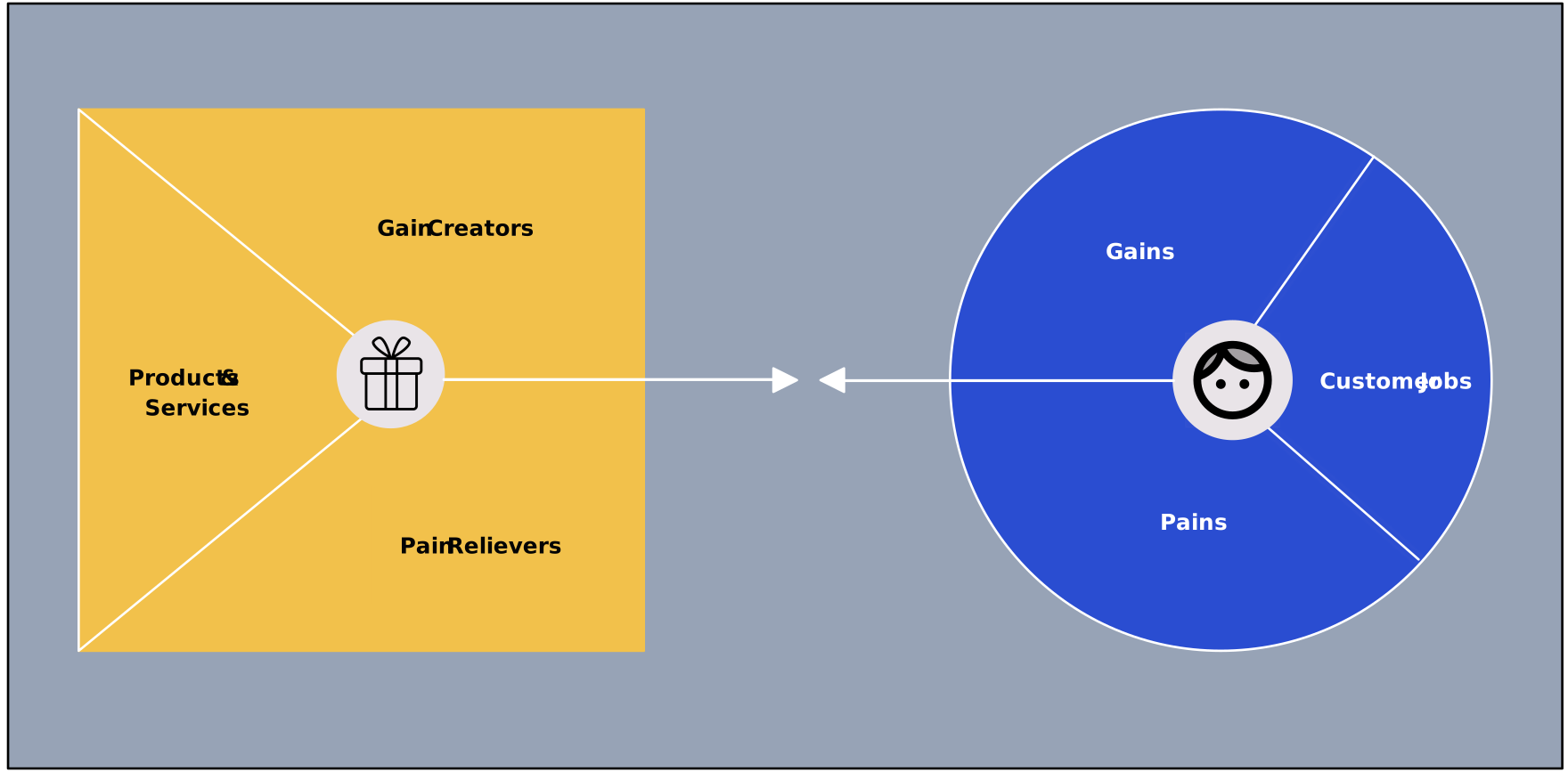
The value proposition canvas illustrates how a product or service creates value for a customer. It guides innovation by aligning concepts with customer needs, ensuring that innovations resonate with target audiences.
Business Model Canvas
Use: Business model innovation
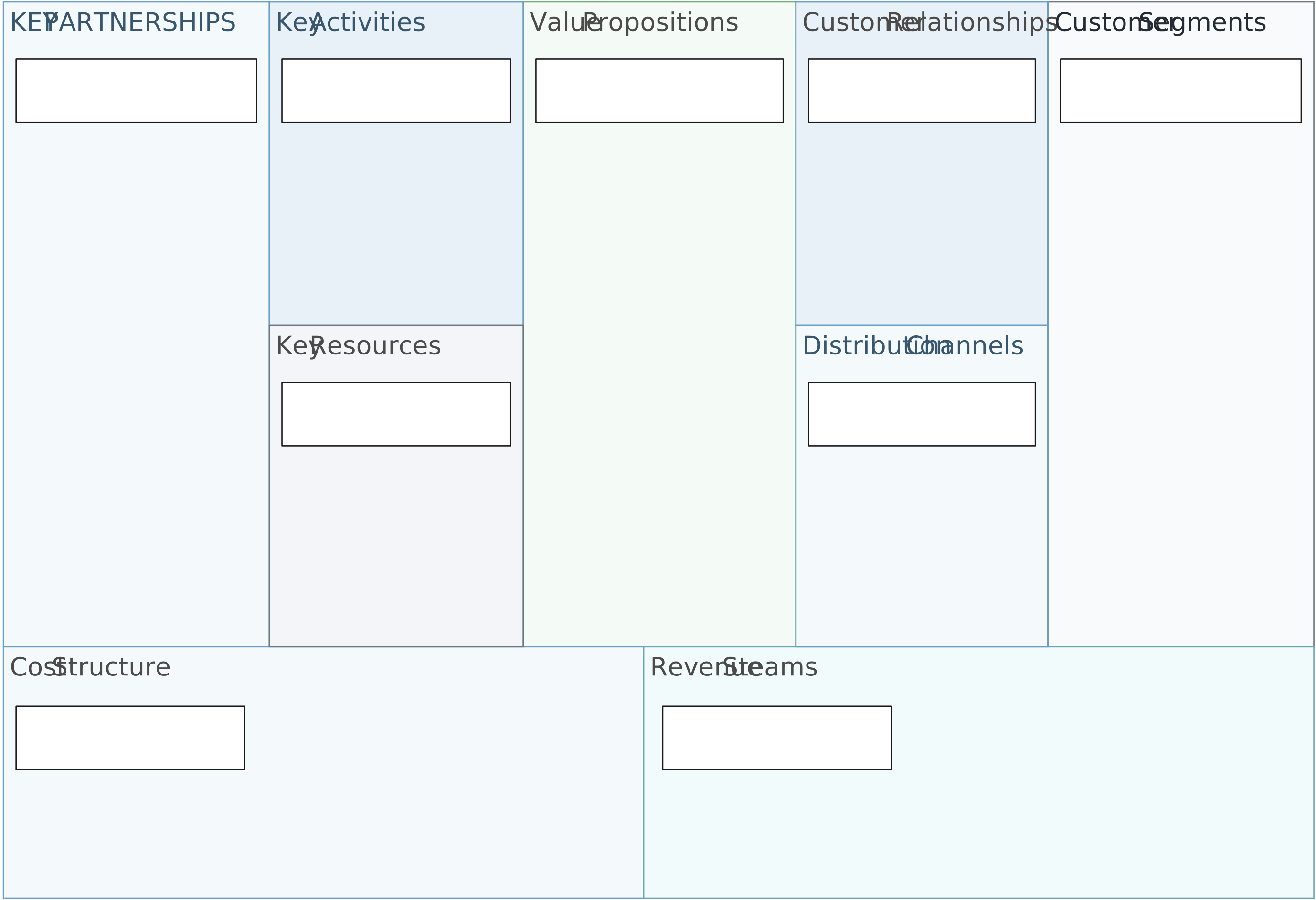
Business model canvas provides a holistic view of a business model, covering key components like value proposition, customer segments, and revenue streams. It helps in innovating business models, assuring sustainability and profitability.
Design Thinking Template
Use: User-centric ideation and prototyping
A design thinking template typically follows key stages such as Empathize, Define, Ideate, Prototype, and Test. It guides teams through understanding user needs (Empathize), defining the problem (Define), generating ideas (Ideate), creating prototypes (Prototype), and testing and refining solutions (Test). This iterative process ensures a user-centric approach to innovation, encouraging empathy and creativity.

Storyboard
Use: Concept development and communication
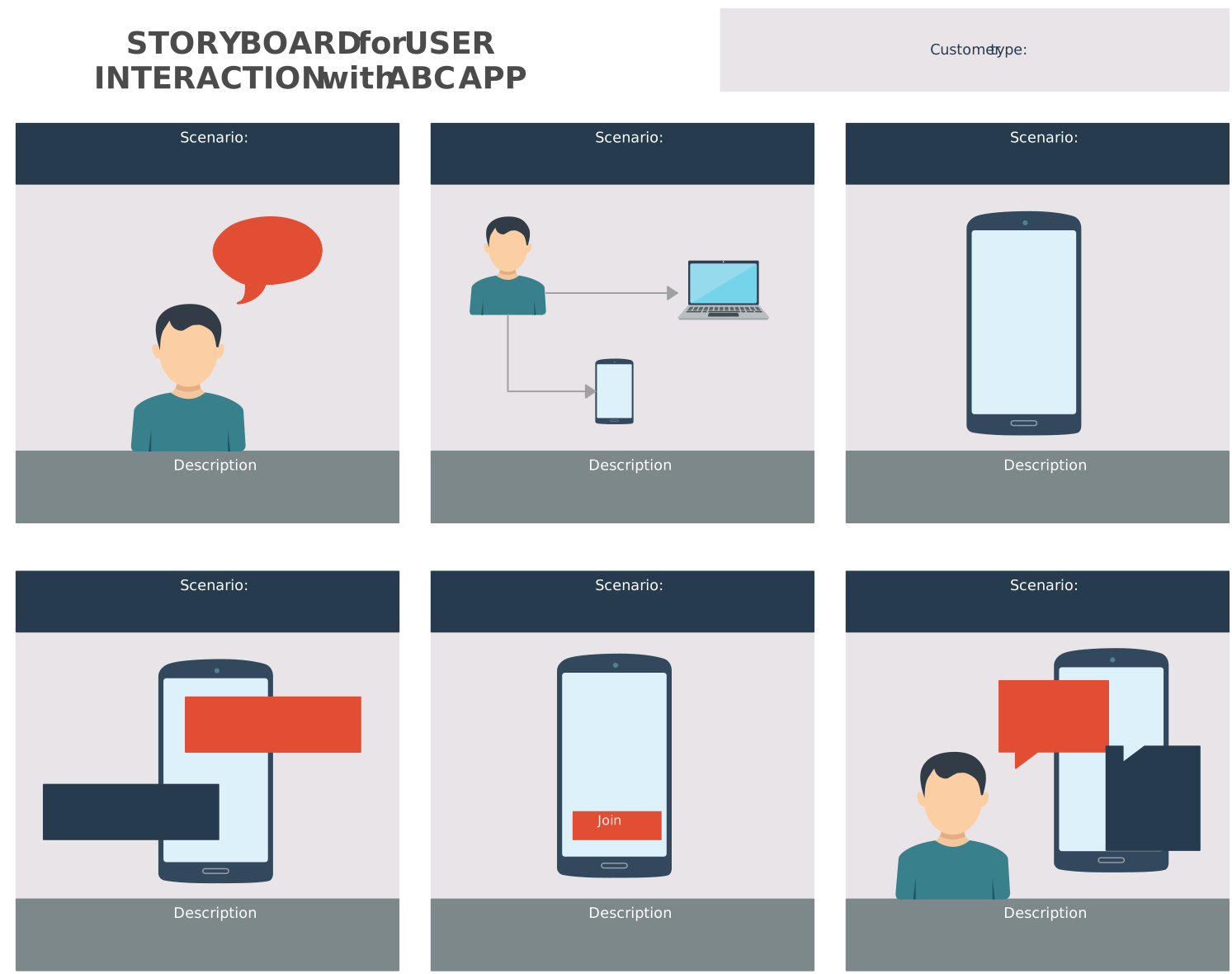
Storyboards visually present the flow and user experience of a product or service. They help communicate concepts, user journeys, and the intended impact of innovations, so they’re helpful for internal understanding and external presentations.
Prototyping Templates
Use: Concept development and testing
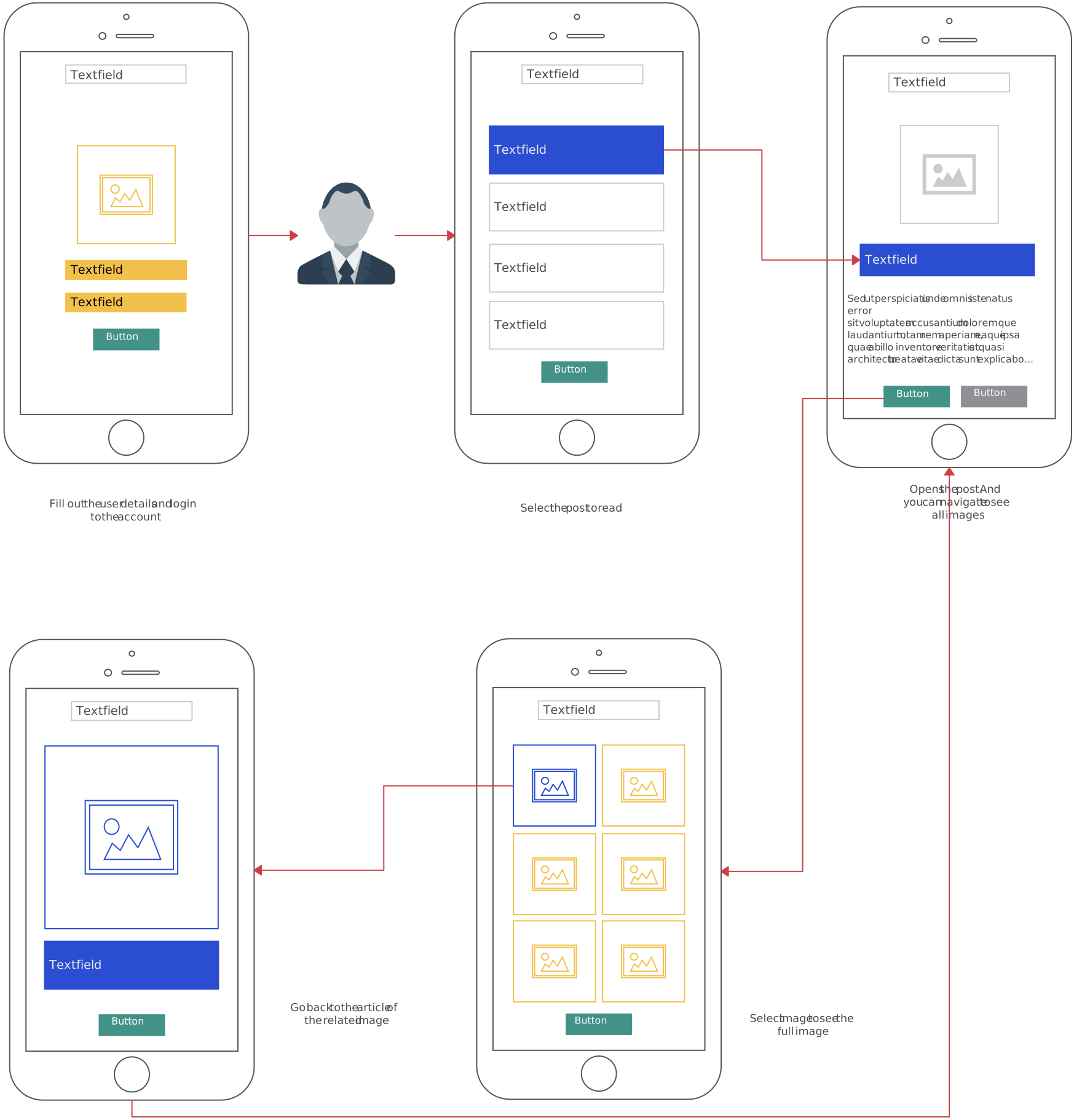
Prototyping templates represent selected visual, functional, or service aspects of a concept. Use them to test specific assumptions and collect feedback before committing to full-scale implementation.
Roadmaps
Use: Strategic planning and implementation
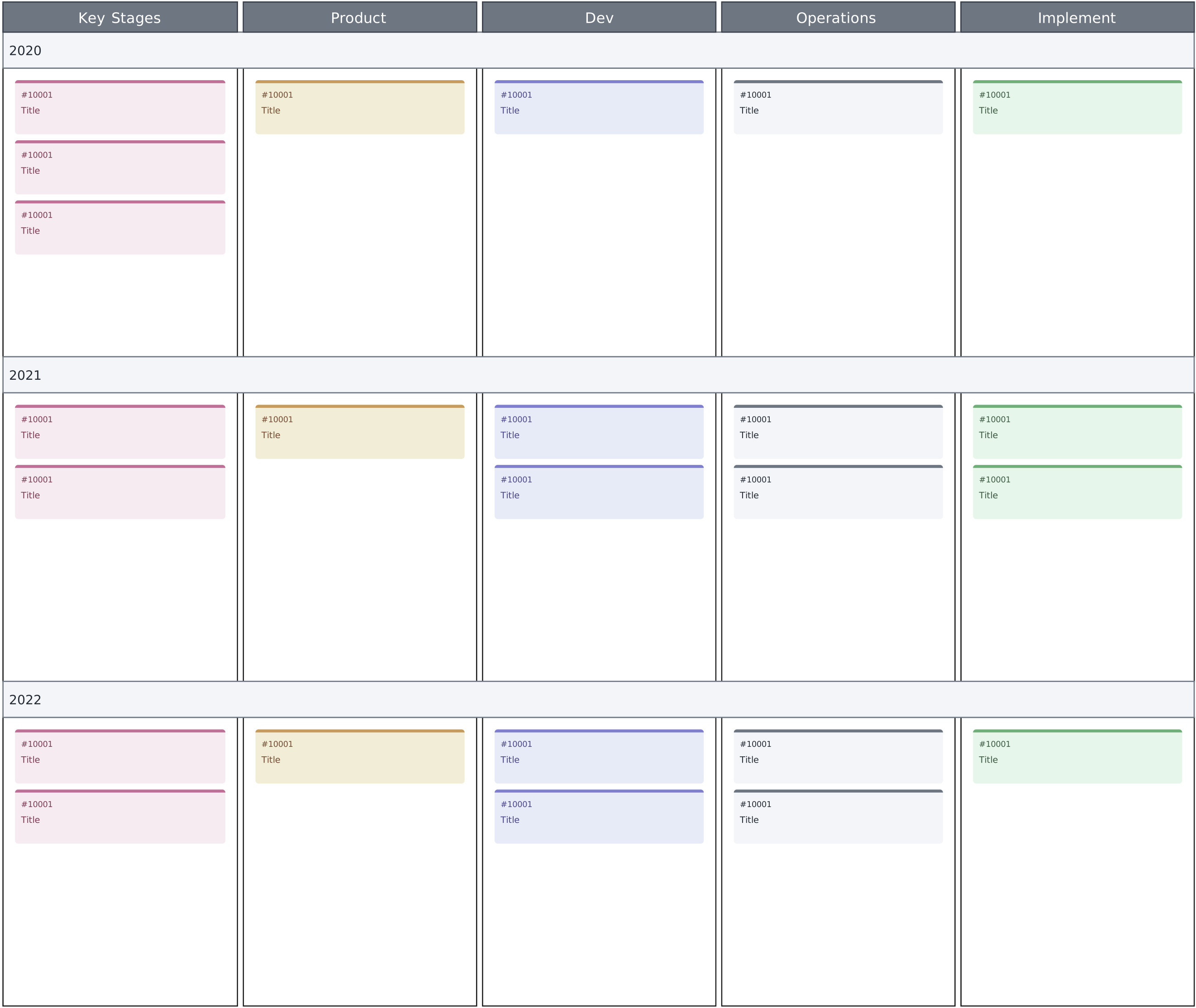
Roadmaps visually represent the timeline and milestones of a project or initiative. In innovation management, they guide teams through the different stages of innovation, ensuring a structured and well-paced development process.
Learn about more methods and tools to strengthen your innovation process with these resources:
Top 6 Methods of Innovation to Come up with Unique Product Ideas
5 Effective Steps to Creating a Powerful Innovation Strategy
An effective innovation management process gives creativity a clear route to evidence-based decisions. It connects strategy, ideas, experiments, owners, handoffs, implementation plans, and post-launch results so teams can learn from both successful and stopped initiatives.
Keep the process documentation current as criteria, responsibilities, systems, and portfolio priorities change. Stakeholders should be able to comment on problems or proposed updates, while the accountable process owner incorporates agreed changes and communicates the active workflow. This turns the innovation process into living operational documentation rather than a one-time diagram.