The service blueprint methodology is a structured way to understand how a service works for customers and the teams behind the scenes. Unlike a one-time diagram, it provides a repeatable process for examining service gaps, clarifying responsibilities, and coordinating improvements across the people involved in delivery.
In this guide, we’ll break down how the service blueprint process works step by step—and how you can use it to drive real improvements in your service delivery.
What Is the Service Blueprint Methodology?
The service blueprint methodology is a structured approach used to map, analyze, and improve how services are delivered. It’s commonly used in service design, customer experience (CX) management, and digital transformation projects.
More than a visual diagram, this methodology involves careful planning, cross-functional collaboration, and ongoing review. It helps teams investigate gaps between customer expectations and internal operations, then connect each finding with the people, processes, systems, and evidence needed to address it.
By following a repeatable process, organizations can use service blueprints not just to document services—but to actively improve and redesign them over time.
Core Components of the Methodology
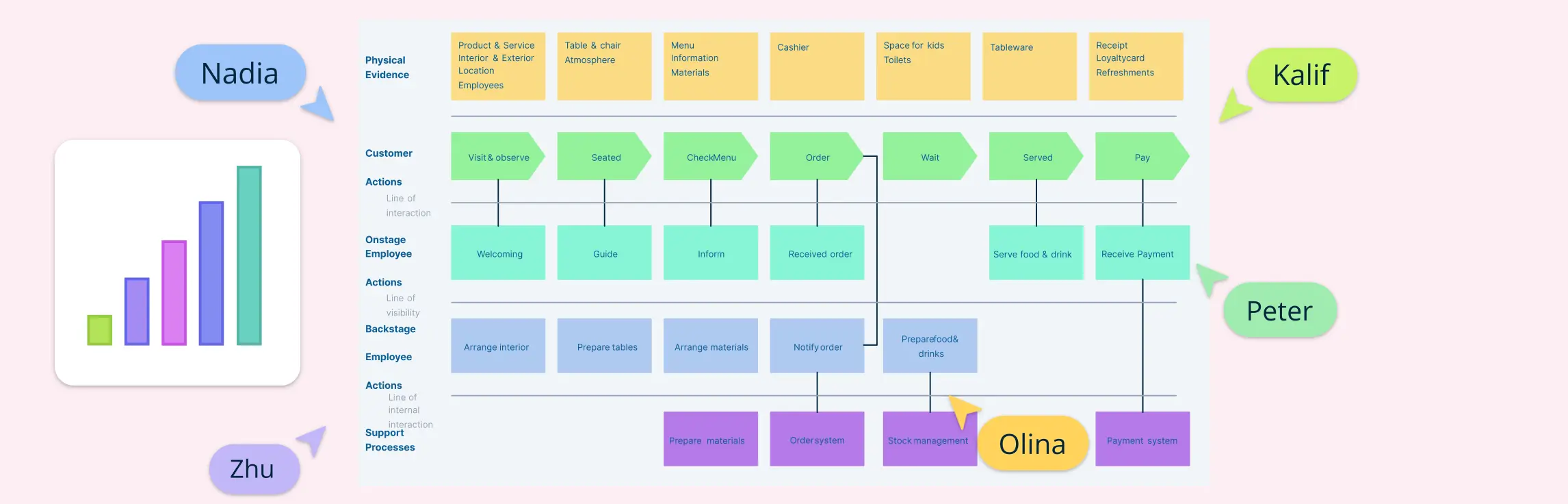
At the heart of the service blueprint methodology are a few key layers that bring structure to how a service is designed and analyzed. While these layers are often shown visually, they play a much bigger role in understanding how a service truly works.
- Customer actions – What the customer does during the service journey.
- Frontstage interactions – What the customer sees, like websites, staff interactions, or apps.
- Backstage processes – Internal tasks and systems that support frontstage actions but aren’t visible to customers.
- Support processes – Additional systems or teams that indirectly help the service run.
- Lines of interaction, visibility, and internal interaction – These lines separate different layers, showing where teams and systems connect—or where breakdowns might happen.
- Metrics and insights (optional) – Data points, owners, or supporting evidence added to evaluate performance, pain points, and improvement areas.
These layers work together to help teams see the full picture—not just what the customer experiences, but everything behind it that makes it happen.
Key Stages of Service Blueprints
The service blueprint methodology isn’t just about creating one diagram and moving on—it’s a continuous process that helps teams design, improve, and evolve their services over time. Think of it as a cycle with clear, repeatable stages:
Step 1: Scoping and defining the service - Start by choosing the service or part of the experience you want to map. Get input from stakeholders, set clear goals, decide which touchpoints to include, and name an owner who will maintain the blueprint.
Step 2: Mapping the current state (As-Is) - Create a detailed picture of how the service works today, from customer actions and frontstage interactions to backstage and support processes. In Creately’s service blueprint workspace, teams can map these layers together and connect relevant notes, links, or files to the visual context.
Step 3: Identifying gaps and pain points - Look closely at the blueprint to spot unclear ownership, broken handoffs, delays, or areas where the experience falls short for customers and service teams. Record the evidence behind each finding so stakeholders can review the same context.
Step 4: Analyzing service gaps and inefficiencies - Go deeper to understand why these issues exist. Are teams misaligned? Are there system failures? This step helps uncover root causes.
Step 5: Designing the future state (To-Be) - Reimagine how the service should work. Explore changes such as appropriate automation, clearer handoffs, better coordination, or new ways to improve the customer experience.
Step 6: Implementing improvements - Turn agreed ideas into an implementation plan involving the relevant tools, training, or workflow changes. Assign responsibility for each change and keep supporting instructions or references connected to the corresponding part of the service.
Step 7: Reviewing and iterating - After implementation, compare performance with the intended future state. Stakeholders can add contextual comments, the owner can incorporate agreed updates, and the team can use version history to understand how the blueprint changed. This review cycle keeps the blueprint current as living service documentation.
Benefits of Using a Structured Service Blueprint Methodology
Using a structured service blueprint process brings more than just clarity—it helps teams work smarter and deliver better experiences. Here’s how:
Systematic service design: Instead of guessing, you follow a clear process to plan, analyze, and improve services step by step.
Cross-functional visibility: Teams from the front desk to IT can see how their work connects, where handoffs occur, and who is responsible for follow-through.
Investigating silos and delays: Mapping the full picture gives teams shared context for examining communication gaps, missed handoffs, and repeated work.
Aligning teams around customer experience: It helps everyone focus on what really matters: delivering a seamless, satisfying experience for the customer.
When teams maintain it through regular review, a service blueprint becomes a shared operational reference for coordinating change rather than a diagram that is set aside after a workshop.
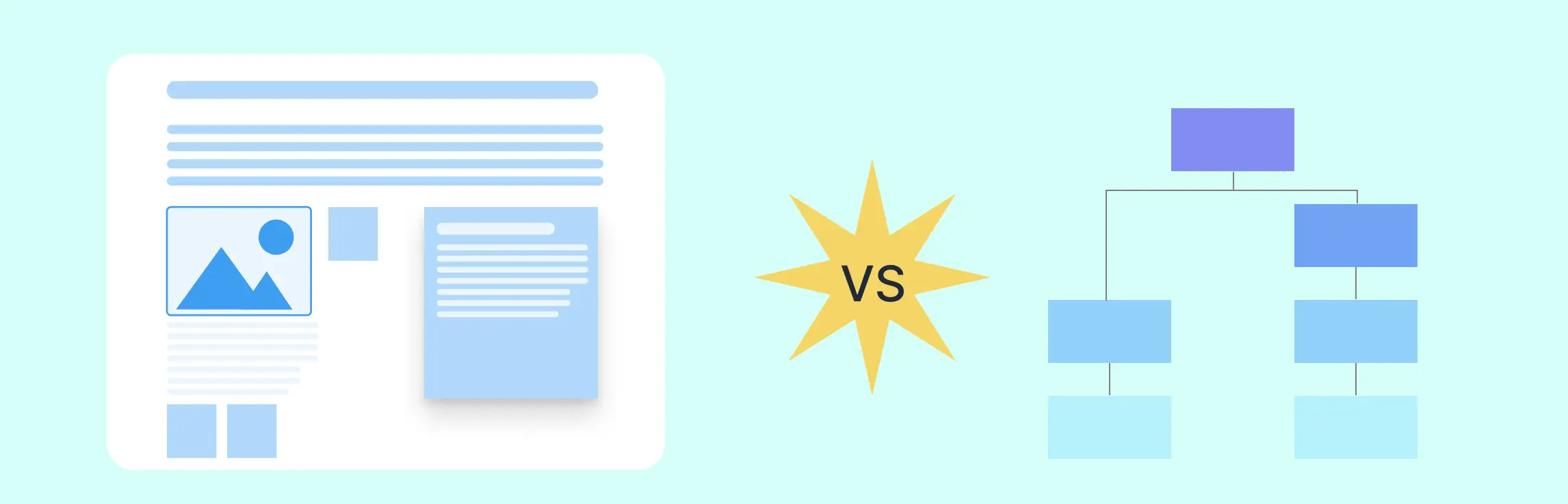
Service Blueprint Methodology vs Ad-hoc Blueprinting
Service blueprint methodology
This is a structured, repeatable process used to map and improve services. It looks at the full picture—from customer actions to backstage processes—and involves planning, stakeholder alignment, implementation, and ongoing review. The blueprint gives teams a common reference for investigating root causes, coordinating changes, and checking whether the redesigned service works as intended.
Ad-hoc blueprinting
This is a quick, informal way of creating a service blueprint, often to visualize a single journey or discuss a specific problem. It can provide a useful snapshot, but without defined scope, ownership, evidence, and a review cadence, teams may overlook underlying issues or cross-team dependencies.
In short, ad-hoc blueprinting supports quick exploration, while the full methodology provides the governance needed to investigate, implement, and review improvements over time.
Example Use Cases of the Service Blueprint Process in Action
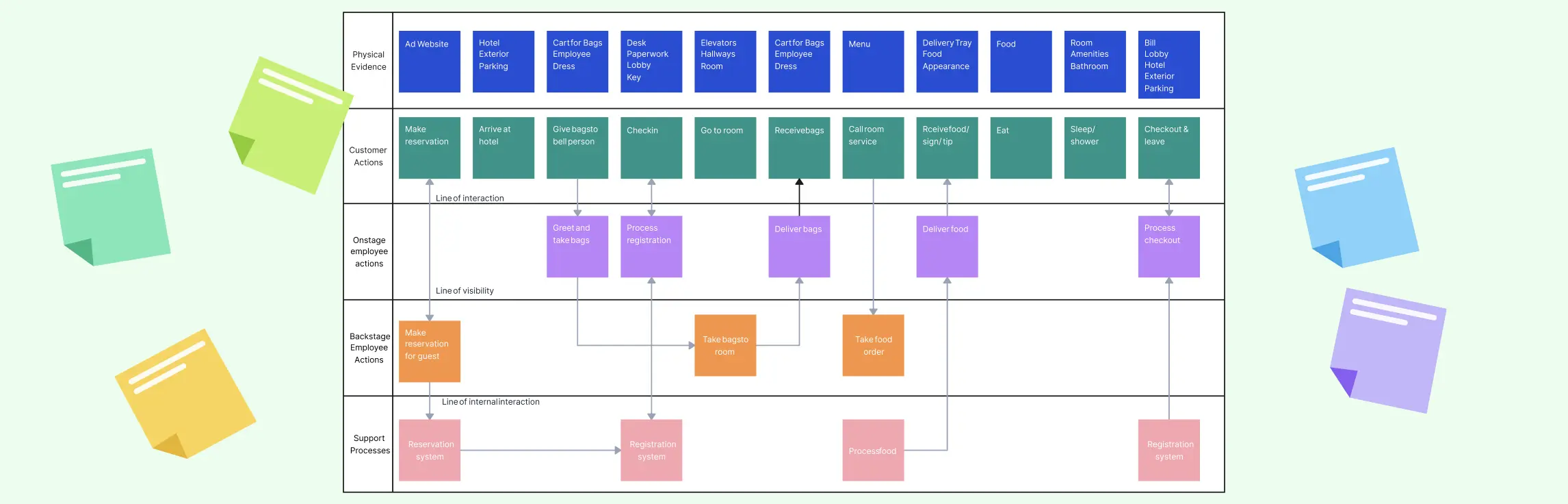
Hospitality – Streamlining guest check-in
Hotels can use a service blueprint to examine wait times at check-in, clarify staff coordination, and identify opportunities to improve the guest’s arrival experience.


Healthcare – Optimizing the patient journey
Clinics and hospitals can map each stage of a patient’s visit to identify delays, understand paperwork handoffs, and explore ways to make the experience more accessible and less stressful.

Finance – Enhancing loan application journeys
Banks can use service blueprinting to understand customer frustrations during loan applications, align the teams involved in assessment, and examine approval handoffs across departments.

Movie theatre – Creating a better moviegoer experience
Theatre chains can map the moviegoing journey—from booking tickets to post-show feedback—to examine queue management, staff deployment, and opportunities to improve the customer experience.

References
Shahin, A. (2010). Service Blueprinting: An Effective Approach for Targeting Critical Service Processes – With a Case Study in a Four-Star International Hotel. Journal of Management Research, 2(2). doi:https://doi.org/10.5296/jmr.v2i2.352.
Ryu, D.-H., Lim, C. and Kim, K.-J. (2020). Development of a service blueprint for the online-to-offline integration in service. Journal of Retailing and Consumer Services, [online] 54(1), p.101944. doi:https://doi.org/10.1016/j.jretconser.2019.101944.
FAQs About the Service Blueprint Methodology
How is the service blueprint process different from service design?
Can service blueprinting be used for internal services?
What teams should be involved in a service blueprinting process?
Is the service blueprint methodology agile-compatible?
When should I use the service blueprint methodology?
Do I need special tools to run the service blueprint process?