Leadership transitions are inevitable, but organizations can prepare for them. A structured succession planning process helps identify roles that present continuity risk, clarify future capability needs, develop internal talent, and plan knowledge transfer before a vacancy occurs. It cannot eliminate every leadership gap, but it gives decision-makers better information and more options. This guide explains six succession planning steps, practical safeguards, and templates for building and maintaining a leadership pipeline.
What Is the Succession Planning Process?
The succession planning process is a structured approach to identifying critical roles, defining future capability requirements, assessing internal talent, and providing relevant development opportunities. Rather than waiting for a vacancy, succession planning helps organizations prepare transition options, reduce continuity risk, and align talent development with long-term strategy. Final appointment decisions should still follow the organization’s governance, employment policies, and applicable law.
Steps to Create a Succession Plan
A strong succession planning process is not a one-time HR exercise. An effective succession planning framework uses consistent criteria, draws on relevant evidence, aligns with business strategy, and is reviewed as roles and talent needs change. Here are six practical steps to follow.
Preparing for Succession: Assessment and Strategic Alignment
Before diving into identifying roles and successors, start with the big picture. Succession planning must reflect where the organization is headed — not just where it is today.
Assess current leadership capacity and future needs
Evaluate current leadership capacity and likely transition needs. Which roles have immediate coverage, and where would a vacancy create material disruption? At the same time, consider future priorities such as expansion, digital transformation, restructuring, or new markets. Leadership requirements evolve with strategy, so readiness criteria should reflect the future context rather than today’s job alone.
Conduct a gap analysis
Compare future role requirements with current organizational capabilities. Depending on the strategy, gaps may involve change leadership, digital fluency, commercial expertise, or cross-functional collaboration. Identifying them early allows the organization to plan development intentionally.
Link succession goals with organizational strategy
Ensure succession planning aligns with your organization’s long-term vision. If growth or innovation is a priority, leadership pipelines should reflect these goals. Embedding succession into strategic planning cycles ensures readiness is not just about filling roles but about advancing the organization’s overall objectives.
Step 1. Identify Critical Roles
Map out the positions that are essential to your organization’s success. Focus on roles that:
Have high strategic impact or influence key decisions.
Hold specialized institutional knowledge that is hard to replace.
Directly affect revenue, operations, or team performance.
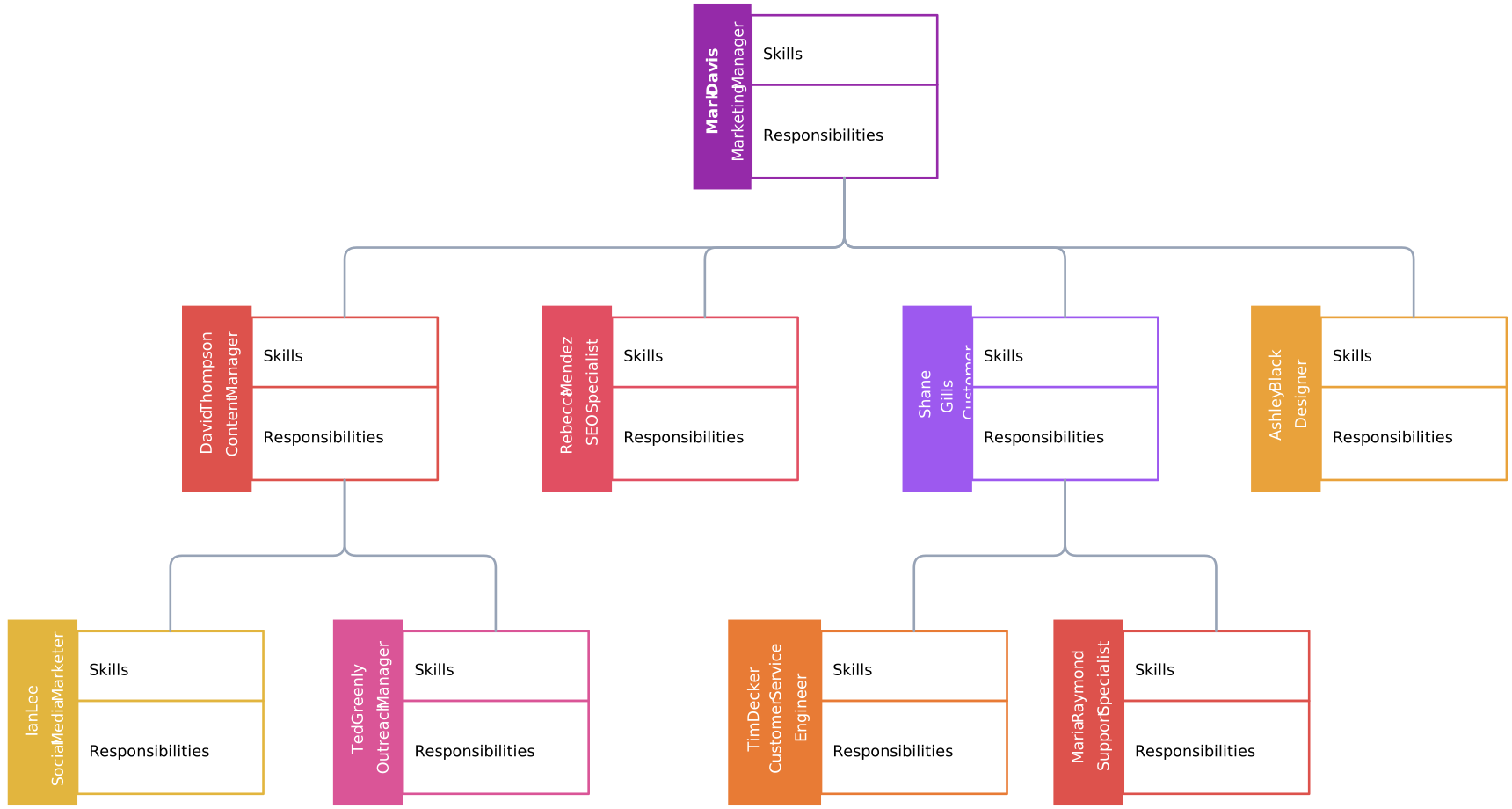

Clearly defining critical roles allows succession efforts to be focused, efficient, and aligned with business priorities. Involving leadership across functions ensures no critical role is overlooked and sets the stage for effective succession planning.
Step 2. Build Success Profiles
For each critical role, define the competencies, experience, and readiness required. Include:
Technical expertise: Industry knowledge, certifications, or specialized skills.
Leadership capabilities: Strategic thinking, decision-making under uncertainty, adaptability, and people management.
Readiness level: Use clearly defined categories such as “ready now,” “ready in one to two years,” or “longer-term development,” and record the evidence supporting the assessment.
Documented profiles create a consistent reference for HR, managers, and senior leaders. Competency matrices can help qualified reviewers discuss capability gaps, but they should support informed judgment rather than reduce an appointment decision to a single score.
Step 3. Identify and Nominate Potential Successors
Evaluate employees who may be able and willing to step into critical roles in the future. Use consistent, job-related criteria and multiple sources of relevant evidence, including demonstrated performance, experience, assessed capability, and career aspirations. Look beyond familiar networks and current reporting lines when defining the talent pool.
Involve qualified HR and business reviewers, document the rationale for readiness decisions, and check for inconsistent standards or barriers. A broader talent pool can improve coverage and development options, but participation in a succession plan should not be treated as a guarantee of promotion.
Step 4. Assess Development Needs
Compare each person’s current skills and experience with the success profile for the relevant role. Identify gaps in technical expertise, leadership capability, or organizational knowledge using evidence appropriate to the role. Include future-facing capabilities only when they are connected to the organization’s strategy and the role’s expected responsibilities.
This step allows development plans to be focused and intentional, accelerating readiness for the most critical roles while reducing risk for the organization.
Step 5. Develop Talent
Design tailored development plans for each successor, combining:
Formal learning programs.
Mentoring and coaching relationships.
Stretch assignments and cross-functional projects.
Experiential learning opportunities that allow successors to lead initiatives, manage change, and solve complex challenges.
Monitor progress regularly and adjust development plans based on performance, changing business needs, and demonstrated growth. These succession planning best practices ensure successors gain the right experience to step into critical roles successfully.
Step 6. Implement, Monitor, and Refine
Put approved development and continuity plans into action. Use knowledge-transfer activities, phased handovers, deputies, or interim arrangements where they fit the role and organizational policy.
Track progress using measurable indicators such as bench strength, readiness scores, time-to-fill critical roles, vacancy coverage, and overall risk exposure. Conduct regular reviews — at least annually or whenever strategy shifts — using saved assessments to refine competency models and development pathways as organizational goals change.
Why Use Creately for Your Succession Planning Process
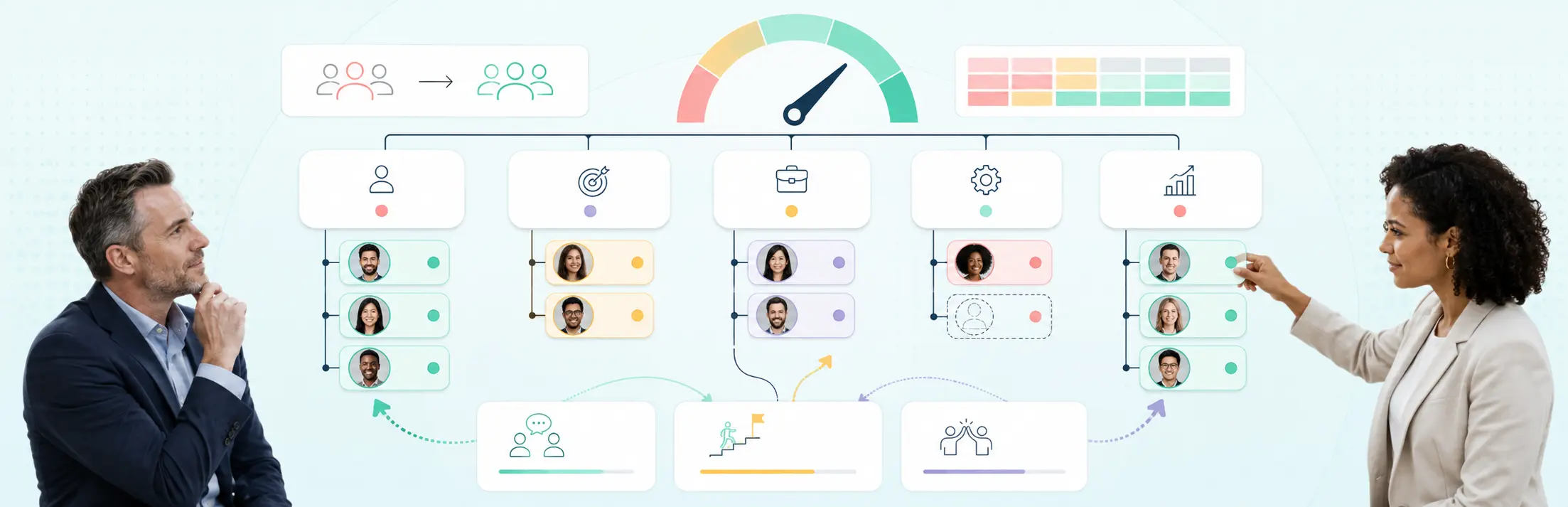
Succession planning involves roles, review cycles, development handoffs, and input from several stakeholders. Creately’s succession planning software helps teams visualize that process, clarify ownership, and discuss scenarios in a shared workspace. Keep named employee records, formal readiness decisions, approvals, and sensitive performance information in the organization’s approved HR systems.
Visualize your talent pipeline
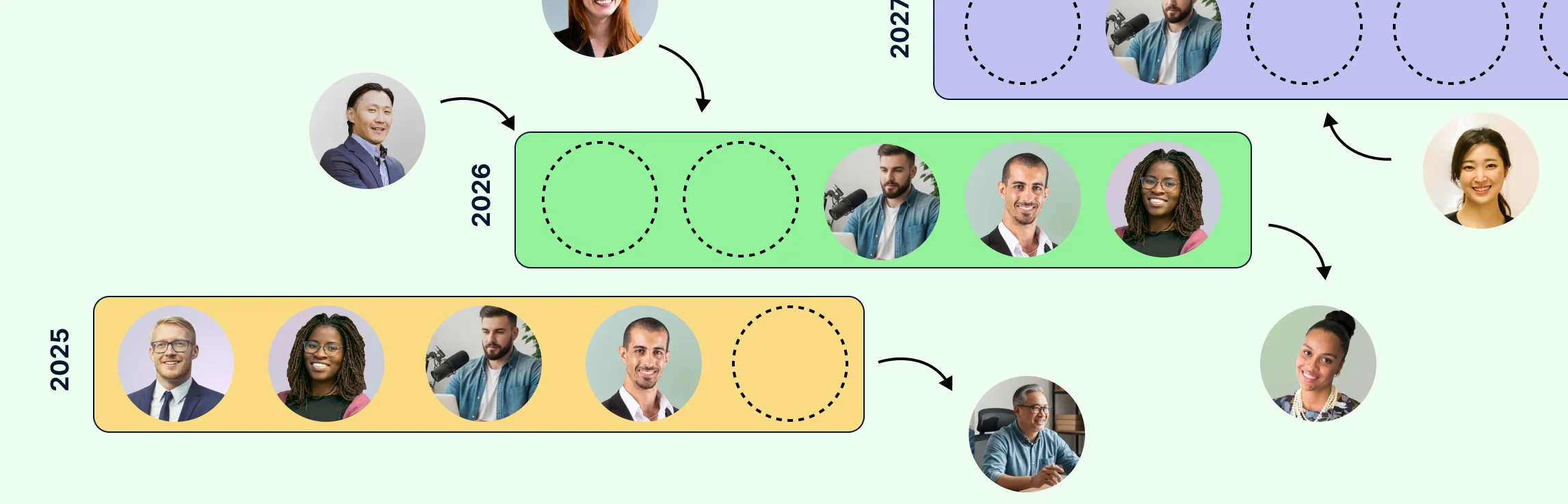
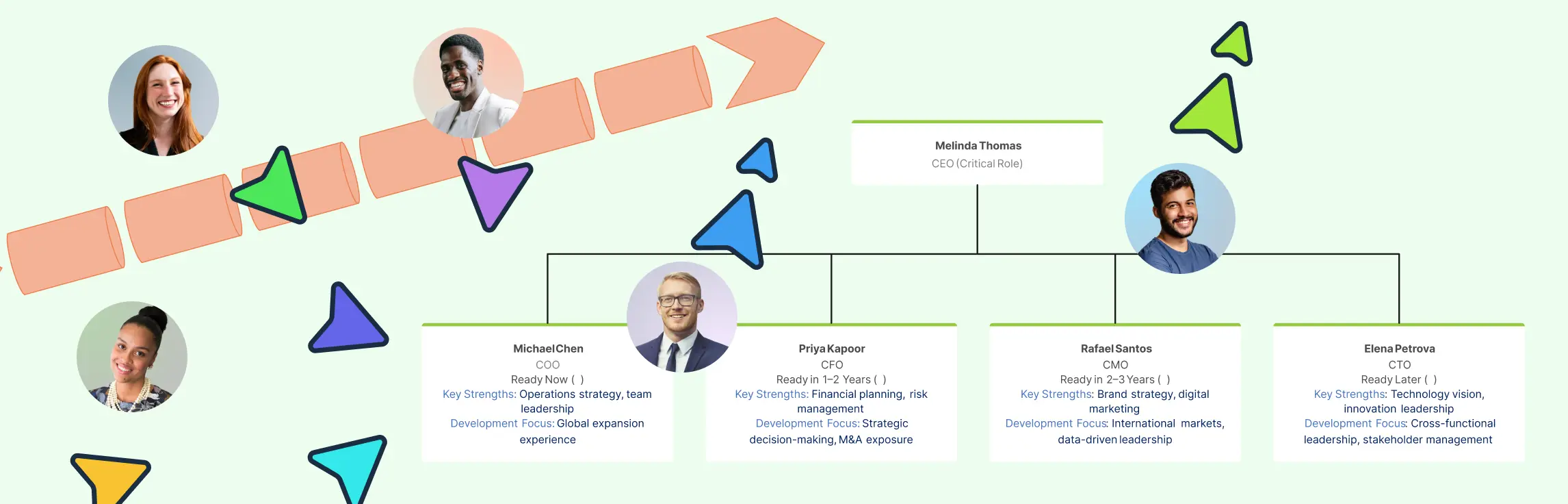
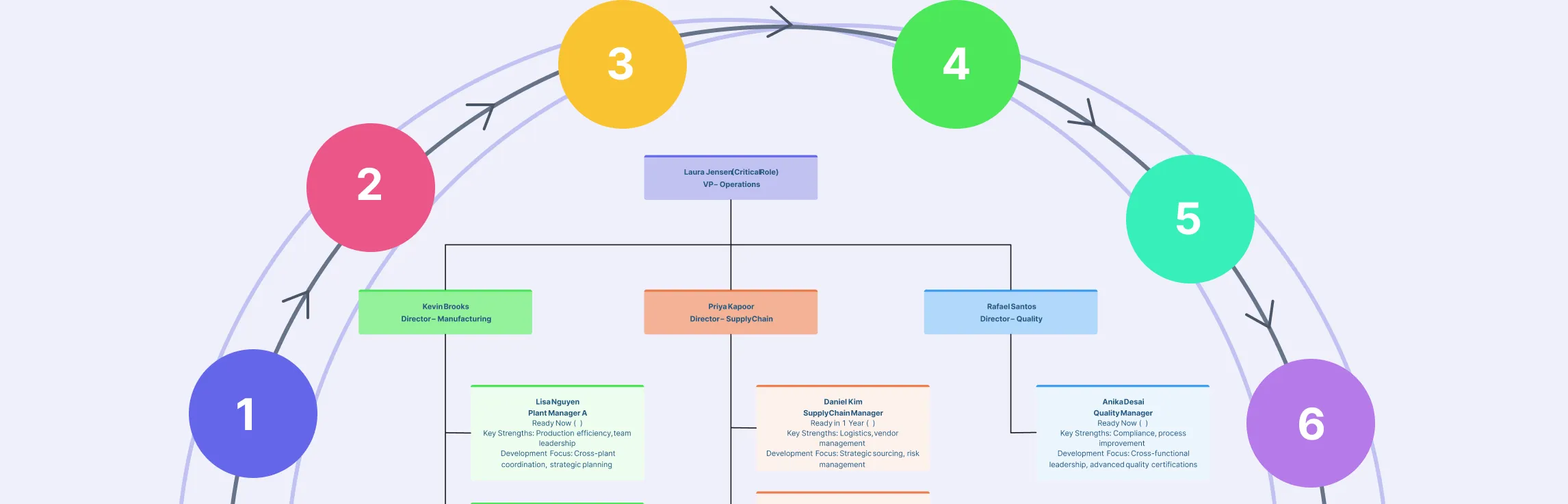
Creately offers ready-to-use templates for succession planning examples, org charts, and career path maps. In Creately Atlas, you can link potential successors to critical positions and record readiness, bench strength, and development actions.
Collaborate in real time
HR, managers, and senior leaders can edit the same visual workspace, use comments and @mentions, and discuss changes in context. Process owners can incorporate agreed updates while formal talent decisions remain in the approved review and governance process.
Adapt quickly to change
Business priorities evolve, and so should your succession plan. Atlas scenarios let you model proposed position and reporting-line changes, compare them with the current structure, and review them before applying or discarding them.
Centralize your data
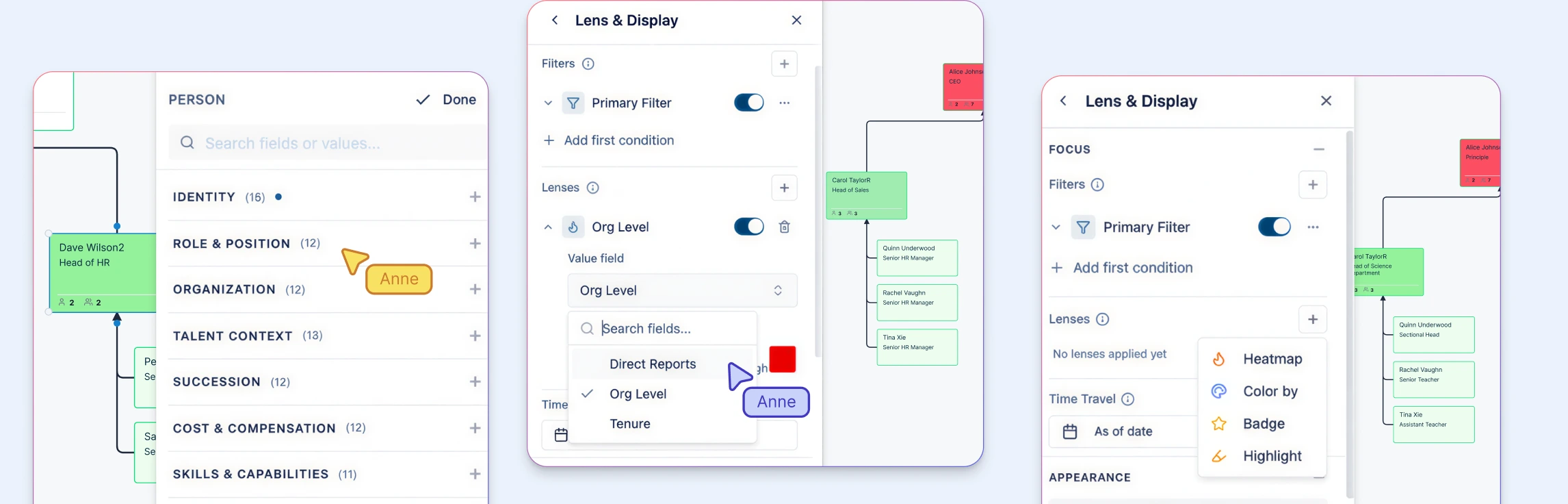
Keep everything in one place. Atlas stores performance, readiness, and development information in structured fields, with field-level access controlling who can see sensitive talent data independently of chart-editing permission.
Share and present effortlessly
Export visuals as PDF, PNG, or SVG, or share the workspace with appropriate access settings. Use these views to facilitate planning discussions while following your organization’s rules for confidential workforce information.
Succession Planning Examples to Get Started
Now that you know how to do succession planning, here are some free templates to get you started.
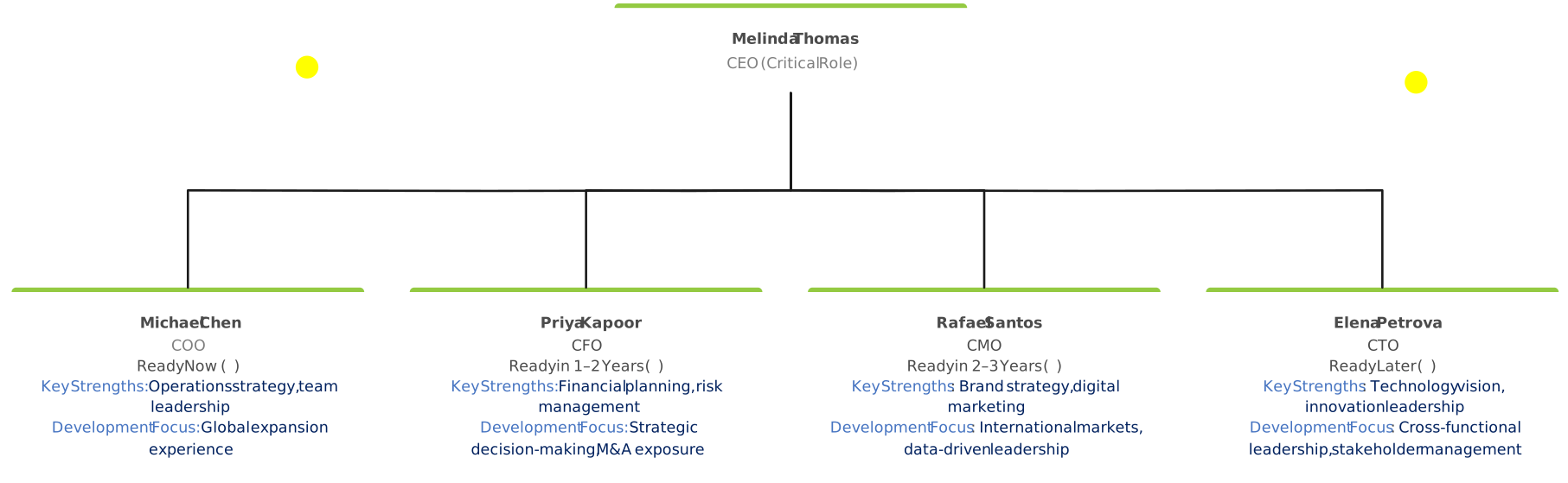
Executive Leadership Succession Planning Template
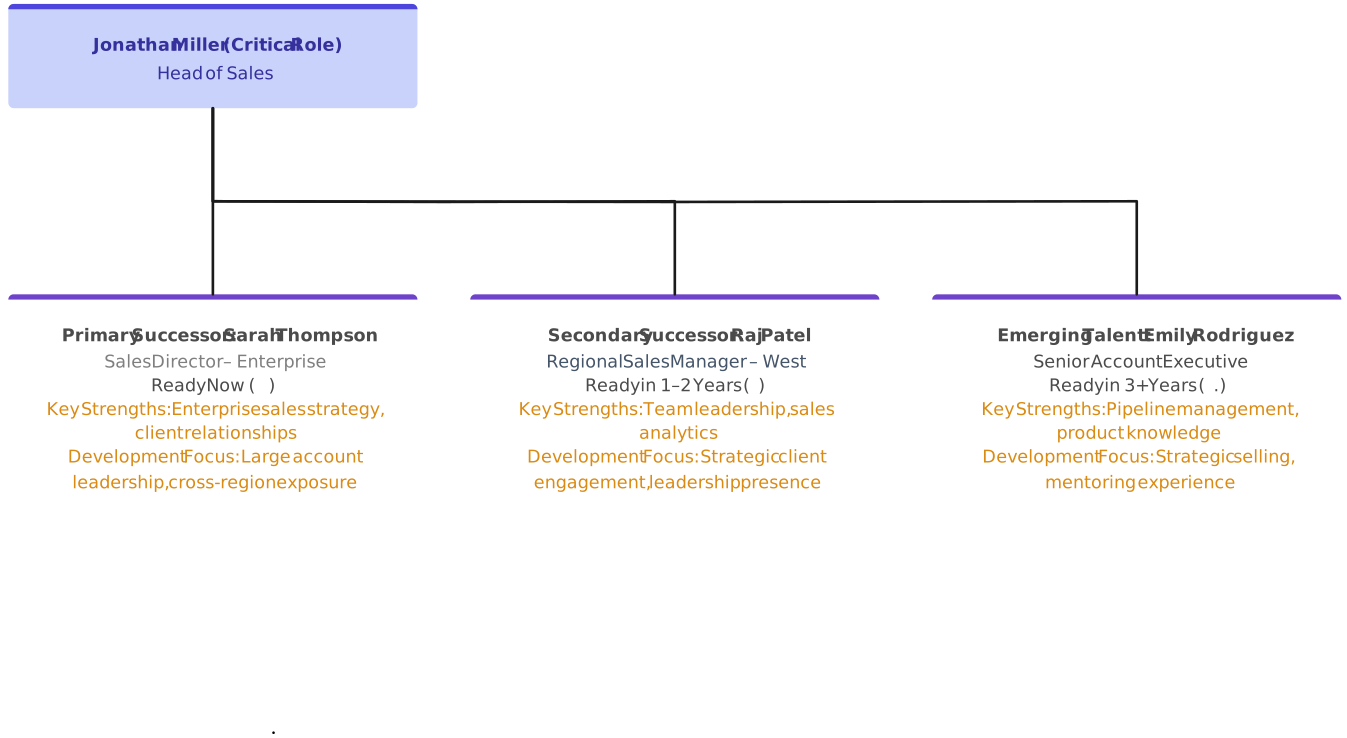
Single Critical Role Succession Plan Template
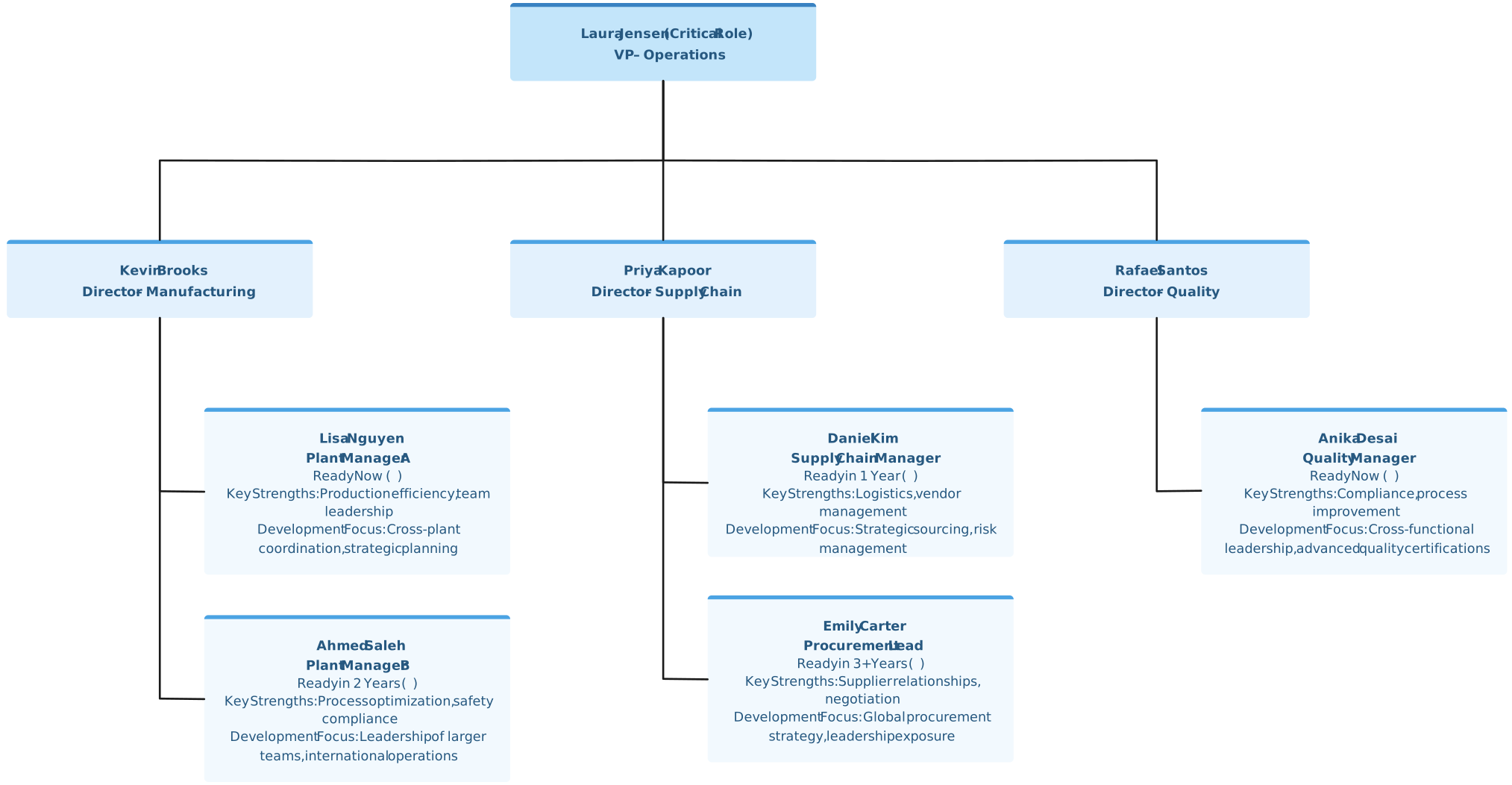
Multi-Level Department Succession Map
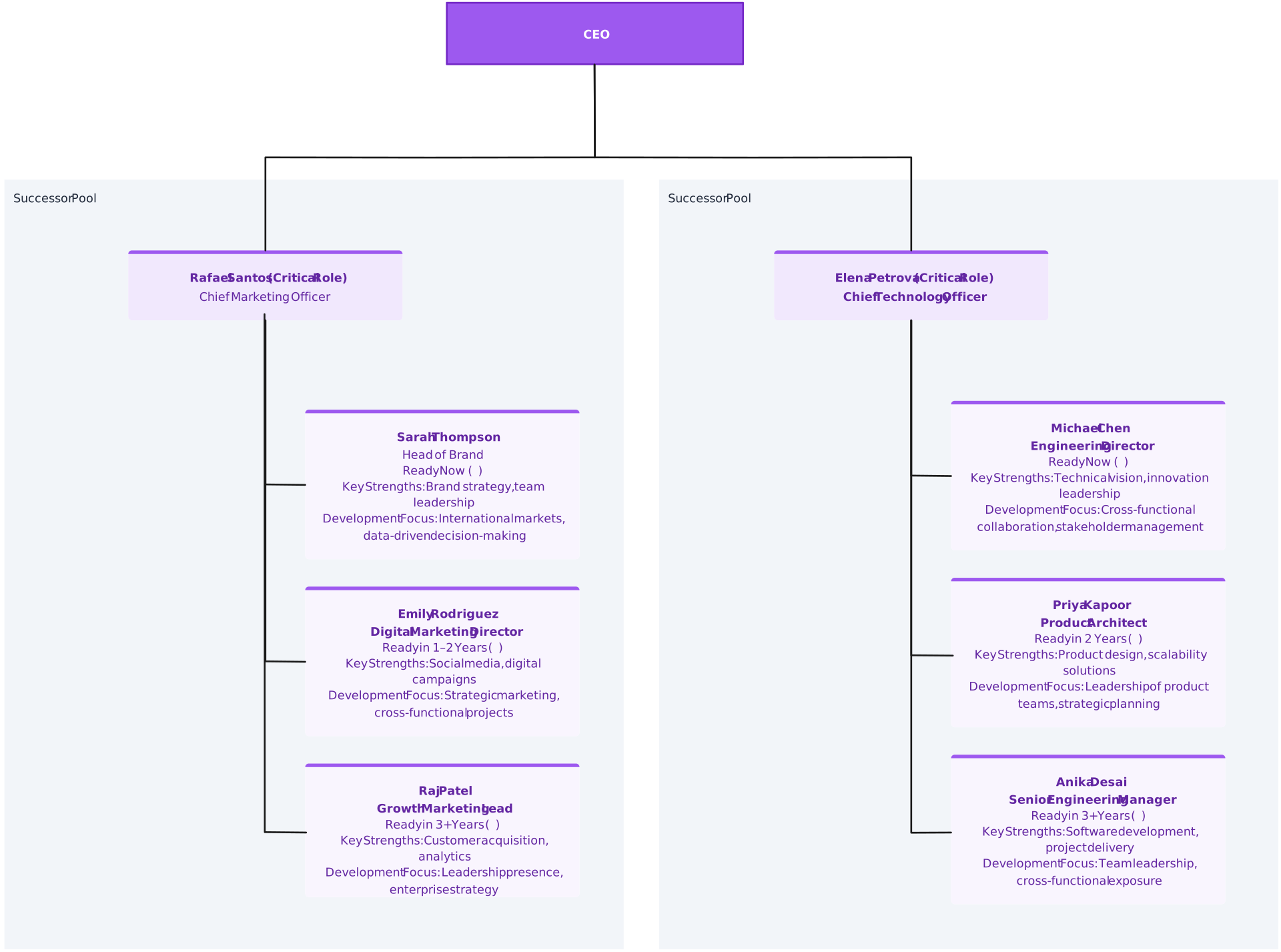
Talent Pool Succession Grid Structure
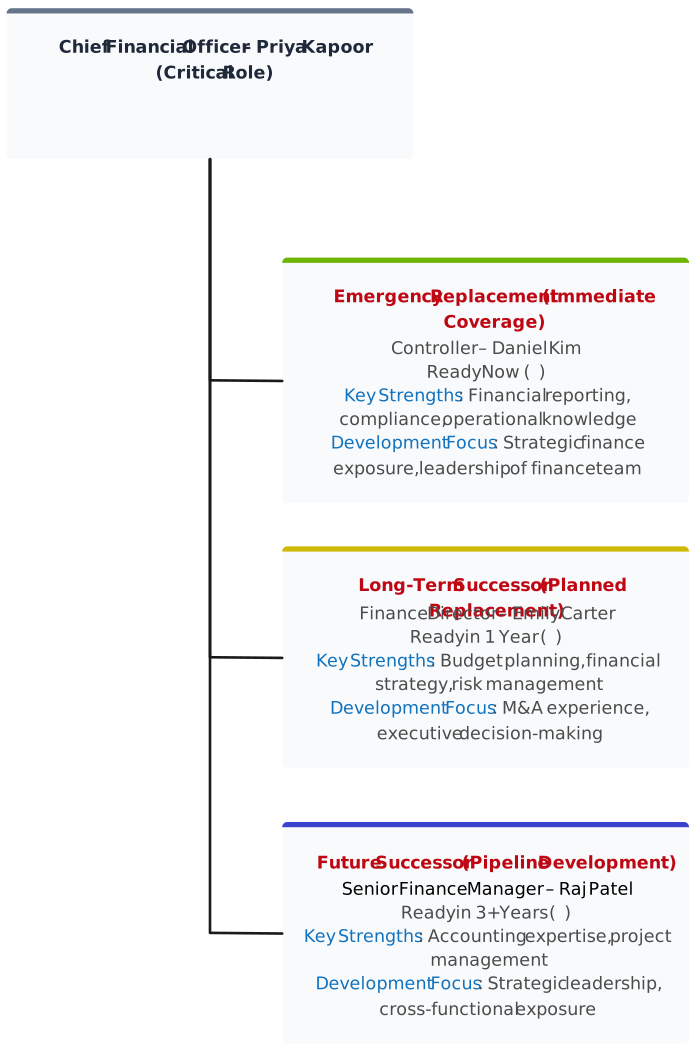
Emergency vs Long-Term Succession Planning Template
FAQs About the Steps in Succession Planning
Why is succession planning important?
What are the roles & responsibilities in the succession planning process?
What are the best practices for succession planning?
What are common challenges in succession planning and how can they be addressed?
How can succession planning support diversity and inclusion?
What is succession planning in HR?