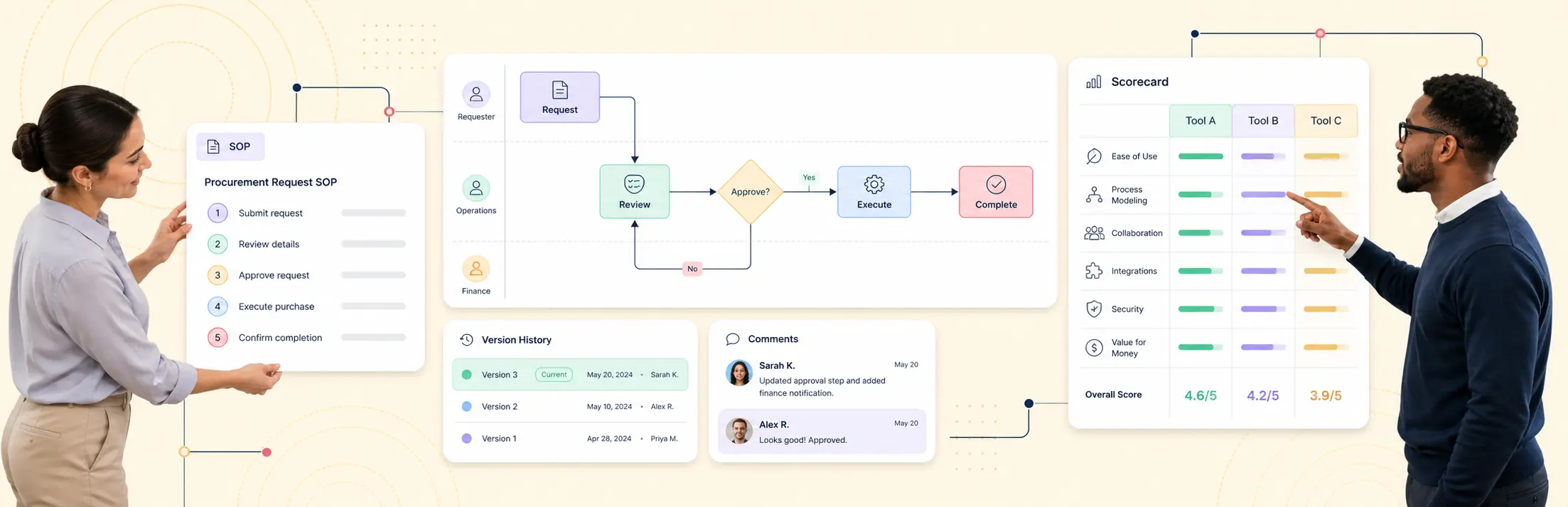
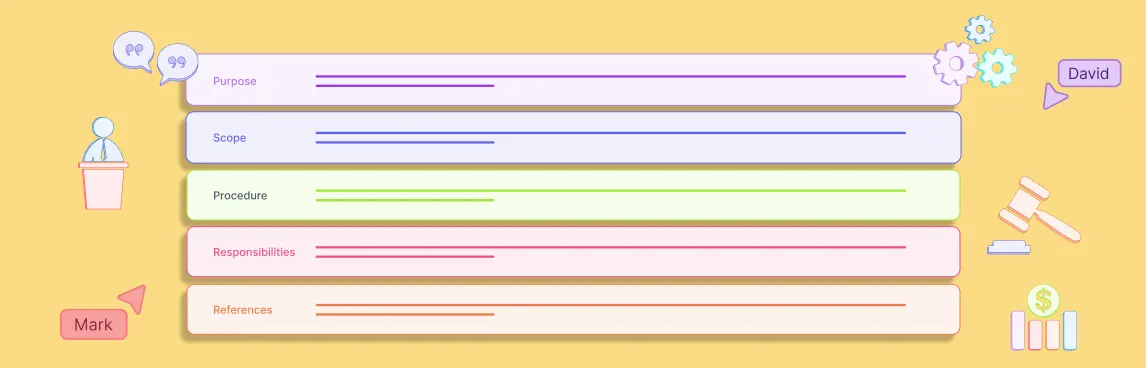
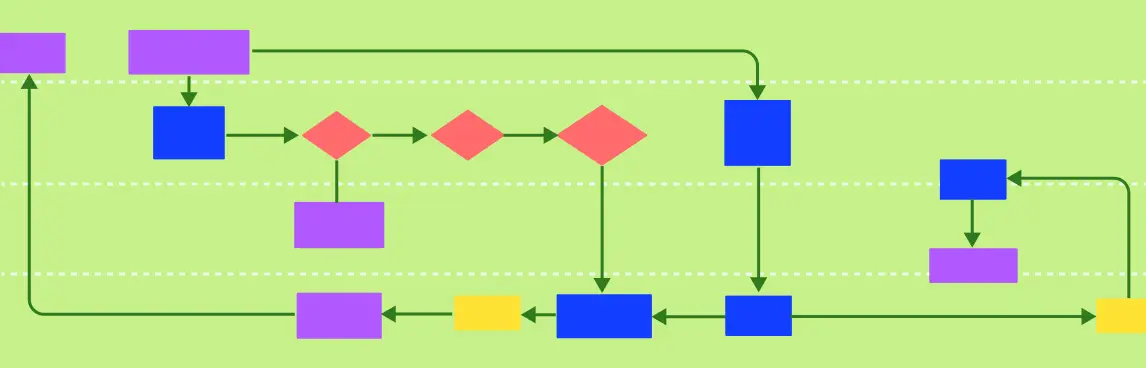
If you need a short answer, use a screen-capture tool when speed matters most, use a wiki-first tool when your main job is publishing procedural knowledge, and use a process-modeling platform when you need documentation that stays governed, visual, and current across teams. For most ops and process owners, the right choice depends less on template count and more on whether the tool can handle ownership, change control, and cross-functional process logic without turning your documentation into another stale folder of files.
Move scattered SOPs into a living process repository by consolidating current procedures, assigning accountable owners, controlling versions, connecting related processes and evidence, and putting every document on a review cycle. Do not start by uploading every PDF. Start with one process family, prove the governance model, and expand from there.
Process documentation supports audit evidence when each control claim connects to an approved procedure, accountable owner, effective version, operating records, and reviewer conclusion. Creately Process models how the control should operate. Creately Compass connects that model to requirements, controls, live evidence, exceptions, and review decisions.
The best process management software gives teams one living repository for how work runs. It should combine clear process maps with controlled documentation, version history, named ownership, responsibility mapping, evidence, review workflows, and BPMN when formal modeling is needed.
As your business grows, the work behind it becomes harder to keep consistent. More people, more handoffs, more tools, and more exceptions all make it easier for process knowledge to drift into scattered docs, messages, and individual memory.