Changing customer expectations, regulations, technologies, and operating conditions can make an undocumented process obsolete quickly. Agile business process mapping applies short feedback cycles and measured, incremental improvement to process management. Teams document the current workflow, identify owners and handoffs, test a proposed change, review the evidence, and update the map when the operating process changes. The result is a living process reference—not an assumption that editing a diagram automatically changes how work is performed.
Expanding Beyond BPM
Agile business process mapping combines the governance of business process management with the iterative learning used in agile workflows. Instead of treating a process map as a one-time deliverable, teams revisit it at an agreed cadence, collect input from the people who perform and receive the work, and make controlled updates after changes are validated.
This approach is useful when requirements or customer needs change frequently. More plan-driven BPM remains appropriate for stable or highly regulated work that requires formal controls. Many organizations use both approaches, choosing the review cadence and governance that fit each process.
What is Agile Business Process Mapping?
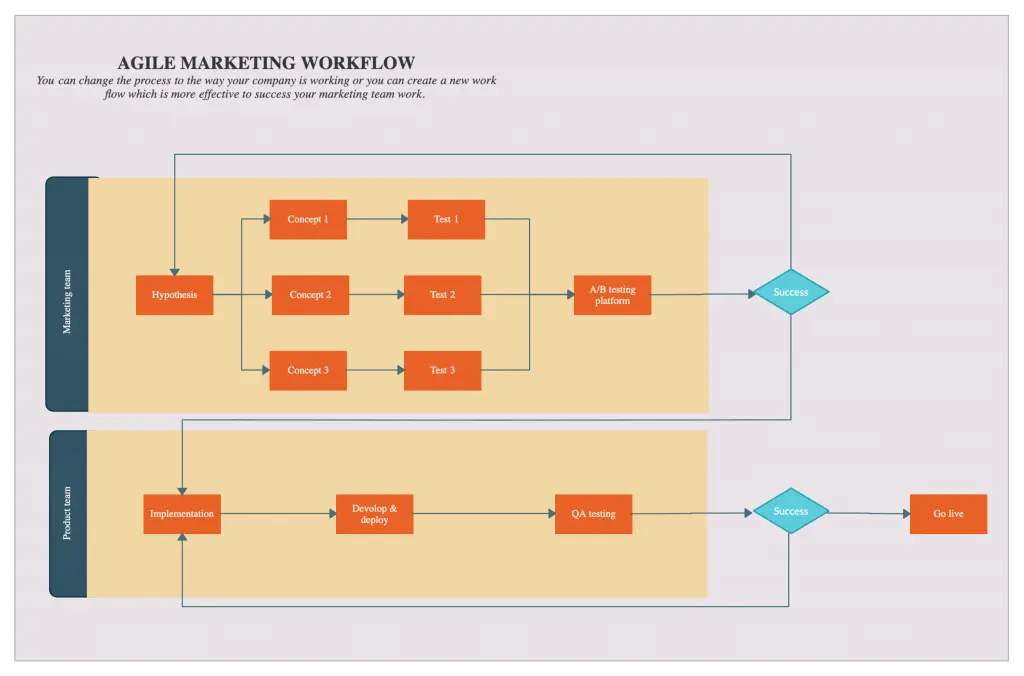

Agile business process mapping is an iterative approach to documenting, analyzing, and improving how work moves through an organization. It is not a separate diagramming standard. Teams may use flowcharts, BPMN, value stream maps, or another suitable notation while applying small experiments, frequent feedback, and regular retrospectives.
A useful agile process map identifies activities, accountable owners, decisions, handoffs, exceptions, systems, and supporting information. Stakeholders review it together, process owners incorporate agreed updates, and the current version remains connected to relevant context. This makes the map a living operational reference while preserving necessary controls.
Agile Business Process Mapping Vs Traditional Business Process Mapping
| Aspect | Agile Business Process Management (BPM) | More plan-driven Business Process Management (BPM) |
|---|---|---|
| Planning horizon | Uses shorter planning and improvement cycles. | Uses a defined plan and longer change cycle. |
| Response to change | Tests and validates incremental changes as needs evolve. | Routes changes through established governance and release procedures. |
| Validation | Uses frequent stakeholder feedback and outcome measures. | Uses scheduled reviews, audits, or stage gates. |
| Documentation | Maintains process documentation as the operating process changes. | Updates controlled documentation at defined milestones. |
| Best fit | Useful for variable processes where learning is frequent. | Useful for stable, regulated, or high-risk processes requiring stronger controls. |
| Collaboration | Brings owners, participants, and stakeholders into recurring reviews. | Uses defined roles and responsibilities within a formal governance model. |
Neither approach is universally better. Agile BPM emphasizes shorter learning cycles, while plan-driven BPM emphasizes predictability and control. The appropriate choice depends on process risk, regulatory obligations, variability, and the cost of change.
Techniques such as value stream mapping can help either approach identify delays, rework, and weak handoffs. In an agile setting, teams use that evidence to prioritize a small improvement, define a success measure, test the change, and update the process documentation after validation.
Implementing agile process mapping requires more than drawing a workflow. Teams need a clear process owner, a baseline, a review cadence, and a controlled way to capture feedback and maintain the current process reference:
The Principles of Agile Business Process Mapping
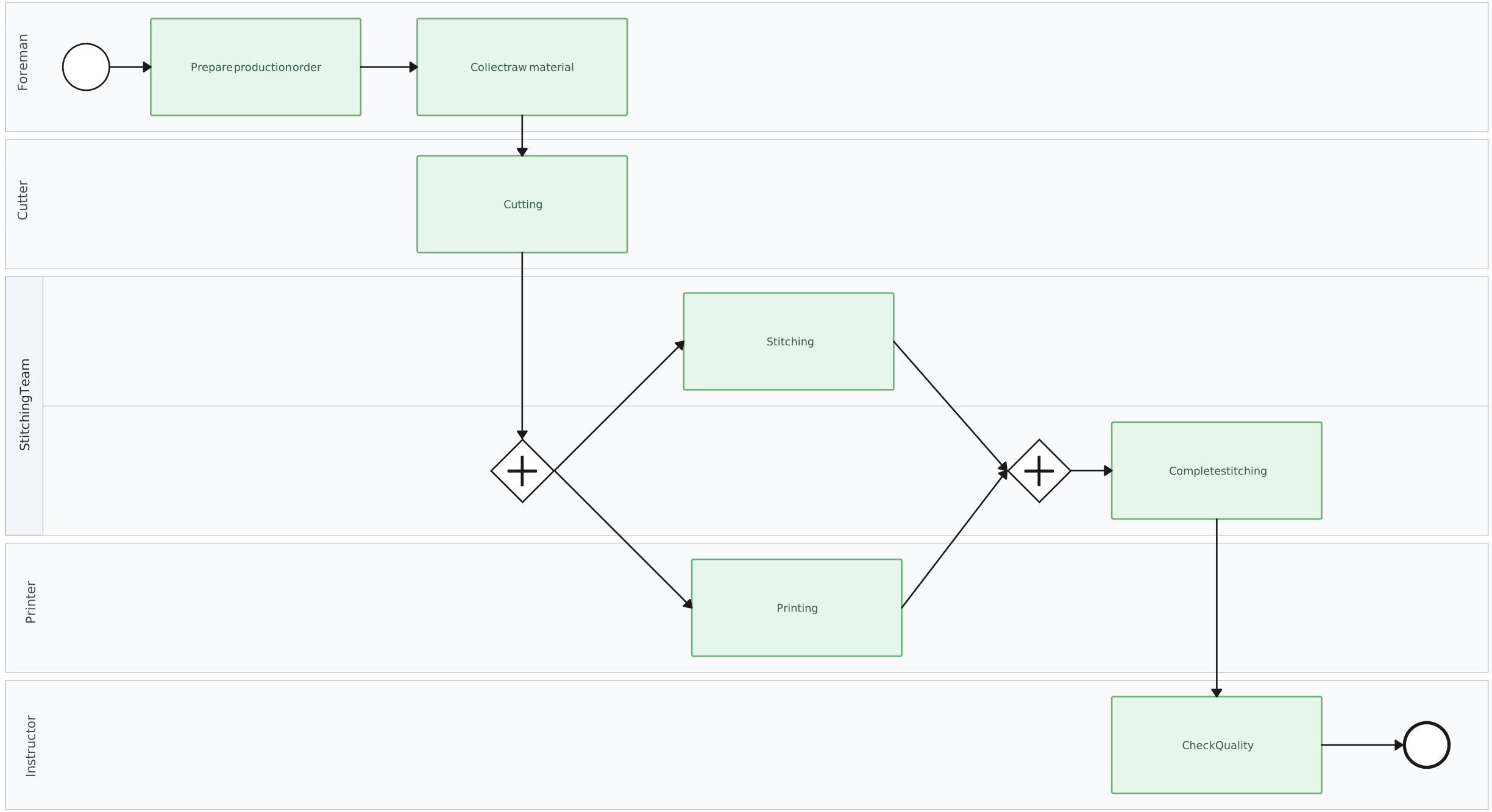
Agile BPM uses iterative discovery and review to improve a process without abandoning necessary governance. The following principles help teams learn from operational evidence, involve the right stakeholders, and keep documentation aligned with the process people actually follow:
Adaptive Knowledge Integration
When a process encounters an exception, capture what happened and why before changing the standard workflow. Participants can add contextual notes or comments, and the accountable process owner can validate the proposed update with affected stakeholders. Once the operating change is agreed and implemented, update the living process documentation so future users have the current guidance.
Complex Task Management
Complex processes become easier to analyze when they are decomposed into meaningful subprocesses. Preserve connections between overview and detailed flows, and document the owner, inputs, outputs, decisions, exceptions, and handoffs for each relevant part. This helps specialists contribute without losing the end-to-end process context.
Iterative Improvement Cycles
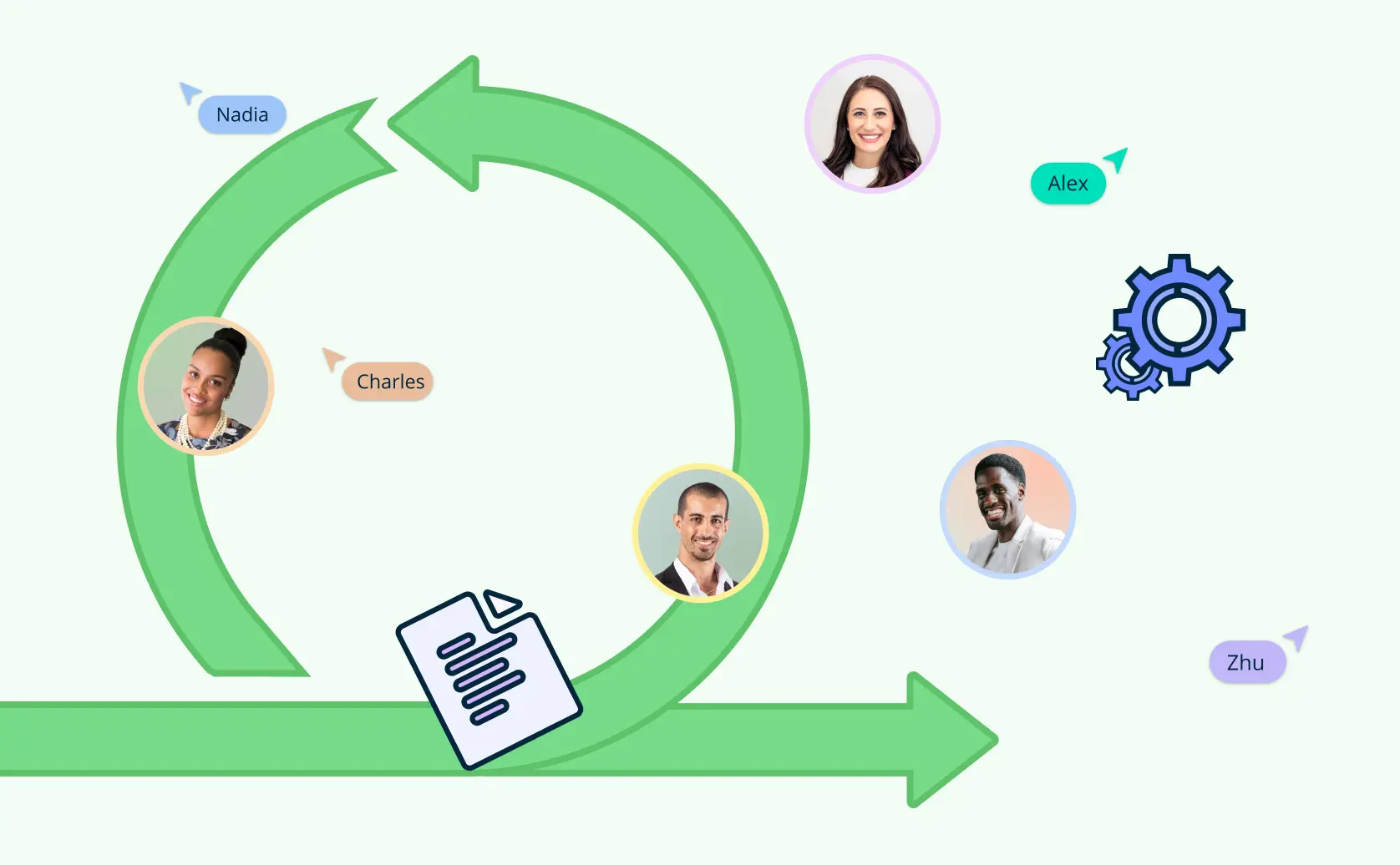
Agile BPM organizes improvement into repeatable learning cycles:
1. Assessment phase
- Review the current process and baseline measures.
- Identify bottlenecks, errors, delays, and weak handoffs.
- Collect feedback from participants and customers.
2. Experiment phase
- Select a small, controlled change and define the expected result.
- Assign an owner and communicate the change.
- Test it within appropriate operational and compliance controls.
3. Review phase
- Compare results with the baseline.
- Discuss feedback and unintended effects.
- Adopt, revise, or stop the change, then update the process documentation accordingly.
This cycle supports continuous improvement without suggesting that a diagram edit automatically changes or executes the operational process.
The Key Steps of Agile BPM
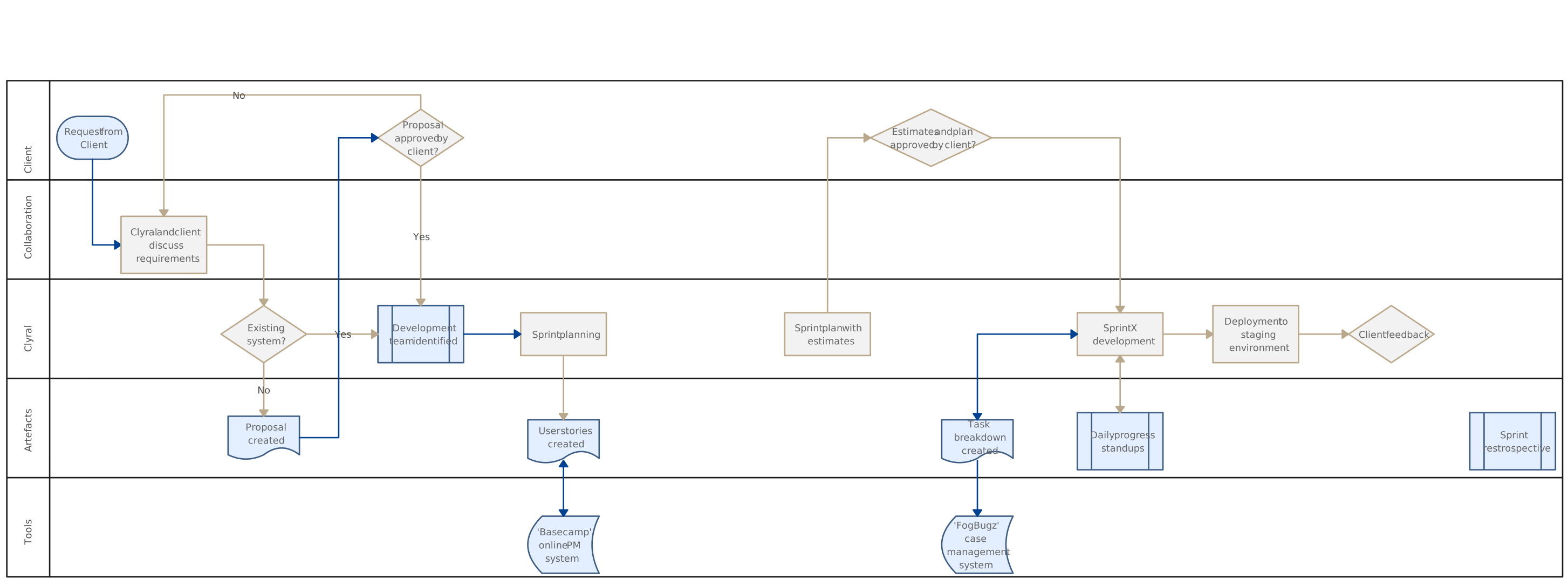
Step 1. Identify and Map Existing Workflows
Begin by thoroughly analyzing your current workflows to gain insights into the existing processes. This involves outlining every task, defining roles, and understanding the flow of work from initiation to completion. This mapping lays the foundation for recognizing inefficiencies and potential improvements.
- Task Breakdown: Set clear objectives for each task and break them down into manageable steps. This detailed breakdown provides clarity and sets a baseline for comparison with future improvements.
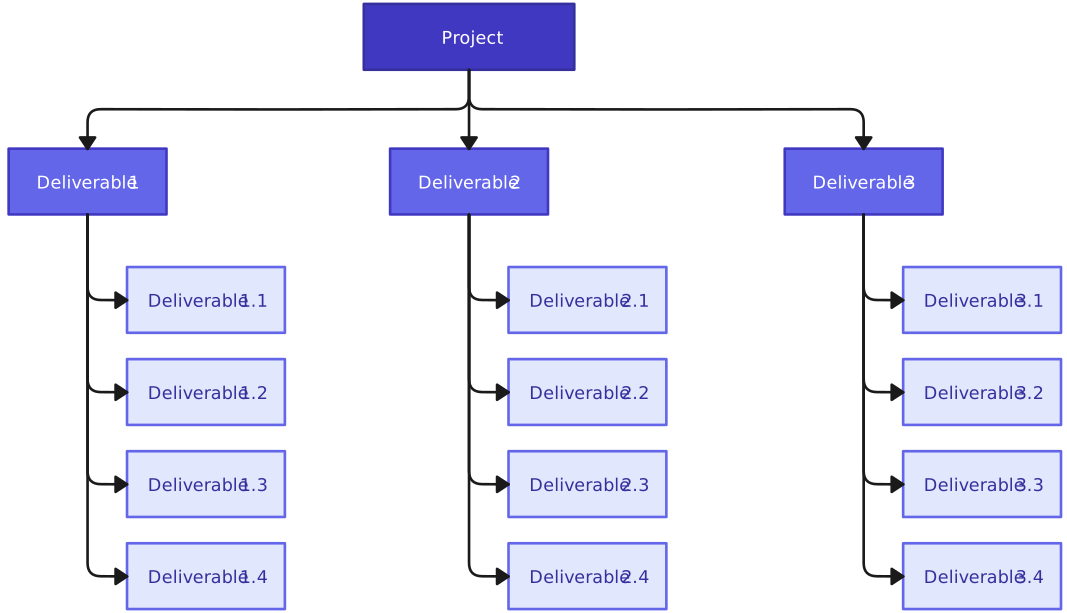
- Role Clarification: Clearly define who is responsible for each part of the process, ensuring everyone understands their responsibilities and how they contribute to the workflow.

Step 2: Map the Value
Value stream mapping is a crucial step in refining your agile workflow diagram. This technique focuses on eliminating waste and optimizing processes by visualizing each step’s contribution to the end product. By identifying non-value-added activities, teams can streamline efforts and improve the overall efficiency of the agile workflow.
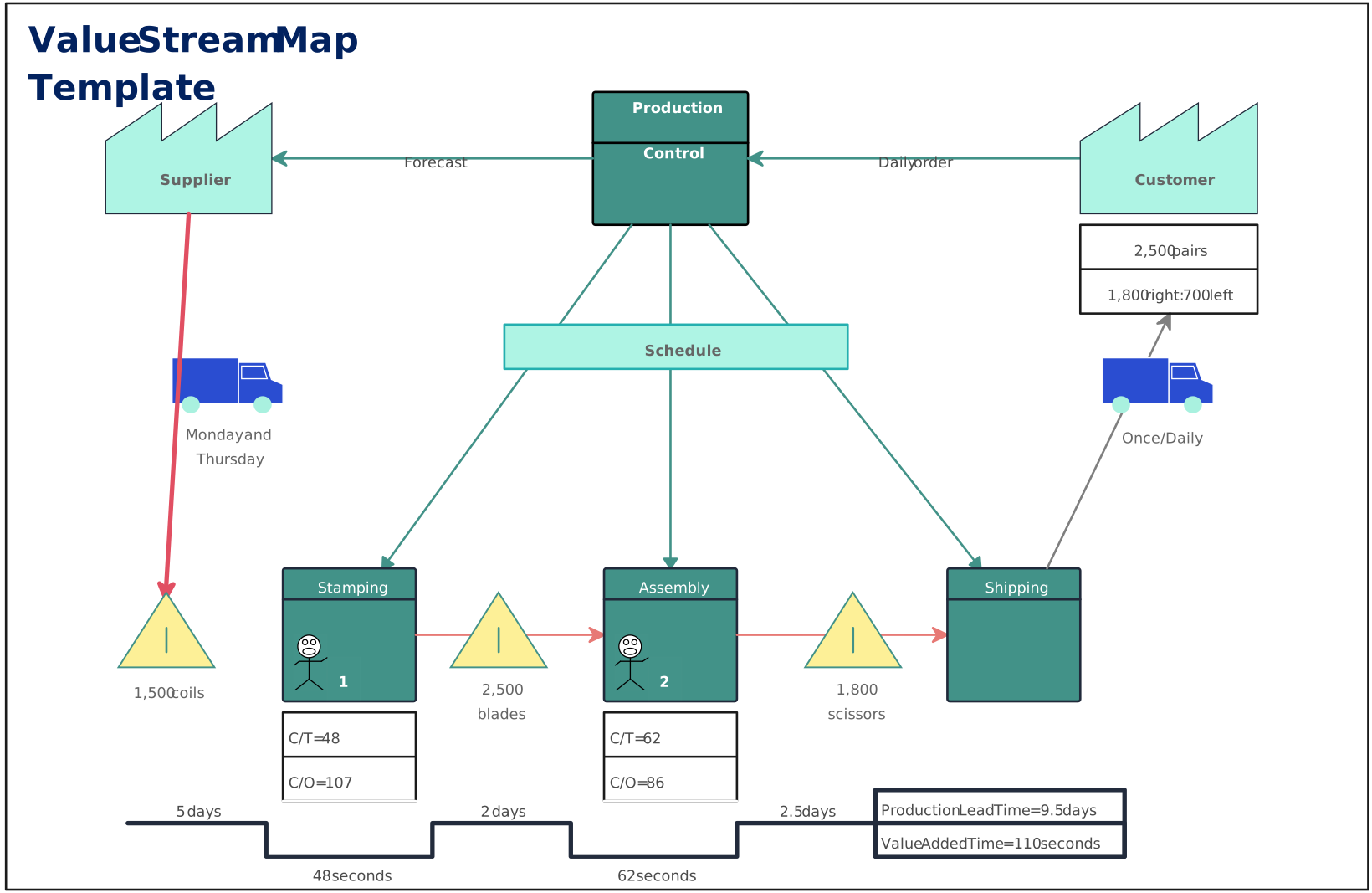
Current State Analysis: Map out the current workflow to pinpoint areas where value is added and where improvements can be made.
Future State Planning: Draft an ideal workflow that minimizes inefficiencies and maximizes productivity, providing a clear vision for process transformation.
Step 3: Implement Feedback Mechanisms
The agile process mapping implementation focuses on the gradual integration of changes to avoid overwhelming teams and to manage resources effectively. Agile iterations or cycles allow for a step-by-step approach in adopting new practices, ensuring adaptability and scalability.
- Feedback Loops: Establish regular review sessions to gather input from team members. Their insights are invaluable in refining processes and implementing changes effectively.

- Continuous Experimentation: Encourage testing of new practices within the workflow to see which methods yield the best results, fostering a culture of ongoing improvement.
Integrating these steps in your agile process mapping not only boosts efficiency but also cultivates an environment that thrives on adaptability and continuous enhancement. A well-designed agile workflow example would demonstrate increased transparency, a prerequisite for teamwork and client satisfaction. Embrace these strategies to transform your project management into a more dynamic and responsive system.
Effective team collaboration is the backbone of organizational success, especially in a fast-paced and dynamic environment. Agile process mapping plays a crucial role in enhancing team collaboration by providing a clear and adaptable framework for projects across sectors. This methodology fosters communication, reduces roadblocks, and ensures every member is aligned with the project goals.
Helpful Resources
Comprehensive software solutions for visually documenting and analyzing business processes. Allows you to create detailed process maps, flowcharts, and workflows.
Explore methods and visual tools for documenting, reviewing, and improving business processes.
Intuitive diagramming software for creating high-quality flowcharts, process diagrams, and other visual representations of workflows and procedures.
Key Benefits of Agile Business Process Mapping
Agile Business Process Mapping offers a range of transformative benefits that empower organizations to thrive in today’s dynamic business landscape. Let’s explore the key advantages this approach provides:
Flexibility
Agile Business Process Mapping is inherently designed to adapt to changing requirements, market conditions, and organizational priorities. By embracing an iterative mindset, teams can quickly pivot their processes in response to new challenges or opportunities, ensuring the business remains agile and resilient.
Continuous Development
Rather than adhering to rigid, linear workflows, Agile Business Process Mapping encourages a culture of continuous improvement. Teams can constantly analyze their processes, identify areas for enhancement, and implement incremental changes on an ongoing basis. This iterative development cycle leads to optimized efficiency and responsiveness.
Breaking Organizational Silos
Agile Business Process Mapping fosters cross-functional collaboration, breaking down traditional organizational silos. By involving diverse team members from different departments, businesses can leverage a broader range of expertise and perspectives to enhance their processes. This collaborative approach leads to more holistic and user-centric outcomes.
Improving Production Time
The adaptability and continuous improvement nature of Agile Business Process directly translate to faster turnaround times. Teams can quickly respond to changing priorities, address bottlenecks, and streamline workflows, ultimately reducing the time it takes to deliver products or services to customers.
Better Collaboration
Agile methodologies place a strong emphasis on effective team collaboration. Techniques like daily stand-ups, Kanban boards, and retrospective meetings enhance communication, alignment, and collective problem-solving, leading to more successful project outcomes.
Faster Time to Market
By optimizing processes, addressing inefficiencies, and incorporating customer feedback in an iterative manner, Agile Business Process Mapping enables organizations to bring their offerings to market more quickly. This competitive advantage is crucial in fast-paced, dynamic industries where responsiveness can make all the difference.
Together, these benefits of Agile Business Process Mapping empower organizations to navigate uncertainty, foster innovation, and maintain a strong competitive edge in their respective industries. As businesses continue to face evolving challenges, Agile BPM emerges as a transformative approach to streamline operations and deliver superior value to customers.
Best Practices to Transition to Agile Business Process Management
As businesses navigate the increasingly dynamic and competitive landscape, traditional Business Process Management (BPM) approaches often struggle to keep pace with evolving demands. To overcome this challenge, organizations should consider integrating Agile methodologies into their BPM framework, unlocking the benefits of enhanced flexibility, responsiveness, and continuous improvement.
Assess Current BPM Practices
The first step in the Agile Business Process Mapping transformation journey is to thoroughly evaluate your organization’s existing BPM processes and capabilities. Identify areas where rigidity or inefficiencies are hindering your ability to adapt to changing market conditions and customer needs. This assessment should involve cross-functional collaboration to gain a comprehensive understanding of pain points across the business.
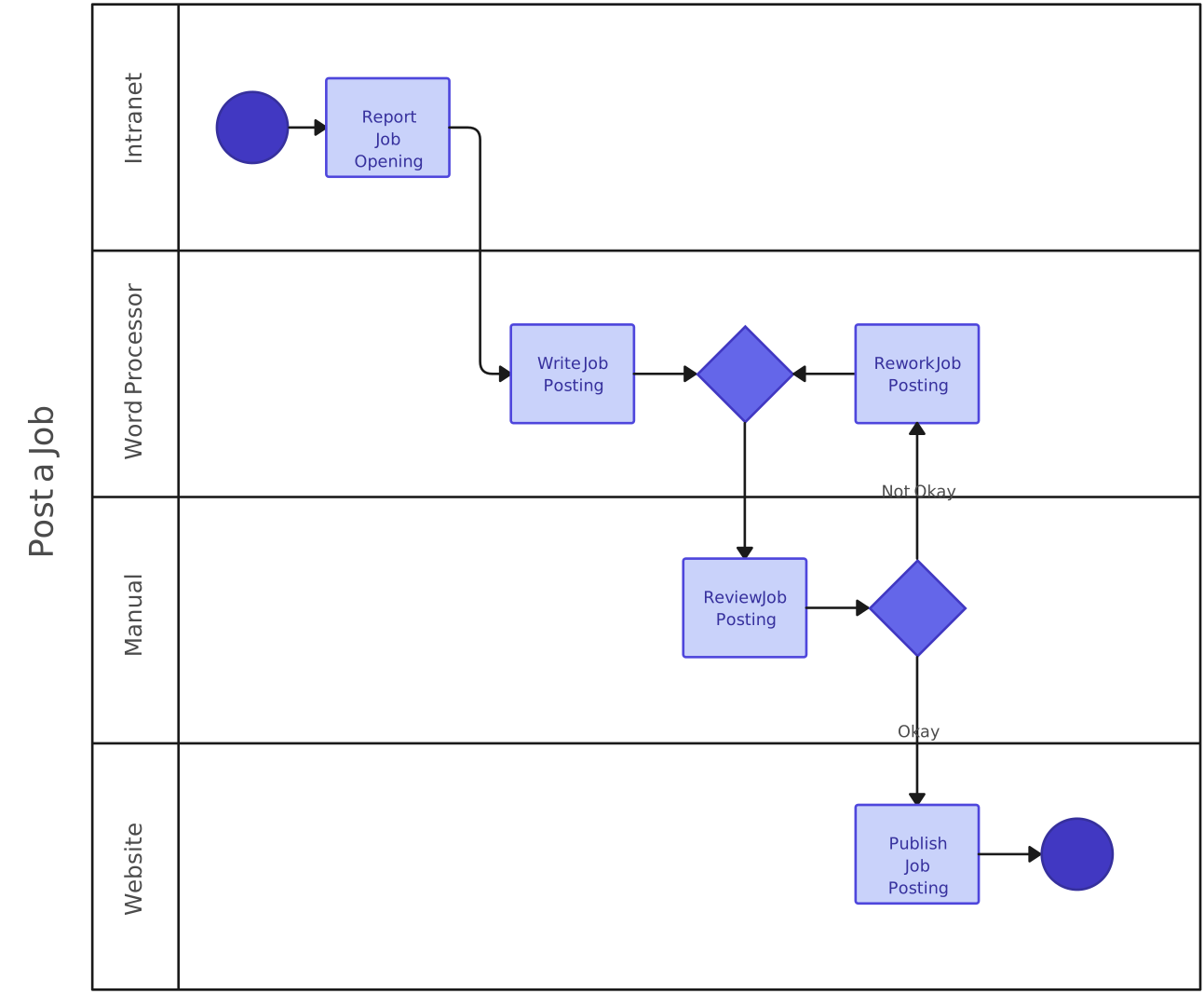
Transitioning to Agile BPM requires a cultural shift that embraces the core principles of Agile: flexibility, iterative development, and continuous feedback. Encourage your teams to adopt an Agile mindset, fostering a collaborative environment where process improvements are welcomed and implemented swiftly.
Implement Agile BPM Practices
Once the groundwork has been laid, begin integrating Agile Business Process Mapping practices into your organization’s workflow. This may involve:
1. Process Mapping and Optimization
Create visual process diagrams using tools like Creately to gain clear visibility into your current workflows.
Collaborate with cross-functional teams to identify areas for improvement and optimization.
Prioritize process enhancements based on their potential impact and ease of implementation.
2. Iterative Process Refinement
Embed the optimized processes into your Agile project management framework, empowering teams to execute and refine them.
Establish regular retrospective sessions to gather feedback and insights from frontline employees.
Respond quickly to these feedback loops, making incremental changes to processes as needed.
3. Collaborative Approach
Break down organizational silos by encouraging cross-functional collaboration between process owners and Agile teams.
Leverage visual collaboration features, such as real-time editing and in-context commenting, to facilitate seamless knowledge sharing.
Cultivate a culture where process improvement is a shared responsibility, not just the domain of a centralized BPM team.
Continuously monitor the performance of your Agile BPM implementation, tracking key metrics such as process efficiency, responsiveness, and team collaboration. Use these insights to further refine your processes, ensuring your organization maintains a competitive edge in the face of dynamic market conditions.
By embracing Agile BPM, your organization can unlock a new level of operational agility, empowering teams to adapt, innovate, and deliver exceptional value to your customers. This transformation may require a shift in mindset and practices, but the long-term benefits of increased efficiency, responsiveness, and collaboration will be well worth the effort.
Incorporating Agile Tools into BPM
Agile environments require unique collaboration techniques to navigate ever-evolving tasks and workflows effectively:
- Daily Stand-Ups: Encourage team members to share status updates, obstacles, and plans to ensure everyone remains on the same page with daily stand ups.

- Kanban Boards: Utilize visual tools such as Kanban boards to track tasks and offer team members a clear view of project progress, allowing them to adjust their contributions accordingly.
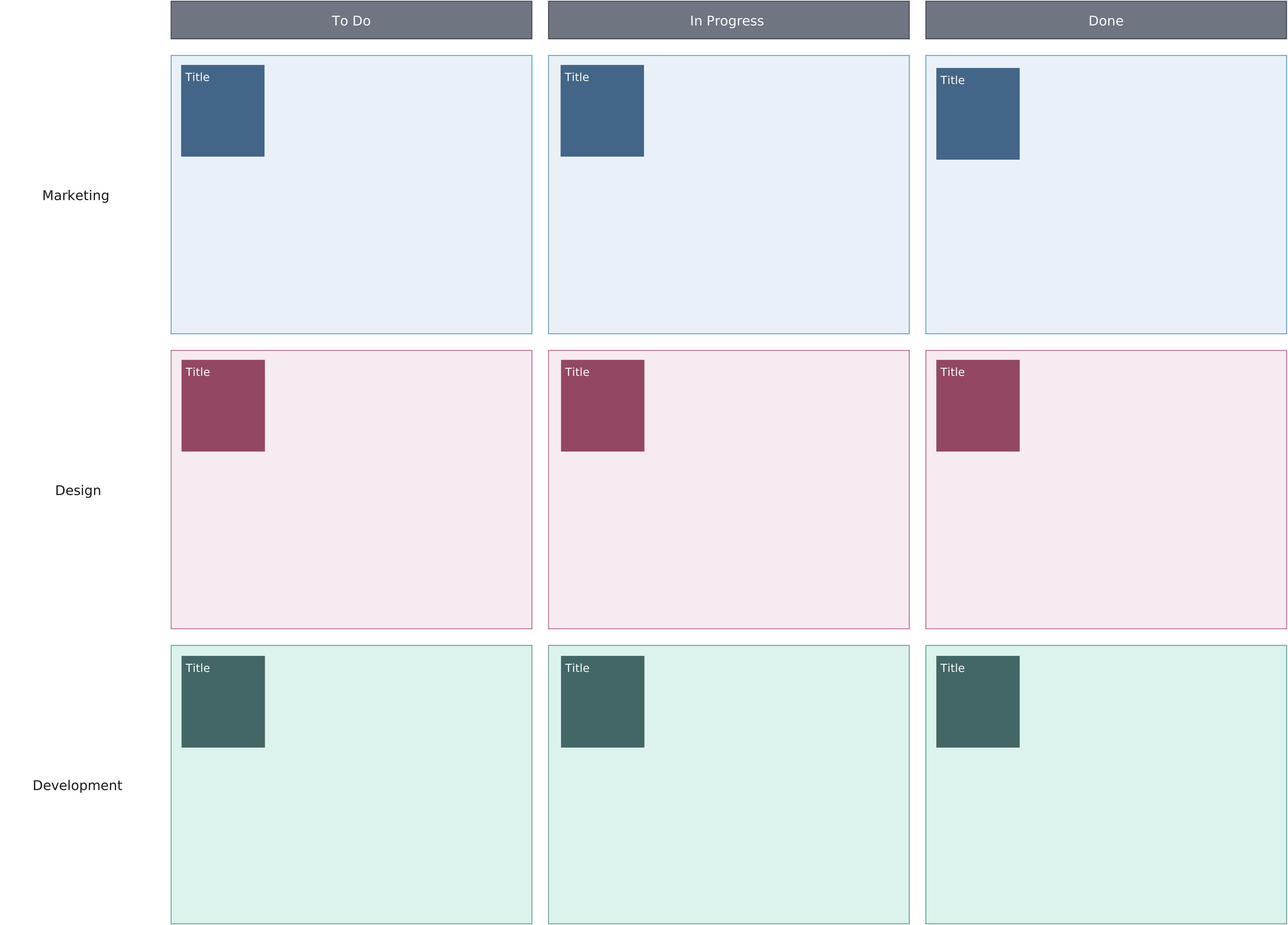
- Retrospectives: Hold regular retrospectives to reflect on completed work, identify learnings, and implement improvements as needed, fostering a culture of continuous growth.
In addition to these techniques, agile process mapping emphasizes transparency and communication across cross-functional teams. By integrating visual process optimization tools within agile projects, teams can discuss strategies and plans in real-time, leading to more informed decision-making.
How Creately Helps in Agile Business Process Mapping
Creately supports agile business process mapping with visual process maps, BPMN 2.0 shapes, and a shared workspace for documenting current- and future-state flows. Teams can show decisions, exceptions, owners, and handoffs clearly, then connect an overview map to detailed subprocess diagrams.
Document ownership and process data: Add structured properties such as owner, status, duration, trigger, SLA, systems, and tags to relevant process objects. This keeps operational context visible without turning the diagram into an execution or task-management system.
Keep supporting context connected: Attach notes, links, and files to relevant shapes so SOP guidance and reference material remain close to the workflow they explain.
Review maps collaboratively: Contributors can edit a workspace in real time and use contextual comments to discuss specific parts of a process. Process owners can evaluate feedback and update the map after an operational change is agreed and implemented; this does not imply formal approval states.
Maintain living process documentation: Revisit maps at the chosen review cadence and update them as the real process changes. Linked diagrams help teams move between high-level and detailed views while preserving context.
Create an editable first draft with AI: Creately AI can turn a natural-language process description into an editable flowchart with decisions and flow. Subject-matter experts should validate the draft, add exceptions and ownership details, and confirm it reflects the actual process.
Explore Creately’s process mapping software to document workflows, clarify handoffs, connect supporting context, and review improvements with stakeholders.
Agile business process mapping gives teams a disciplined way to learn and improve in smaller increments. Start with an accurate current-state map, clear ownership, visible handoffs, and a measurable objective. Gather contextual feedback, test changes within appropriate controls, and update the living documentation only when the operating process changes. Used this way, agile practices complement BPM governance and help stakeholders make better-informed improvement decisions.
Sources
- Principles behind the Agile Manifesto
- Business Process Model and Notation (BPMN) 2.0.2 specification
- Lean Enterprise Institute: Understanding the Fundamentals of Value-Stream Mapping