An agile workflow is a repeatable way of moving work from an idea to delivery through small increments, frequent feedback, visible priorities, and regular adaptation. Instead of assuming that requirements will remain fixed, teams inspect progress, update priorities, and improve how work flows. This guide explains how agile workflows compare with predictive approaches, which frameworks and lifecycle patterns teams use, and how to implement and maintain an agile workflow.
Agile vs Traditional Workflows
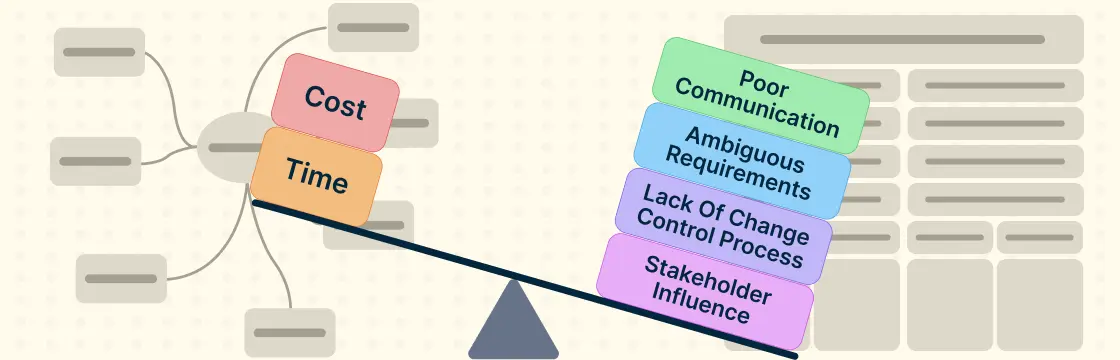
Agile and traditional workflows are not opposites in every situation. Predictive approaches, including Waterfall, usually define more of the scope and sequence upfront and manage changes through formal controls. They can work well when requirements are stable or when work must follow a fixed sequence.
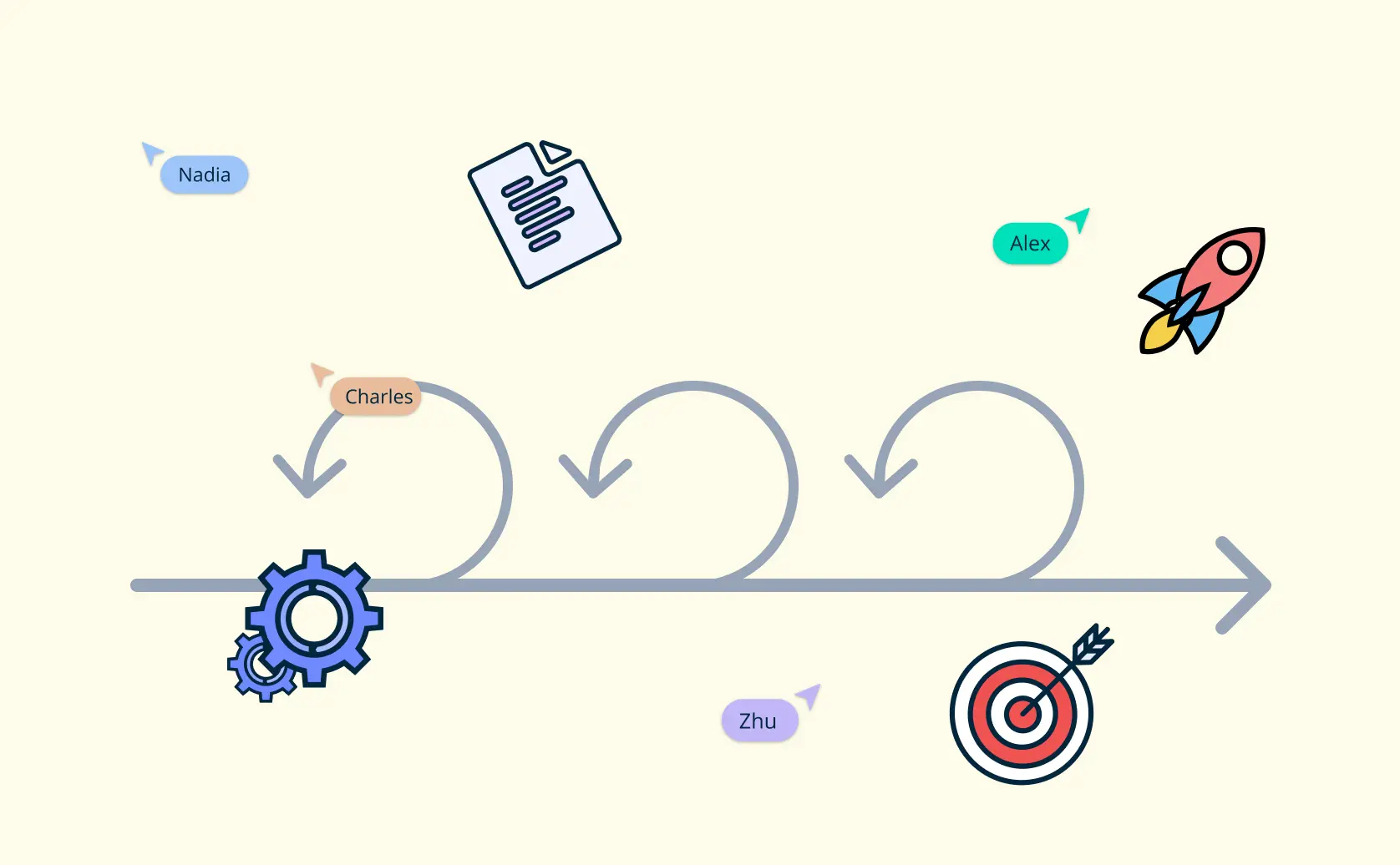
Agile workflows use shorter planning and delivery cycles. Teams review progress frequently, gather feedback, and adjust the backlog or workflow as new information emerges. Scrum commonly organizes work into time-boxed sprints, while Kanban manages work as a continuous flow. Teams can use an iterative process and workflow diagram software to make work stages, handoffs, and feedback loops visible.
| Aspect | Predictive workflow | Agile workflow |
|---|---|---|
| Planning | More scope and sequencing defined upfront | Planning revisited as the team learns |
| Feedback | Often gathered at planned milestones | Gathered frequently throughout delivery |
| Change | Evaluated through change-control procedures | Incorporated through backlog and workflow updates |
| Delivery | Often released at major milestones | Usually delivered in smaller increments |

Benefits of an Agile Workflow
Flexibility and Adaptability
Agile workflows stand out for their intrinsic flexibility and adaptability, empowering teams to respond swiftly to ever-evolving market demands. Unlike traditional workflows, which often remain hostage to initial plans, agile workflows break down projects into sprints or iterative cycles. This approach allows teams to regularly assess outcomes, incorporate feedback, and adjust strategies as needed. By doing so, businesses can accelerate their adaptation to external changes, ensuring products and services remain aligned with consumer expectations. This dynamic adaptability fosters a competitive edge, facilitating quicker pivots in strategy without being bogged down by procedural red tape.
Improved Collaboration and Communication
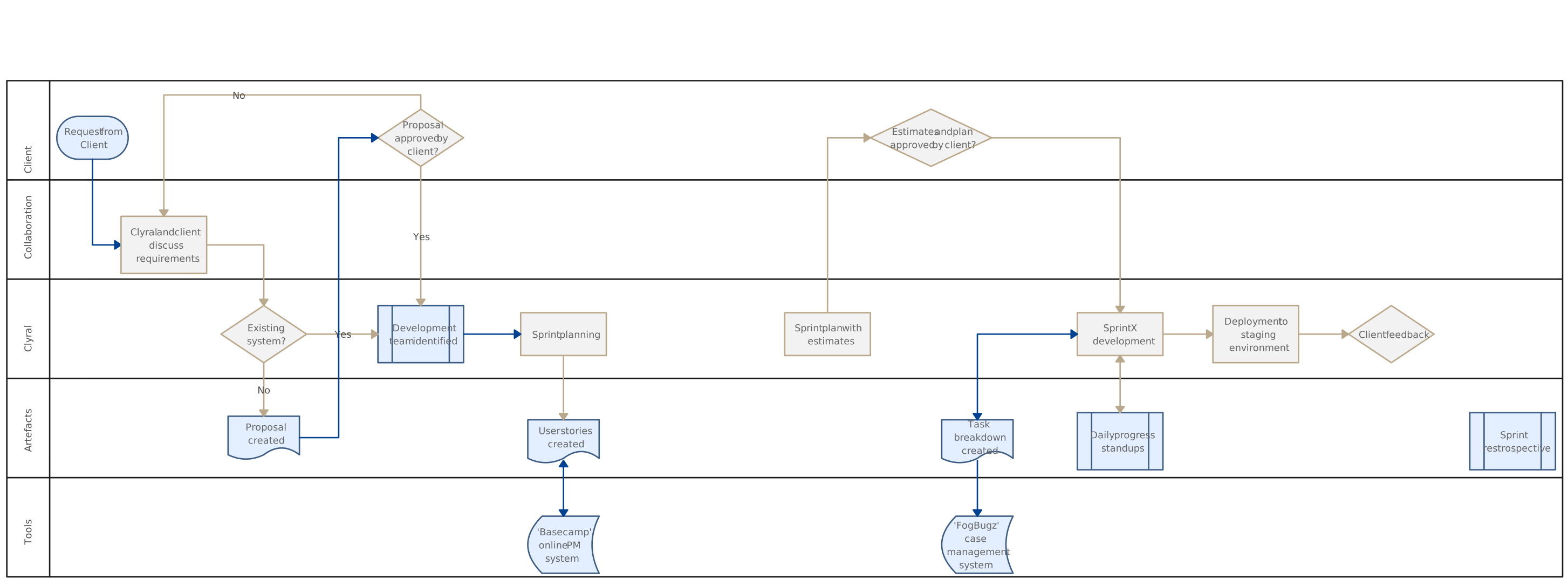
Agile workflows inherently promote robust team collaboration and open communication channels. The iterative nature of agile requires regular interaction between team members, further solidified by events such as sprint planning, daily stand-ups, and retrospectives. These interactions cultivate a culture of transparency and mutual support, allowing members to share ideas and insights more freely. By leveraging tools like Creately, with its visual project management and task management capabilities, teams can collaborate seamlessly, regardless of geographical constraints.
The shared ownership of projects in an agile workflow ensures that teams align around common goals and work collectively towards delivering incremental value. This collaborative spirit not only enhances team morale but also propels innovation, as team members are encouraged to contribute their unique perspectives and skills.
Additionally, agile workflows emphasize stakeholder engagement. Regular feedback loops involve stakeholders at various stages of the project, ensuring that their insights and requirements are integrated early and often. This continuous dialogue with stakeholders helps refine priorities and fine-tune products for maximal customer satisfaction.
Focus on Delivering Customer Value
At the heart of agile workflows lies a commitment to delivering customer-centric value. By iteratively refining products based on stakeholder feedback and market research, agile teams can quickly identify and implement features that resonate with consumer needs. This iterative feedback mechanism ensures that resources are strategically allocated towards initiatives that truly enhance product offerings, increasing customer satisfaction and loyalty over time.
Effective Task Prioritization
The use of dynamic backlog management in agile workflows permits teams to prioritize tasks effectively. By consistently evaluating project goals and stakeholder feedback, teams can maintain a well-ordered product backlog that highlights high-impact tasks. This prioritization aids in optimizing resource allocation and minimizing waste, thereby enhancing overall project efficiency.
Creately offers tools that facilitate agile workflows, ensuring that projects run smoothly from conception to execution. With features like Kanban boards and visual prioritization, Creately simplifies task management and fosters an environment of innovation and collaboration. Employing these tools ensures agile workflows remain streamlined, adaptive, and poised for success in today’s fast-paced market landscape.
The Types of Agile Workflows
Agile teams use several frameworks and methods to organize work. Scrum, Kanban, Feature-Driven Development (FDD), Crystal, and Extreme Programming (XP) differ in cadence, roles, and technical practices, so teams should choose an approach that fits their work rather than treating them as interchangeable workflow types.
Scrum:
Scrum organizes complex work around fixed-length sprints, a Product Goal, a Sprint Goal, and a usable Increment. The Daily Scrum is a short planning event for Developers, while Sprint Reviews and Retrospectives support feedback and improvement. Learn more about Scrum and explore practical examples in our guide to agile templates.
Kanban: Visualizing Continuous Flow
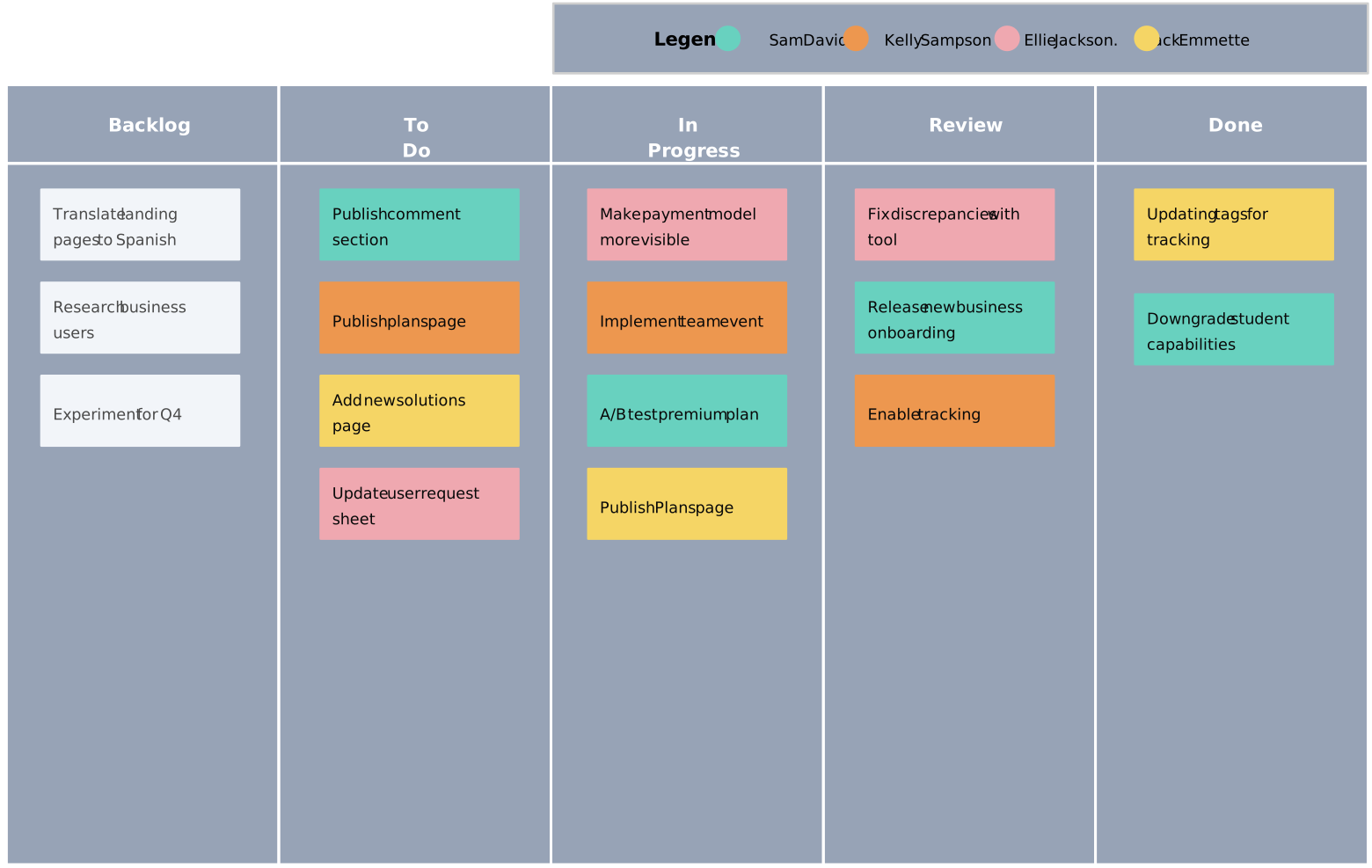
Kanban visualizes work as it moves through defined stages. Teams use explicit workflow policies, a pull system, and work-in-progress limits to control demand, expose bottlenecks, and improve flow. Unlike Scrum, Kanban does not require time-boxed sprints.
Feature-Driven Development (FDD):
FDD is a software-development method designed around building and delivering small, client-valued features. It combines domain modeling, feature lists, planning by feature, and short design-and-build cycles. It is most relevant to larger software projects that benefit from feature-based planning and progress tracking.
Crystal Methodology:
Crystal is a family of agile methods tailored to factors such as team size and system criticality. It emphasizes people, communication, frequent delivery, reflection, and adapting the method to the project context instead of imposing one uniform process.
Extreme Programming (XP):
XP is a software-development method focused on technical quality and responsiveness to changing requirements. Common practices include pair programming, test-driven development, continuous integration, small releases, and frequent customer feedback.
Each method has different strengths. Evaluate the nature of the work, team size, delivery cadence, regulatory needs, and feedback requirements before selecting or combining practices.
The Phases of Agile Workflow
There is no single lifecycle used by every agile team. One common agile project lifecycle groups work into the following phases:
- Concept: Define the problem, desired outcome, key stakeholders, and initial measures of value.
- Inception: Form the team, clarify the initial scope, identify major risks, and create a starting roadmap or backlog.
- Iteration: Deliver and review small increments of work. Feedback informs backlog refinement and the next planning cycle.
- Release: Make a validated increment available to users or stakeholders, then monitor outcomes and collect feedback.
- Retirement: Withdraw or replace a product, service, or workflow responsibly, preserving lessons and addressing migration or support needs.
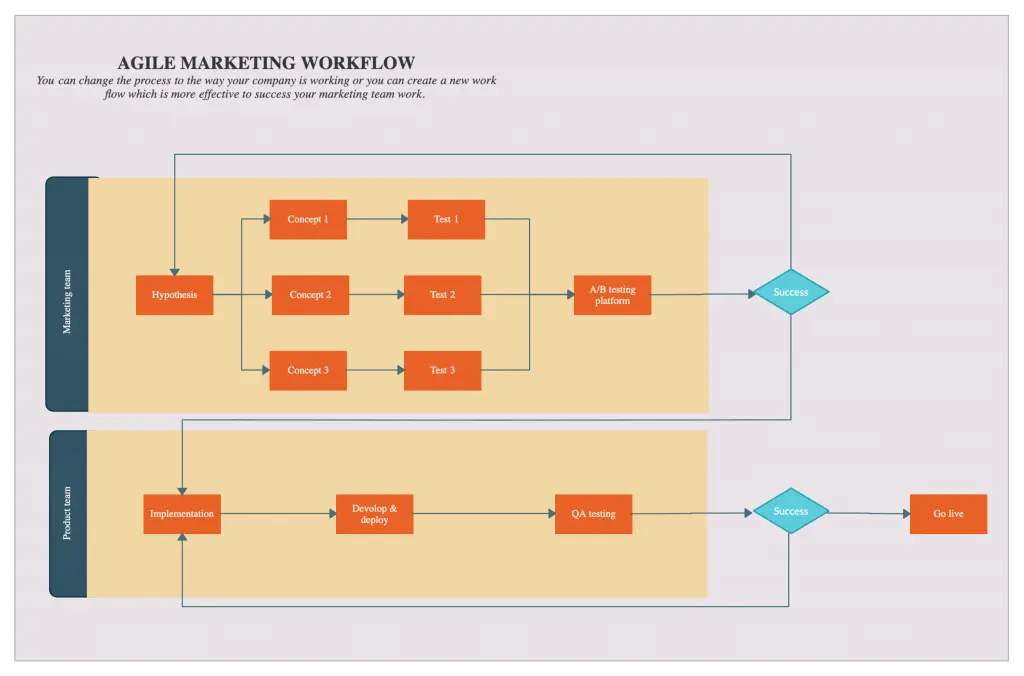
Teams may name or combine these phases differently. What matters is maintaining short feedback loops and clear ownership as work moves from discovery through delivery and eventual retirement. Creately templates such as the Agile Marketing Workflow and roadmap maker can help teams visualize this lifecycle.
How to Implement an Agile Workflow
Choosing the Right Agile Framework
Select a framework or set of practices that fits the team’s work, delivery cadence, dependencies, and feedback needs. Scrum provides defined accountabilities and time-boxed events, while Kanban focuses on visualizing and improving continuous flow:
Scrum: Scrum is ideal for projects with well-defined goals and frequent feedback cycles. It breaks work into “sprints”—short, time-boxed cycles (typically 2-4 weeks) where teams complete and review specific tasks. Scrum’s structured approach works well for teams that thrive on routine check-ins and clear role assignments (e.g., Product Owner, Scrum Master, team members) to keep everyone aligned.
Kanban: This framework emphasizes a continuous workflow without predefined time frames, focusing on visual task progression using a Kanban board. By setting work-in-progress (WIP) limits, Kanban helps manage workload and improve efficiency, making it ideal for teams that need real-time adaptability.
Feature-Driven Development (FDD): Best for larger projects with an emphasis on specific feature completion, FDD offers a structured yet adaptive approach, breaking down development into deliverable features that enhance customer value.
When choosing a framework, consider your team’s experience with agile practices, communication needs, and the complexity of your project. A well-chosen framework will guide your workflow, setting the pace for agile workflows.
Planning and Prioritizing the Backlog
The next critical step is building and maintaining a product backlog. This prioritized list of tasks, features, and requirements serves as the foundation for planning each sprint or work cycle:
Identify Key Tasks and Features: List out essential features and tasks aligned with project goals and customer requirements. Clearly describe each item to avoid ambiguity during implementation.
Use Backlog Management Tools: Tools like a Product Backlog Template or Creately’s Kanban board can help organize and prioritize items visually. This makes it easier for team members to understand tasks, deadlines, and dependencies.
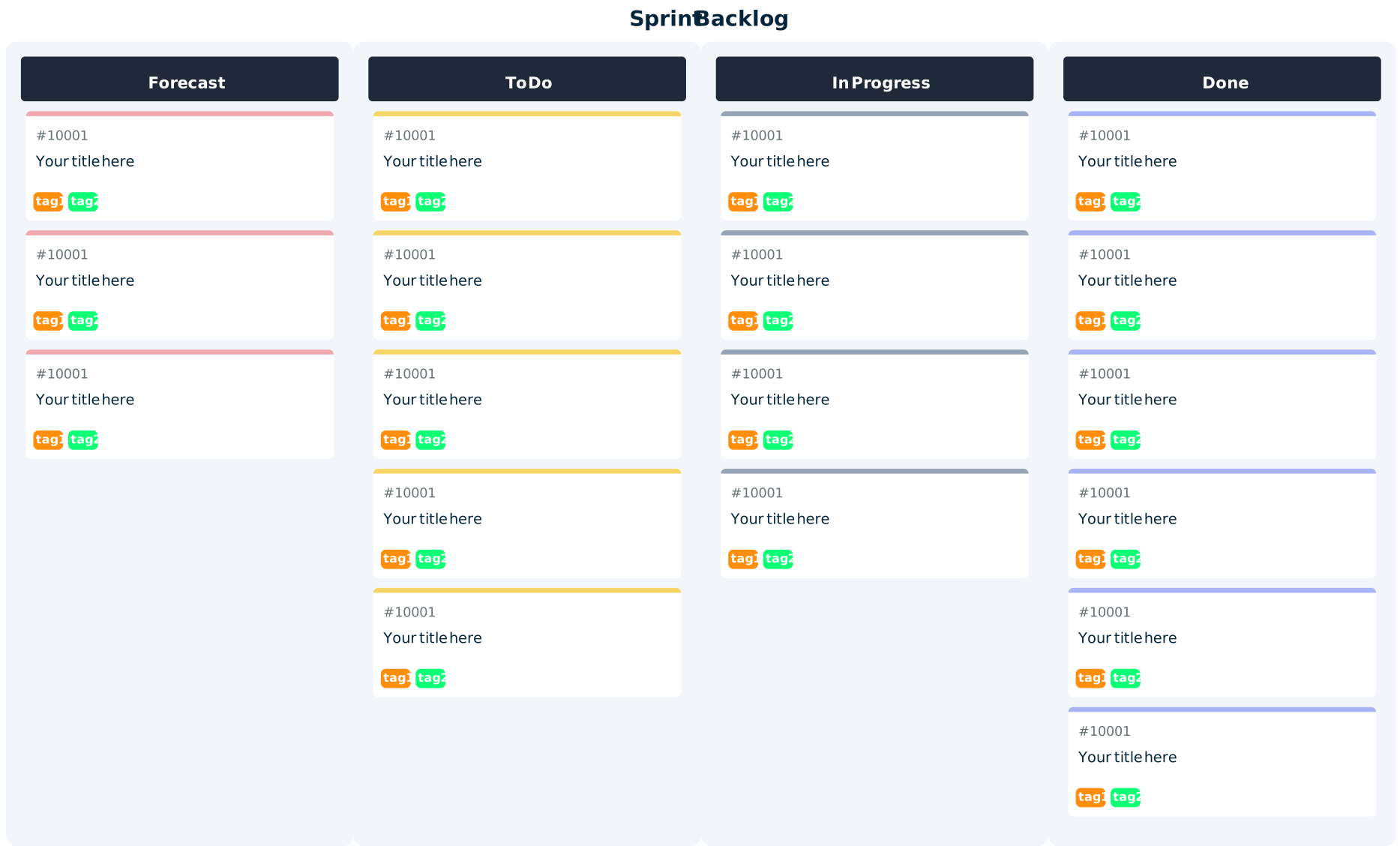
Regularly Update and Refine: The backlog should be a “living document,” regularly updated with new insights, shifting priorities, and customer feedback. Incorporate stakeholder input to align with evolving project objectives and market needs.
Prioritize High-Impact Items: Review and reorder items based on impact and urgency to ensure that resources are allocated effectively to tasks that drive the most value.
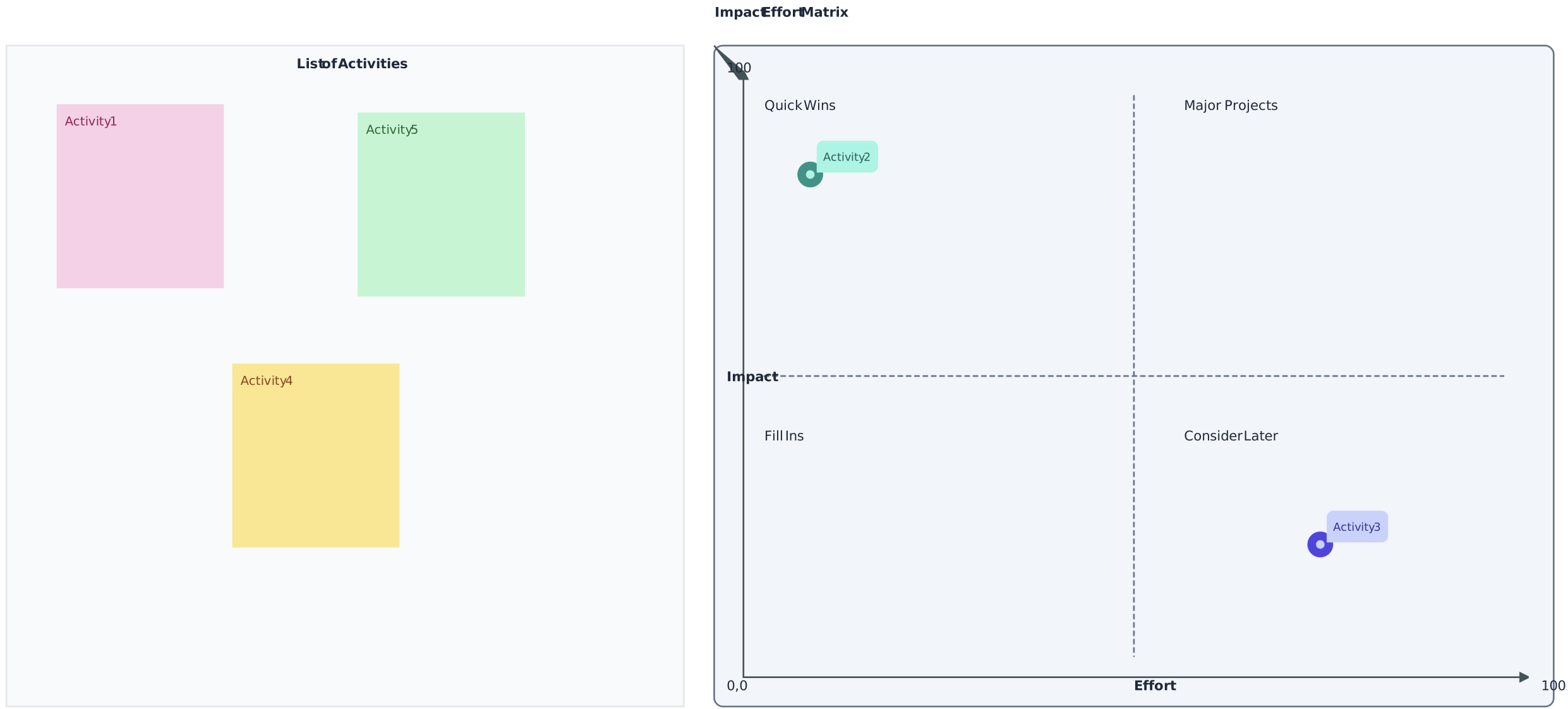
A well-organized backlog keeps teams focused, reduces wasted effort, and supports efficient sprint planning.
Incorporating Feedback Loops and Retrospectives
Feedback loops are crucial to agile workflows, enabling teams to continuously improve and align with project goals:
- Regular Retrospectives: Hold retrospectives at the end of each sprint. This dedicated time allows teams to discuss successes, challenges, and areas for improvement. Use these insights to adjust processes, tools, and team dynamics.

Gather Stakeholder Feedback: Involve stakeholders regularly to ensure the project aligns with their needs. Tools like surveys or sprint reviews can help capture valuable insights that shape upcoming work.
Encourage Open Dialogue: Fostering a culture of open communication ensures that team members feel comfortable sharing constructive feedback. Continuous feedback keeps teams agile and responsive, allowing them to adapt swiftly to evolving project demands.
Retrospectives promote a continuous improvement mindset, helping teams deliver better results with each sprint.
Conducting Effective Sprints
Sprints are the building blocks of agile workflows. To conduct effective sprints, focus on the following:
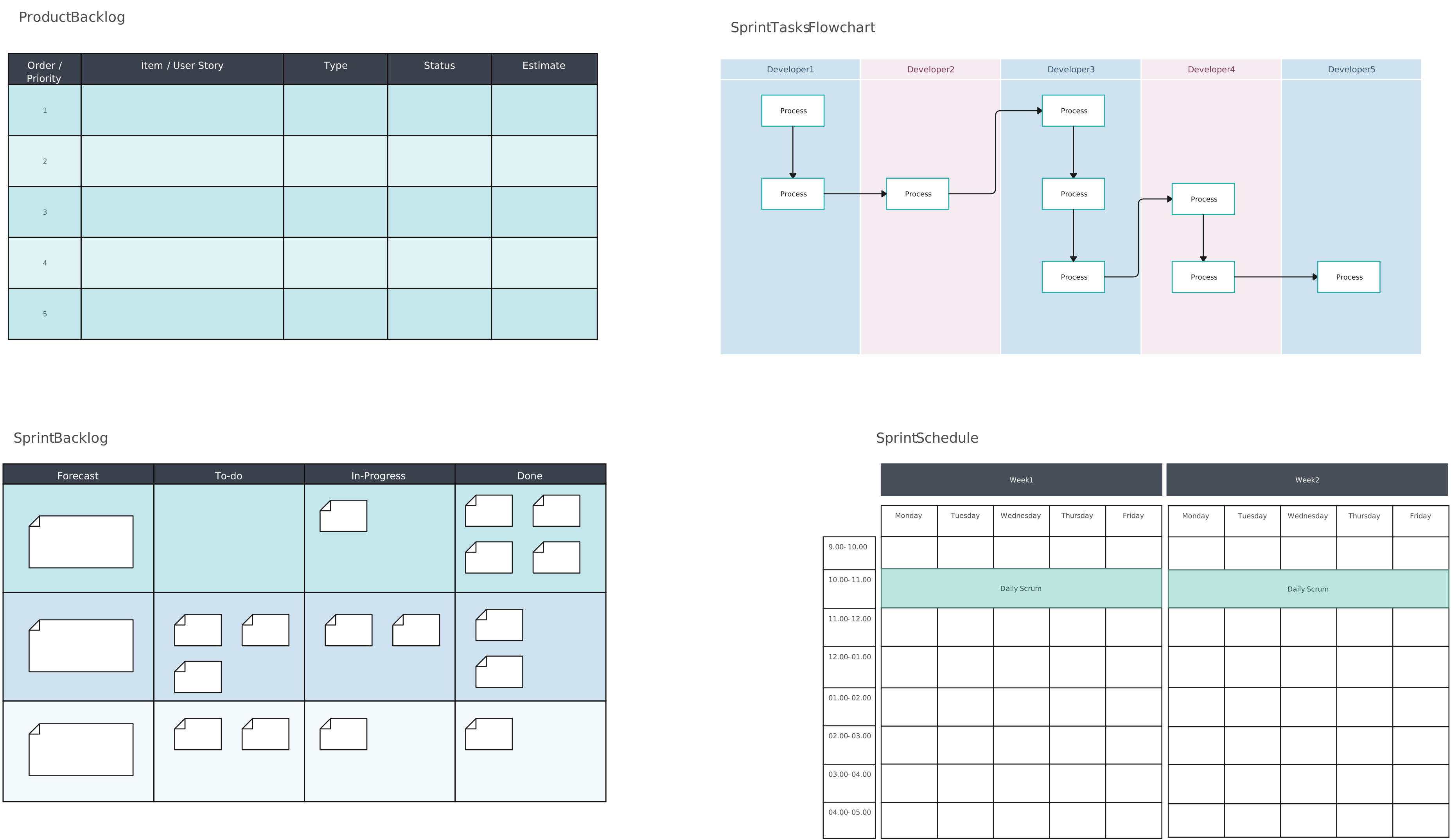
Define Clear Goals: Set specific goals for each sprint. Clear objectives provide direction and motivate teams by showing measurable progress toward project completion.
Assign Roles and Responsibilities: Clarify team roles and delegate tasks to leverage each member’s strengths. Everyone should know their responsibilities, fostering accountability and reducing confusion.

Visualize Tasks with a Product Backlog Board: Use tools like a backlog board to display tasks, deadlines, and current progress. This visual representation boosts team communication and enables early detection of potential issues.
Use WIP limits where appropriate: If the team combines Kanban practices with sprint delivery, set work-in-progress limits to reduce overload and expose bottlenecks. WIP limits are a Kanban practice rather than a required Scrum rule.
Effective sprint planning and execution ensure that each cycle adds meaningful progress and keeps teams aligned.
Continuous Improvement and Feedback Loops
Sustaining an agile workflow requires a commitment to continuous improvement:
Scheduled Review Cycles: Incorporate regular review cycles to evaluate workflow efficiency. During these cycles, assess what’s working well and what needs adjustment, refining the workflow as necessary.
Monitor Workflow Bottlenecks: Identify obstacles that slow progress or create inefficiencies. Addressing bottlenecks promptly prevents issues from compounding and enhances productivity.
Encourage a Culture of Improvement: An agile mindset thrives on continuous learning. Encourage team members to propose and test new ideas, fostering a proactive approach to improvement.
A focus on ongoing assessment and refinement keeps agile workflows effective, allowing teams to stay responsive and competitive.
Helpful Resources
Comprehensive software solutions for visually documenting and analyzing business processes. Allows you to create detailed process maps, flowcharts, and workflows.
Plan Agile Workflows Better With These Visual Templates
Intuitive diagramming software for creating high-quality flowcharts, process diagrams, and other visual representations of workflows and procedures.
Application of Agile Principles Across Industries
Agile principles originated in software development, but their focus on flexibility, continuous improvement, and collaboration has made them valuable across various industries. The versatility of agile principles enables organizations to enhance productivity, respond to market demands, and foster innovation. Here are examples of how teams apply agile principles across sectors:
1. Software Development and IT
Agile principles are foundational in software development, where adaptability and rapid feedback are essential. By implementing frameworks like Scrum and Kanban, software teams deliver products in short cycles, incorporating user feedback into each iteration. This approach helps in managing complex projects, addressing technical issues early, and aligning product functionality with user needs. Agile’s emphasis on collaboration and iterative progress makes it especially effective for launching and refining digital products in a fast-paced environment.
2. Marketing and Advertising
Agile marketing focuses on adapting to consumer trends and responding quickly to campaign performance data. Teams work in “sprints” to test messaging, visuals, and channels, adjusting strategies in real-time based on customer feedback and analytics. Kanban boards or Scrum workflows help marketing teams manage content production, digital campaigns, and product launches more efficiently. Agile principles allow marketers to stay aligned with audience preferences, enhance engagement, and achieve measurable results.
3. Manufacturing and Product Development
Product-development teams can apply agile practices to support rapid prototyping, iterative testing, and faster market deployment. By breaking down development into incremental steps, teams can refine product features based on early user testing, minimizing waste and aligning with lean manufacturing principles. For instance, automotive and electronics industries use agile to test new features and materials, ensuring quality control while meeting changing consumer demands.
4. Healthcare and Pharmaceuticals
In healthcare, agile principles improve patient care, streamline administrative tasks, and support research and development. Healthcare and research teams can use agile practices to coordinate non-clinical work, improve administrative workflows, and organize research activities while following clinical, ethical, and regulatory controls. In pharmaceutical research and healthcare operations, iterative planning can help cross-functional teams review findings, manage dependencies, and improve processes without replacing required scientific or clinical governance.
5. Education and E-Learning
Agile methodologies are helping educators and curriculum designers create and deliver adaptive, student-centered learning experiences. Agile principles promote iterative development of educational content, allowing for rapid updates in response to student feedback and performance data. In e-learning, agile workflows enable the development of interactive modules, assessments, and learning tools that can evolve based on learner needs, so teams can evaluate and improve the learning experience over time.
6. Finance and Banking
Financial institutions are increasingly adopting agile principles to respond to the rapid changes in regulatory requirements, consumer behavior, and technology. Agile helps banking teams develop and deploy digital services like mobile banking, payment solutions, and personalized financial products faster and more efficiently. Finance teams can also use short feedback cycles to improve customer-service and operational processes while preserving security, risk, and compliance controls.
How Creately Enhances Agile Workflow Implementation
Creately’s workflow diagram software helps teams visualize how work moves, clarify ownership and handoffs, and keep review context connected as an agile workflow changes.
1. Real-Time Collaboration for Seamless Communication
Team members can edit a shared workspace together, use comments and @mentions to discuss specific elements, and incorporate feedback into the next update. This supports collaborative review without implying a separate formal approval system.
2. Visual Tools for Simplified Workflow Management
Templates, shapes, smart connectors, Quick Create, and layout assistance help teams map stages, decision points, feedback loops, and dependencies. Teams can document the current workflow, design an improved version, and make handoffs easier to inspect.
3. Kanban Boards for Workflow Visualization
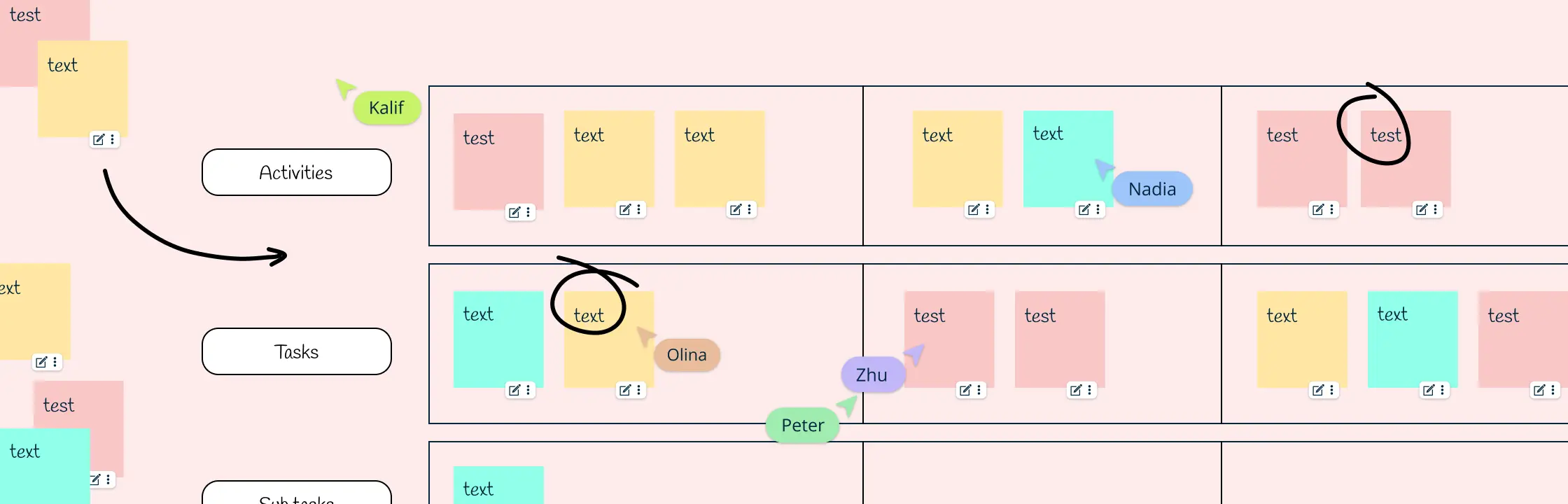
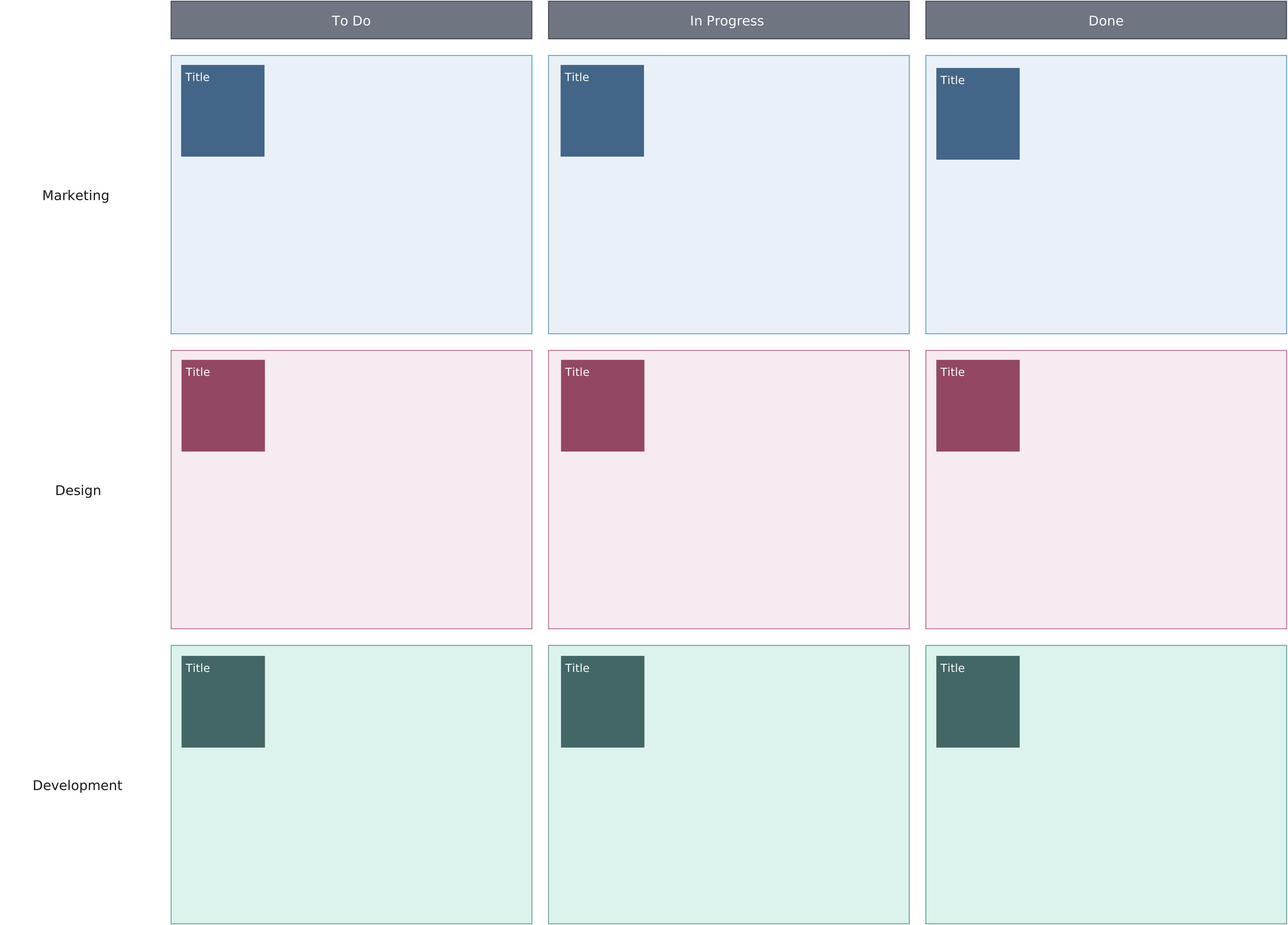
Kanban boards make task status and work stages visible. Teams can organize work into columns, connect cards with owners and relevant details, and use agreed work-in-progress policies to identify congestion and improve flow.
4. Integrating Remote and Hybrid Teams
A shared visual workspace gives distributed teams a common view of priorities, process changes, and dependencies. Notes, links, and files can remain connected to the relevant work instead of being separated from the workflow context.
5. Streamlined Stakeholder Engagement
Stakeholders can review the workflow, leave comments, and use @mentions to direct feedback to the appropriate people. Named owners can then incorporate agreed changes and keep the workflow current.
6. Automated Workflows and Integrations for Enhanced Productivity
Teams can connect owners, status information, notes, links, files, and other structured details to the workflow. Related diagrams can be linked to provide more detailed subprocess context. This turns the workflow into living documentation that supports planning, delivery, onboarding, and continuous improvement.
Treat the workflow as a maintained operational reference: assign ownership, review it at an agreed cadence, and update it when roles, policies, handoffs, or delivery practices change.
Sources
Benitez, Christopher. “A Quick Guide to an Agile Workflow Lifecycle | Nifty Blog.” Nifty Blog | Delivering Our Thoughts and Findings on the Future of Project Management!, 11 Oct. 2021, www.niftypm.com/blog/agile-workflow/.
“What Is Agile Workflow? - ServiceNow.” , 2024. www.servicenow.com/products/strategic-portfolio-management/what-is-agile-workflow.html.
FAQs on Agile Workflows
What are the key benefits of using an agile approach to business workflows?
Adopting an agile methodology for business workflows can provide several key benefits:
Increased flexibility to adapt to changing business requirements
Faster iterations and quicker implementation of process improvements
Better collaboration and communication between cross-functional teams
Enhanced visibility into workflow bottlenecks and pain points
More opportunities for continuous optimization and refinement
How does an agile workflow approach differ from traditional, linear methods?
What are some common agile workflow techniques and tools?
How can I get my team on board with adopting an agile approach to workflows?
To successfully transition your team to an agile workflow approach, consider these strategies:
Communicate the benefits and rationale for the change
Provide training and support for new tools and techniques
Foster a culture of experimentation, feedback, and continuous improvement
Celebrate small wins and recognize team members’ contributions
Lead by example and demonstrate agile principles in your own work