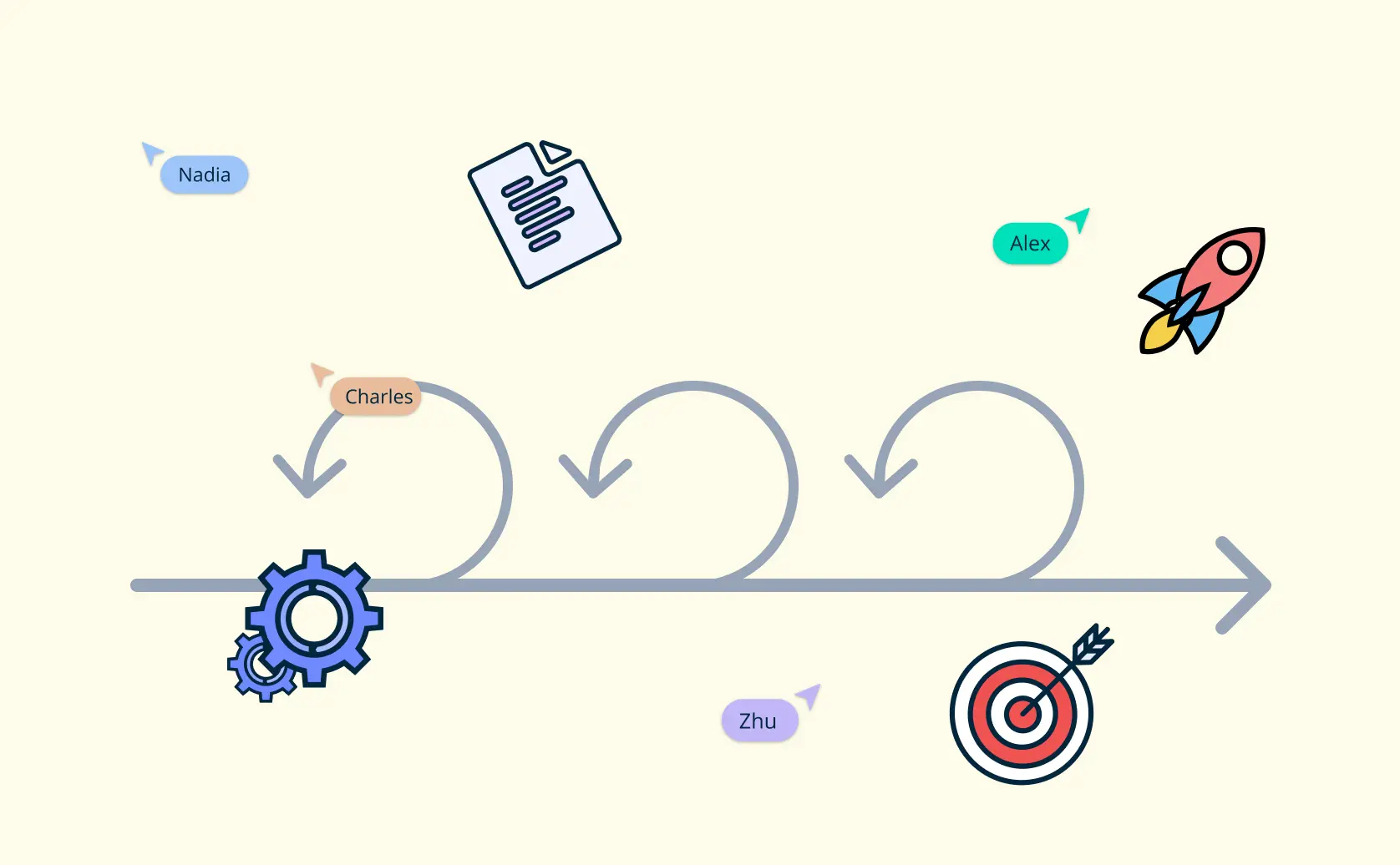
Agile Product Management is a flexible approach to developing products that focuses on continuous improvement, adaptability, and teamwork. Unlike traditional methods that follow a fixed plan, Agile allows teams to make adjustments as they go, ensuring that products evolve based on customer feedback and market changes.
An agile workflow is a repeatable way of moving work from an idea to delivery through small increments, frequent feedback, visible priorities, and regular adaptation. Instead of assuming that requirements will remain fixed, teams inspect progress, update priorities, and improve how work flows. This guide explains how agile workflows compare with predictive approaches, which frameworks and lifecycle patterns teams use, and how to implement and maintain an agile workflow.
In today’s fast-paced digital world, product managers and professionals face a constant challenge: how to deliver high-quality software that meets ever-changing user needs, while keeping pace with technological advancements and market shifts. The pressure to innovate quickly, respond to customer feedback, and stay ahead of competitors can be overwhelming. Enter Agile Software Development - a methodology that’s revolutionizing how teams approach these challenges. Whether you’re a seasoned product manager, a startup founder, or a tech professional looking to streamline your processes, understanding Agile is no longer optional; it’s essential. This approach promises not just to improve your product development cycle, but to transform how your entire organization thinks about innovation, collaboration, and value delivery. Let’s dive into the world of Agile and discover how it can empower you to navigate the complex landscape of modern software development with confidence and agility.
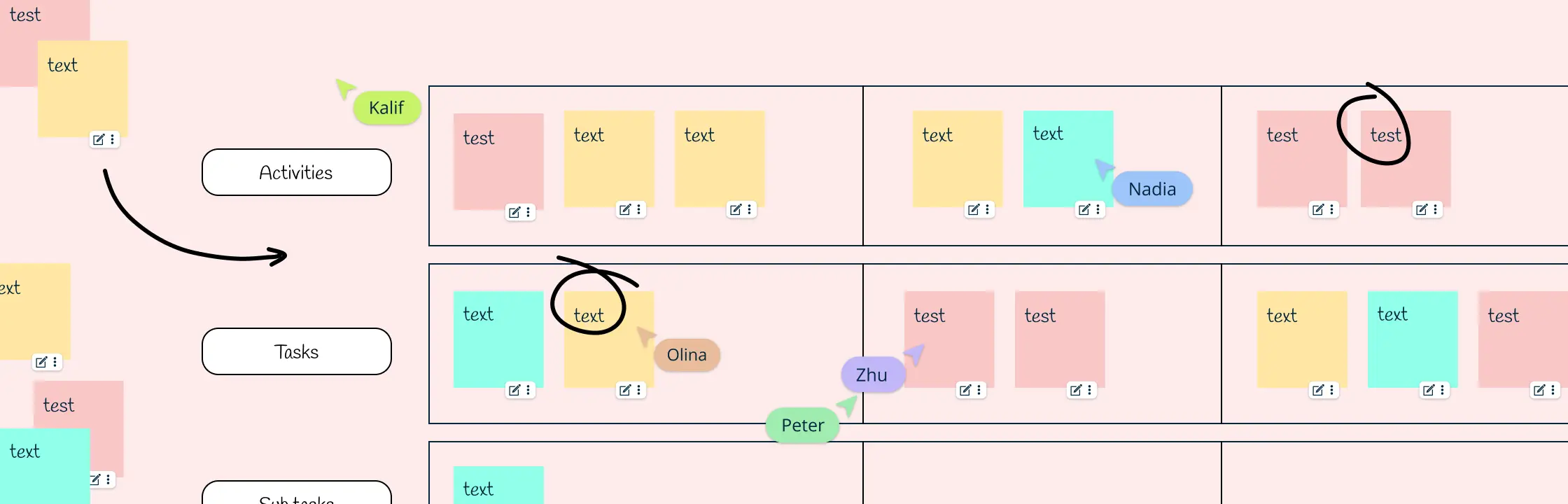
Product roadmaps often resemble a game of high-stakes Tetris, with features and user stories falling into place - or not - at breakneck speed. It’s no wonder that most managers cite feature prioritization as their biggest challenge. User story mapping emerges as a game-changer in this complex puzzle, offering a visual, collaborative approach that transforms abstract ideas into concrete action plans. Beyond just organizing tasks, it’s a powerful tool for aligning teams and uncovering hidden user needs.
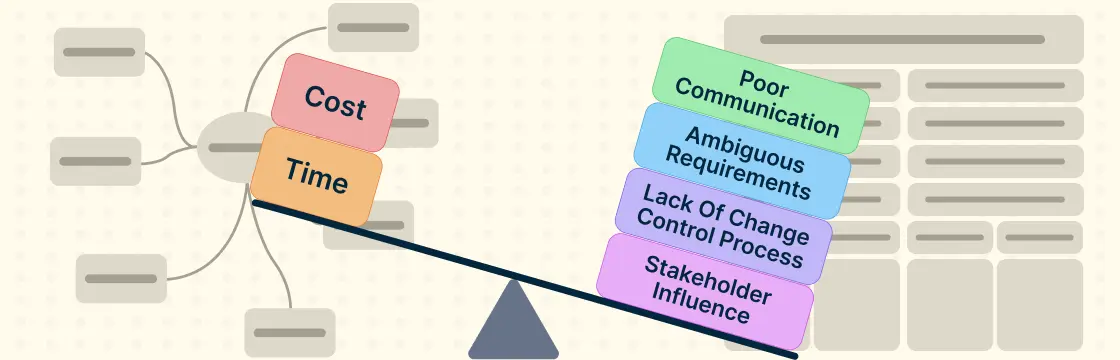
We’ve all been there, a project is running smoothly, when someone casually suggests an idea, ‘Hey, wouldn’t it be cool if’… Just like that a simple-to-execute project suddenly transforms into an ever-expanding project with endless scope.
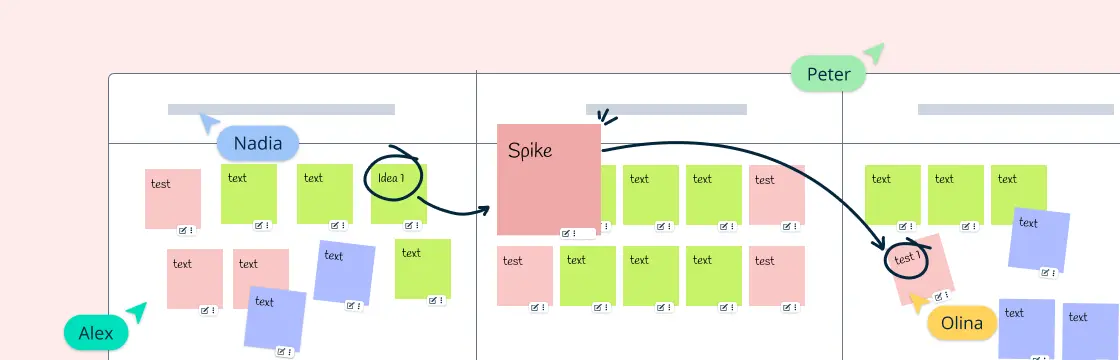
As part of an Agile team, you’ve likely encountered those moments when workloads surge unexpectedly or tasks become more complex than anticipated. These spikes can catch you off guard, adding pressure to adapt quickly and maintain momentum. These uncertainties occur because each user story represents a functional increment, and encapsulates client requirements that can be challenging to grasp fully. Predicting the entirety of a story is no easy feat, leaving Scrum Masters with the daunting task of visualizing the end products desired by clients.
Agile methods promise better project management, but they can feel overwhelming. That’s where Agile templates come in. They are invaluable tools for organizing, planning, and executing projects. In this post, we’ll share agile templates and explain how they can transform your project approach. Whether you’re new to Agile or a pro, these templates will help you make your projects smoother and more successful.
A good team structure provides clarity to the work process and roles and responsibilities. Each team member has a clear idea of what the team is set to achieve and what he/she should do to reach the collective goals. In this context, are agile teams more effective in getting work done faster than traditional teams? Are they better structured and optimized to achieve success every time?