In today’s fast-paced world, waiting for every decision to come from the top can slow your team down—and kill innovation. That’s why more companies are embracing a decentralized organizational structure, giving teams the freedom to act, experiment, and own their work. This guide will take you through the real-world models companies use, the benefits and challenges of decentralization, and actionable steps to implement it successfully.
What Is a Decentralized Organizational Structure?
A decentralized organizational structure is a system where decision-making authority is distributed from top executives to managers and teams at various levels of the organization. Instead of having all key decisions made at the top, employees closest to the work and customers are empowered to make decisions within their areas of responsibility.
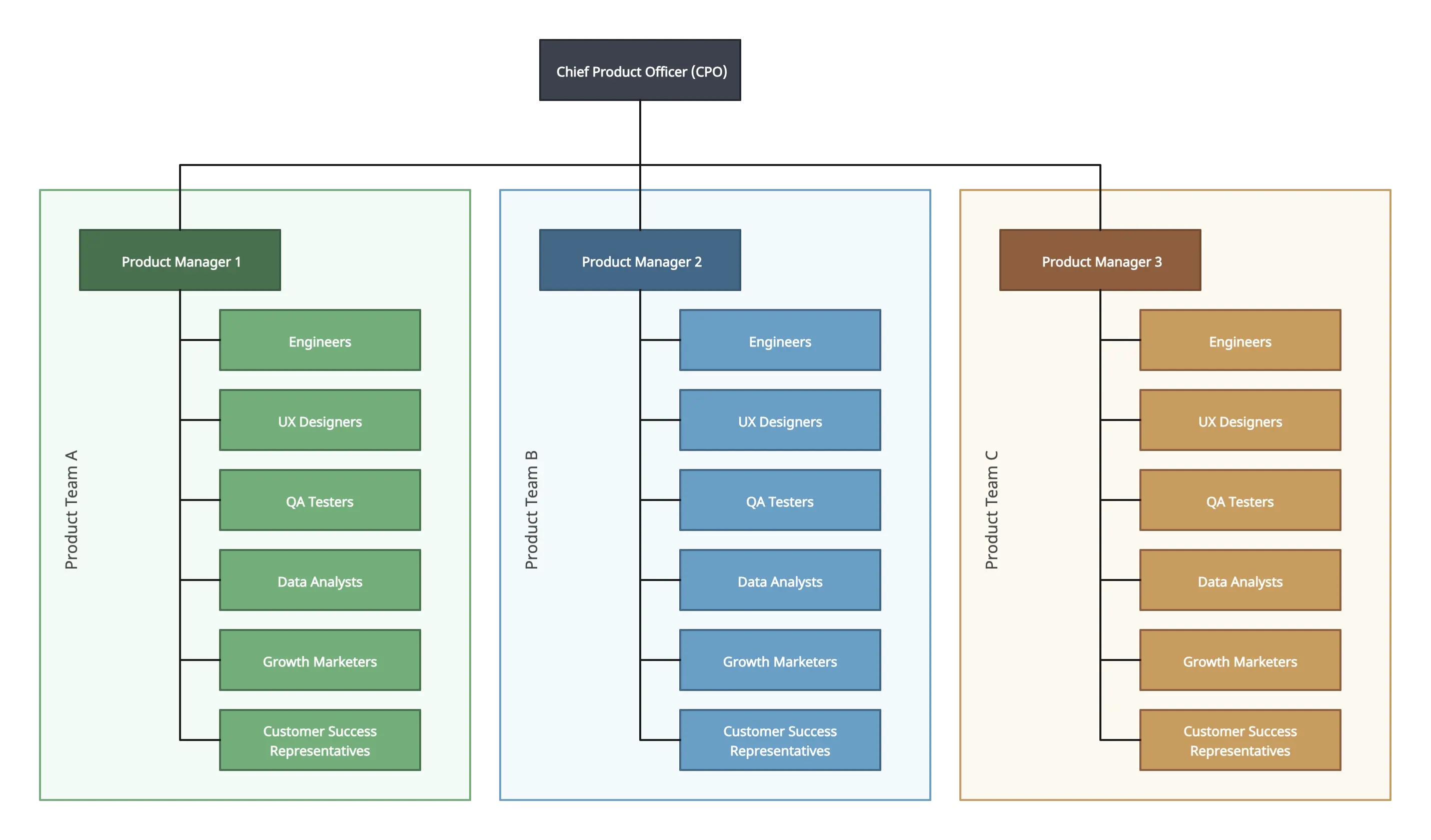
Core principles of decentralization:
Distributed authority: Teams and managers have the power to make decisions without seeking approval from senior leadership for every action.
Responsiveness: Decisions can be made quickly, allowing the organization to react faster to market changes and customer needs.
Empowerment: Employees take ownership of outcomes, fostering accountability and engagement.
Local adaptation: Teams can tailor strategies, products, and processes to specific markets or contexts.
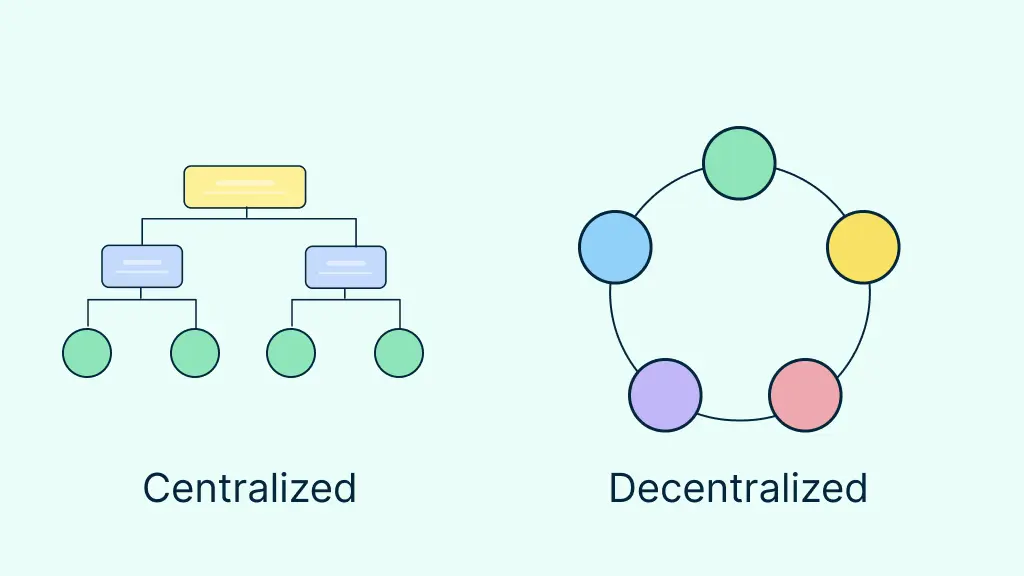
Decentralization vs Centralization
Decentralization pushes authority closer to the people who interact directly with customers, products, and local markets—leading to faster, more informed, and more adaptive decisions.
| Decision Area | Centralized Organization (Top-Down) | Decentralized Organization (Distributed) |
| Hiring & Recruitment | Executive team approves all new hires; standardized processes only | Local managers or team leads interview, hire, and adjust roles to fit team needs |
| Pricing Strategy | Prices are set by senior management based on global strategy | Teams adjust prices or promotions based on local market conditions and competition |
| Product Development | Major product features or launches require executive approval | Product squads or cross-functional teams make decisions on features, roadmap, and prioritization |
| Marketing Campaigns | All campaigns controlled and approved by central marketing team | Regional or product teams customize campaigns, messaging, and channels for local audiences |
| Customer Support Policies | Standardized scripts and policies applied globally | Local teams adapt policies, scripts, and solutions to customer needs and feedback |
| Budget Allocation | Annual budgets allocated by headquarters | Departments or regional offices manage budgets based on priorities and results |
| Innovation & Experimentation | Limited experimentation; requires leadership sign-off | Teams encouraged to test new ideas, pilot initiatives, and implement improvements independently |
| Supplier & Vendor Management | Headquarters negotiates contracts and selects vendors | Regional teams select suppliers and negotiate terms based on local requirements |
Types and Models of Decentralization
A decentralized org structure isn’t one-size-fits-all. Organizations can distribute decision-making in different ways depending on their size, goals, and the nature of their work. Understanding the types and models helps you choose the right approach for your business.
Types of Decentralization
1. Functional Decentralization
Decision-making is delegated to managers within specific functions or departments (e.g., marketing, sales, operations).
Example: A marketing manager decides on campaign strategy, budget allocation, and local promotions without central approval.
2. Geographical (Regional) Decentralization
Authority is given to regional or local offices to make decisions tailored to their markets.
Example: A retail chain allows regional managers to adjust pricing, promotions, and inventory based on local demand.
3. Product or Business Unit Decentralization
Each product line or business unit operates almost like an independent entity with its own decision-making powers.
Example: Alphabet’s “bets” approach, where different business units (YouTube, Waymo, Google Cloud) have autonomy to manage products and strategies.
Modern Decentralized Models
1. Squads, Tribes, and Guilds (Spotify Model)
Teams (squads) are cross-functional and autonomous, grouped into larger units (tribes) for alignment, with guilds for knowledge sharing.
Benefits: Encourages innovation, fast decision-making, and cross-team collaboration.
2. Holacracy
A flat structure where roles replace traditional job titles, and authority is distributed through “circles.”
Example: Zappos adopted holacracy to empower employees to self-manage and make decisions aligned with organizational goals.
3. DAO (Decentralized Autonomous Organization)
Decisions are made collectively by stakeholders using pre-defined rules coded into blockchain-based systems.
Example: Modern digital organizations and communities like dOrg use DAOs for transparent, distributed decision-making.
4. Independent Business Units
Large corporations create autonomous units with their own leadership and profit & loss responsibility.
Example: General Electric (GE) historically operated with highly decentralized business units to allow flexibility and speed.
Characteristics of a Decentralized Organizational Structure
Decentralized organizations have a personality of their own—they’re agile, empowered, and built for speed. Here’s what makes them tick:
Decision-making at every level: Teams and managers closest to the work have the authority to make meaningful decisions. No more waiting for months to get approvals—if you see an opportunity, you act.
Faster responses to change: When markets shift, customer needs evolve, or competitors move, decentralized teams can pivot quickly without waiting for top-down directives.
Empowered employees: Giving people the ability to make decisions fosters ownership, accountability, and engagement. Employees feel trusted—and that energy shows in results.
Flexibility and adaptability: Policies, strategies, and processes can be adjusted to local contexts or product needs. This is especially powerful for global organizations or companies with diverse product lines.
Encourages innovation: When teams are free to experiment, test new ideas, and learn from outcomes, creativity thrives. It’s no longer just “executives decide”—everyone becomes a problem-solver.
Shared leadership and accountability: Leadership is distributed, and so is responsibility. Teams know they’re accountable for their outcomes, creating a culture of collaboration and shared purpose.
Better alignment with customers and markets: Localized decision-making allows organizations to understand and respond to customer preferences and regional nuances faster than a centralized system ever could.
When to Choose Decentralization
Decentralization isn’t a one-size-fits-all solution. Giving teams decision-making power works wonders in some situations, but it can create chaos if applied in the wrong context. The key is to understand when it makes sense for your organization.
Consider these factors:
Market diversity: If your company operates in multiple regions, serves diverse customer segments, or has varied product lines, local teams may need the authority to make decisions that suit their specific markets.
Speed requirements: When decisions need to be fast to keep up with competitors or changing customer demands, decentralization allows teams to act without waiting for approval from the top.
Leadership bandwidth: If senior leaders are stretched thin and can’t make every decision, decentralization distributes responsibility while keeping the organization moving.
Scale and complexity: Large organizations with multiple products, divisions, or markets often benefit from decentralized decision-making because central oversight alone can’t handle the volume or nuance of decisions.
| Factor | Low Need (Centralized Better) | High Need (Decentralized Better) |
| Market diversity | Single market or uniform customer base | Multiple regions or highly diverse markets |
| Speed requirements | Decisions can wait for approvals | Fast response required to remain competitive |
| Leadership bandwidth | Leaders can personally manage decisions | Leaders are overextended; teams need autonomy |
| Scale & complexity | Small organization, simple processes | Large, multi-product, multi-region organization |
How to use this matrix:
Evaluate each factor for your organization.
The more “High Need” areas you have, the more beneficial decentralization is likely to be.
How to Implement a Decentralized Organizational Structure
Shifting to a decentralized structure isn’t about handing over control and hoping for the best. It’s a thoughtful process that empowers your teams while keeping your organization aligned. Here’s how you can do it, step by step.
Step 1: Diagnose – understand current decision-making
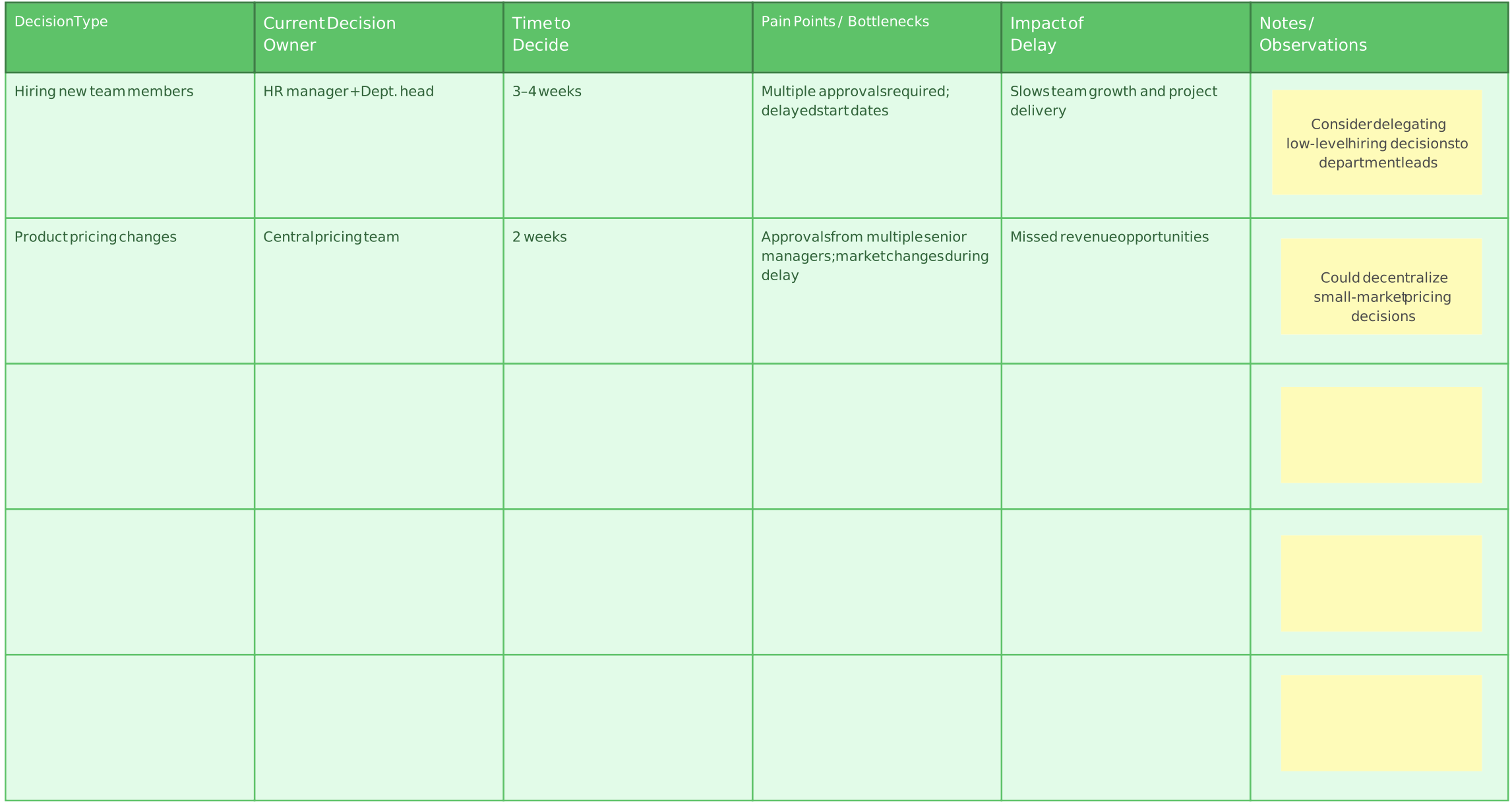
You can’t decentralize effectively without knowing how decisions are currently made. This step helps identify bottlenecks, overlaps, and areas that cause delays or confusion.
Map all key decisions in your organization (e.g., hiring, pricing, product changes).
Identify who currently makes each decision and note pain points or delays.
Pinpoint decisions that are slowing growth or creating frustration.
Tools/templates:
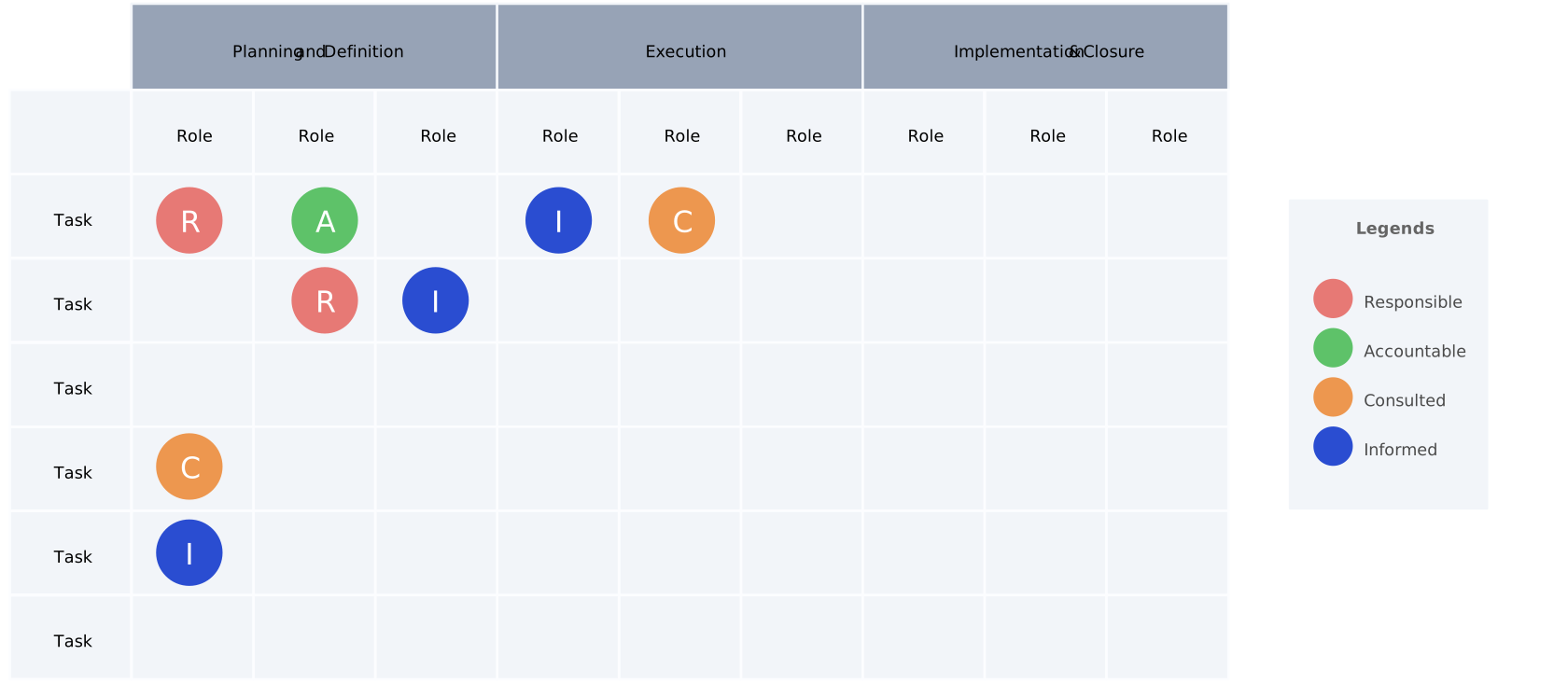
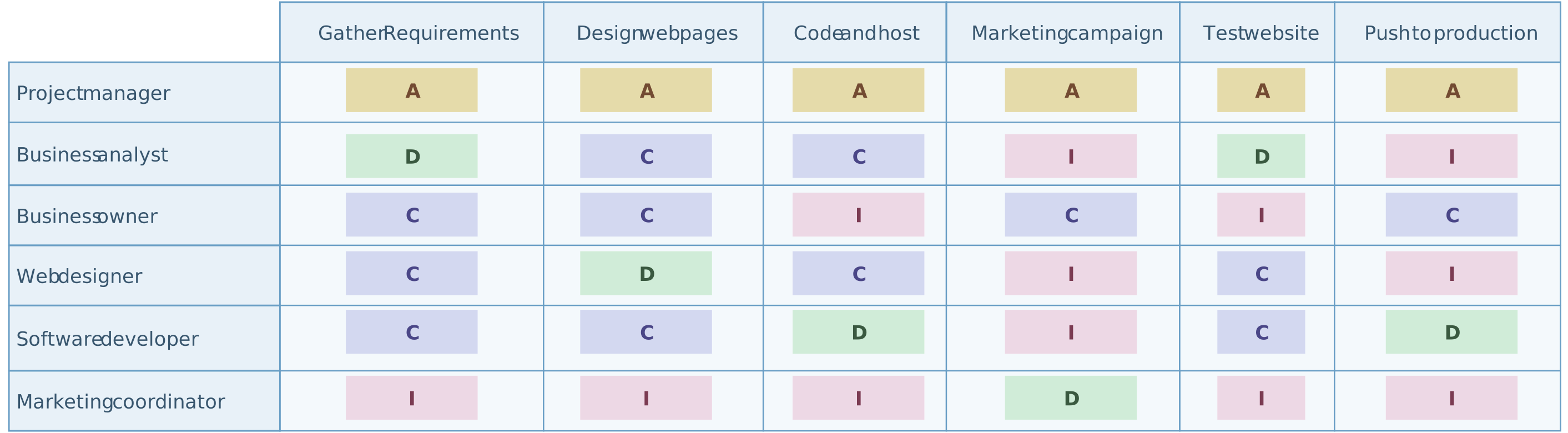
- RACI Matrix – maps who is Responsible, Accountable, Consulted, and Informed for each decision.

- Decision pain-point table – tracks slow approvals, conflicting authorities, and decision gaps.
Step 2: Define clear decision ownership
Clarity is essential. Teams need to know what decisions they can make and what must escalate to leadership.
Assign decision rights for every key decision.
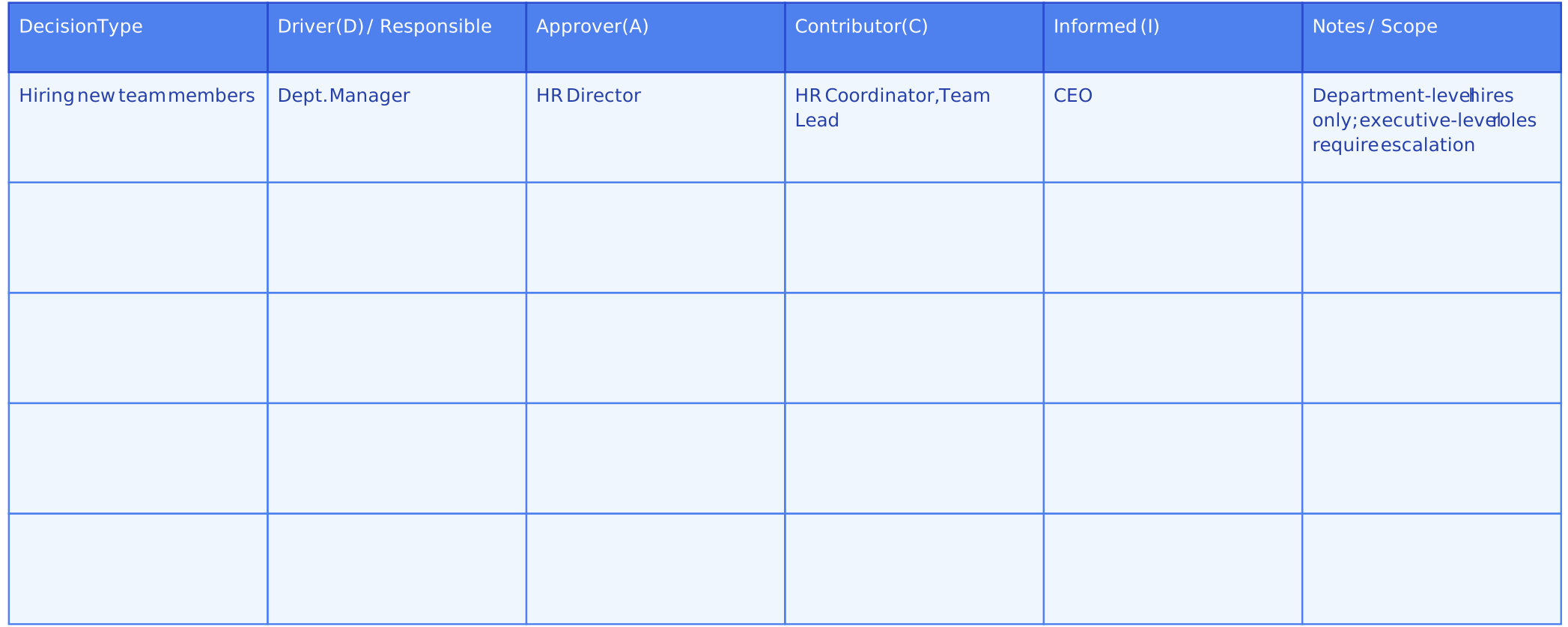
Make it clear who drives the decision, who approves it, who contributes, and who needs to be informed.
Document this framework so there’s no ambiguity.
Tools/templates:
- DACI template – assigns Driver, Approver, Contributor, Informed for each decision.
- Decision ownership chart – visually shows which team or leader owns each decision type.
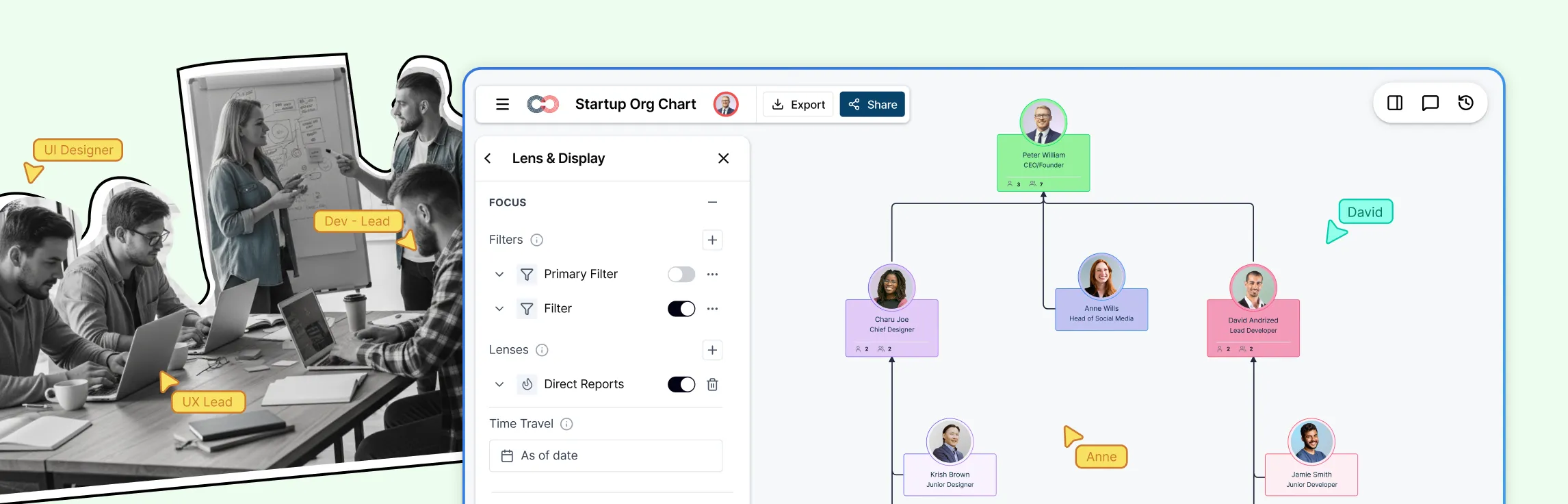
Step 3: Visualize your decentralized structure in Creately
This is where your structure starts to take shape. Instead of thinking in abstract concepts, you translate everything into a decentralized org chart that shows:
autonomous units (pods, squads, regions, product teams)
their decision rights
shared services (finance, HR, legal, ops)
cross-functional connectors (guilds, communities of practice, dotted lines)
By mapping the structure visually, everyone can see where autonomy lives, how collaboration happens, and how decisions flow.
Your decentralized org chart becomes the “source of truth” that guides the rest of the transformation.
Step 4: Pilot decentralization in a specific area
Test decentralization in a controlled environment before rolling it out organization-wide.
Select a single product line, region, or department for the pilot.
Grant decision-making authority to teams in the pilot area.
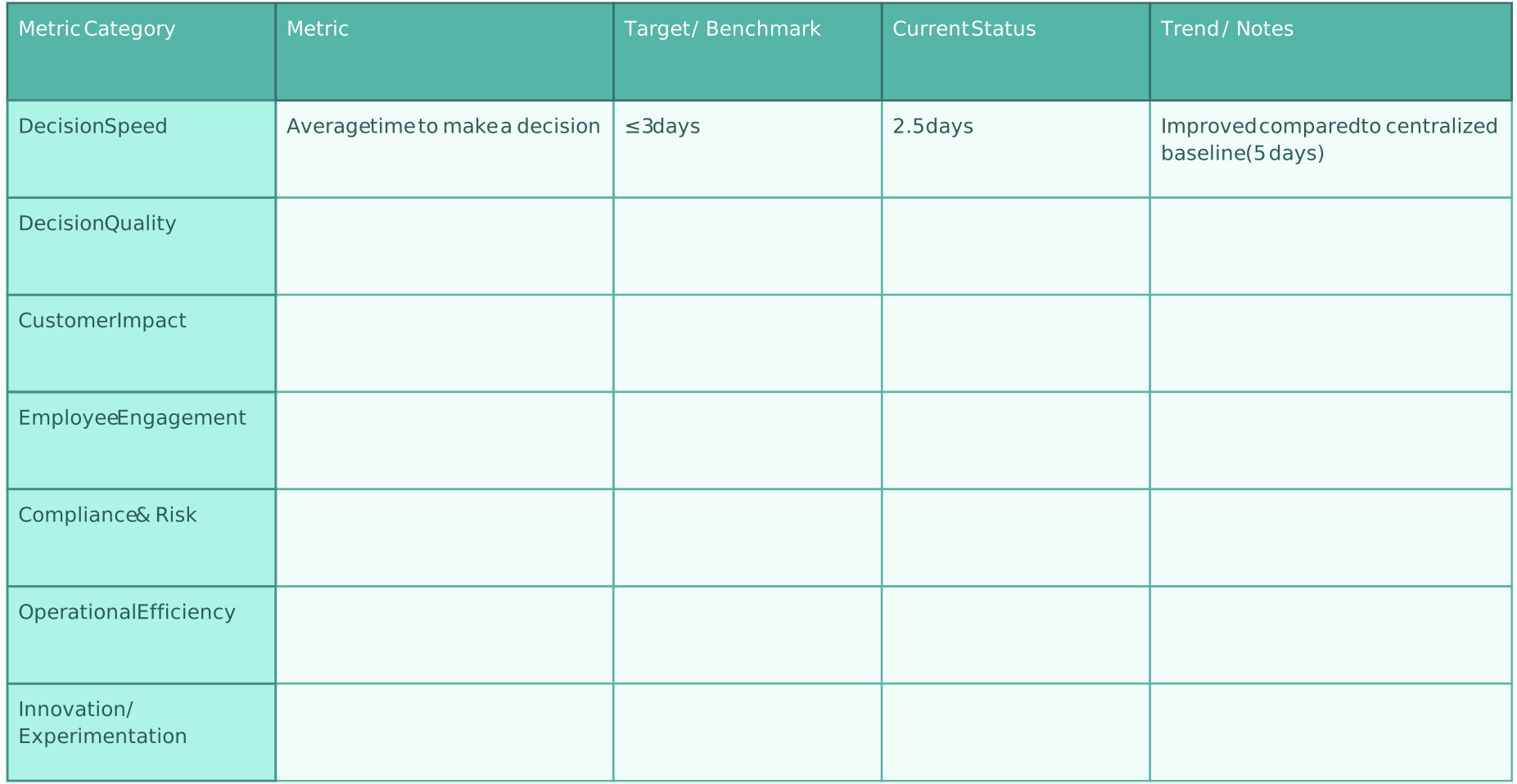
Track metrics like decision speed, quality, customer satisfaction, and project outcomes.
Tools/templates:
- Pilot scorecard – tracks decision outcomes, speed, and impact.
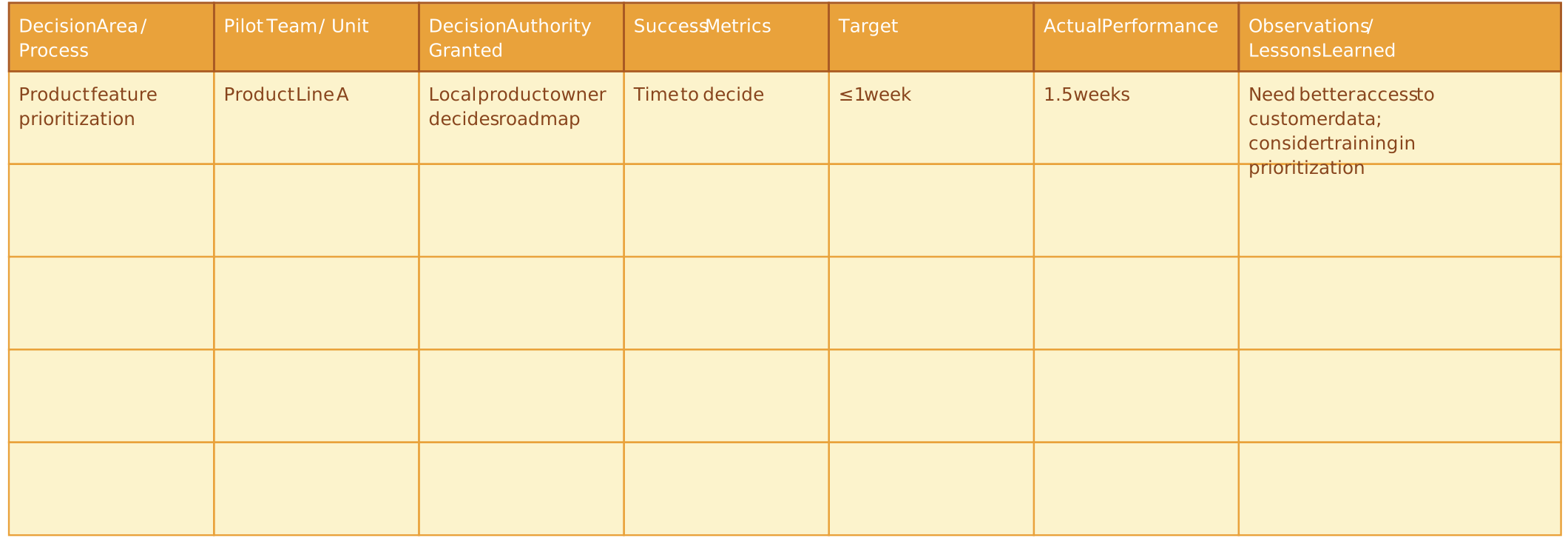
- Success metrics dashboard – visualizes pilot performance for leadership review.
Step 5: Build governance and guardrails
Autonomy works only with clear boundaries to prevent mistakes, conflicts, or misalignment.
Define policies, escalation paths, and reporting requirements.
Set clear thresholds for which decisions can be made locally and which require higher-level approval.
Ensure teams understand the framework and have guidance on risky or high-impact decisions.
These guardrails are often visually represented around or alongside your org chart as guidelines.
Tools/templates:
- Decision guardrails checklist – outlines scope, thresholds, reporting, and escalation for each decision type.

Step 6: Align incentives and KPIs
Teams need motivation to make decisions that serve the organization, not just their own unit.
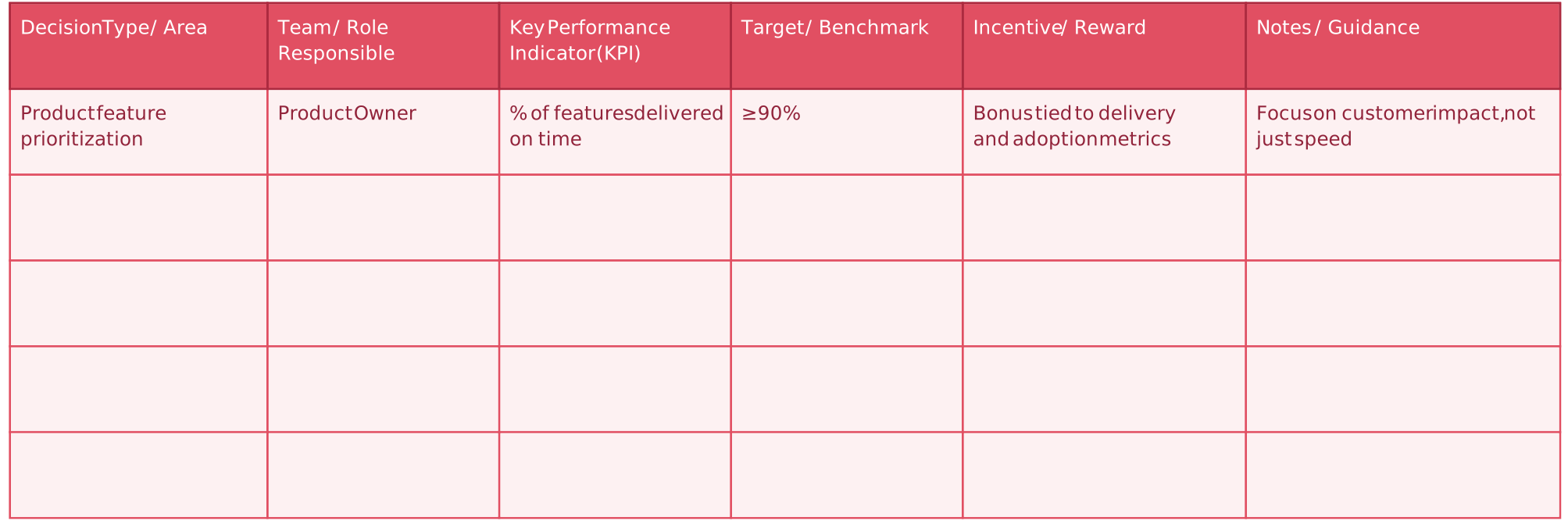
Review KPIs, performance metrics, and compensation plans.
Align rewards with responsible decision-making, collaboration, and organizational goals.
Avoid incentives that encourage local optimization at the expense of company-wide alignment.
Tools/templates:
- KPI alignment worksheet – links decisions to measurable outcomes and incentives.
Step 7: Invest in capabilities
Authority alone isn’t enough—teams must have the skills, knowledge, and resources to make informed decisions.
Provide coaching, training, and access to relevant data and tools.
Assign support roles (product managers, business analysts, or data stewards) to help teams make informed choices.
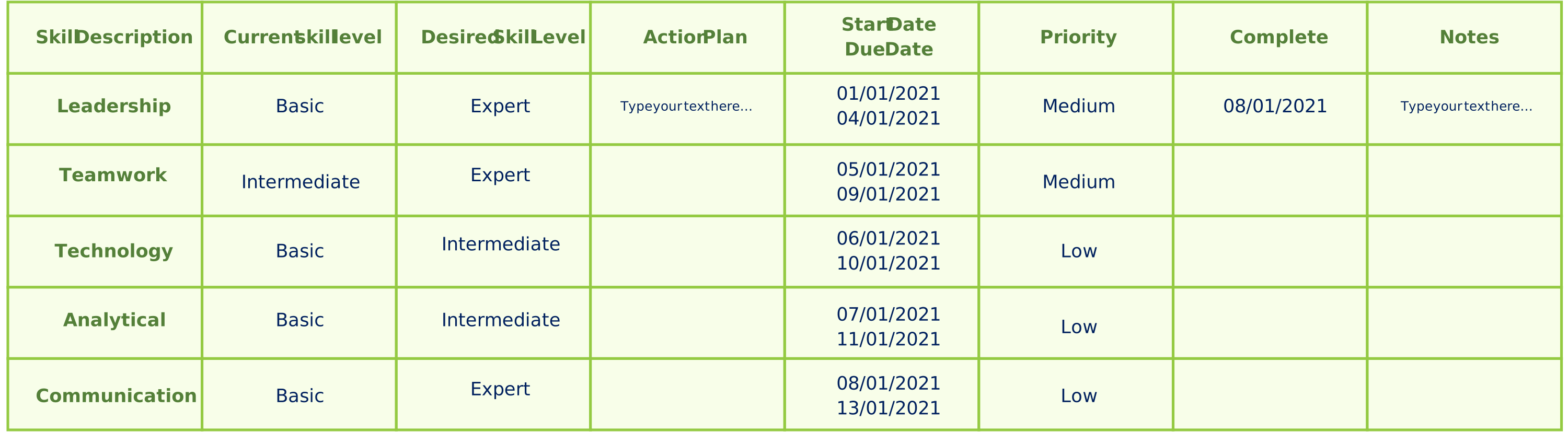
Identify and address skill gaps proactively.
Tools/templates:
Capability/skills gap assessment – lists required skills, training, and resources for each decision type.
Example: Teams may need financial modeling, analytics tools, or cross-functional collaboration skills.
Step 8: Scale and iterate
Decentralization is evolutionary. As you expand the structure to new teams, regions, or product lines, keep refining your decentralized org chart based on:
retrospectives
audits
performance data
lessons learned
Your org chart becomes a living artifact—updated as autonomy deepens, governance evolves, and teams grow.
Tools/templates:
Iteration log – tracks changes, lessons learned, and next steps.
Example: Adjust thresholds, add training, or refine KPIs after each expansion phase.

Decentralized Organizational Structure Examples
Seeing decentralization in action makes it much easier to understand how it actually works. Here are well-known organizations that thrive because they push decision-making closer to teams, customers, and local markets.
1. Amazon – Decentralized “Two-Pizza Teams”
Amazon is famous for breaking large functions into small, autonomous teams—small enough to be fed with two pizzas. These teams own a product or feature end-to-end and make decisions independently. This structure keeps a massive company moving fast, encourages experimentation, and prevents slowdowns caused by top-heavy approval chains.
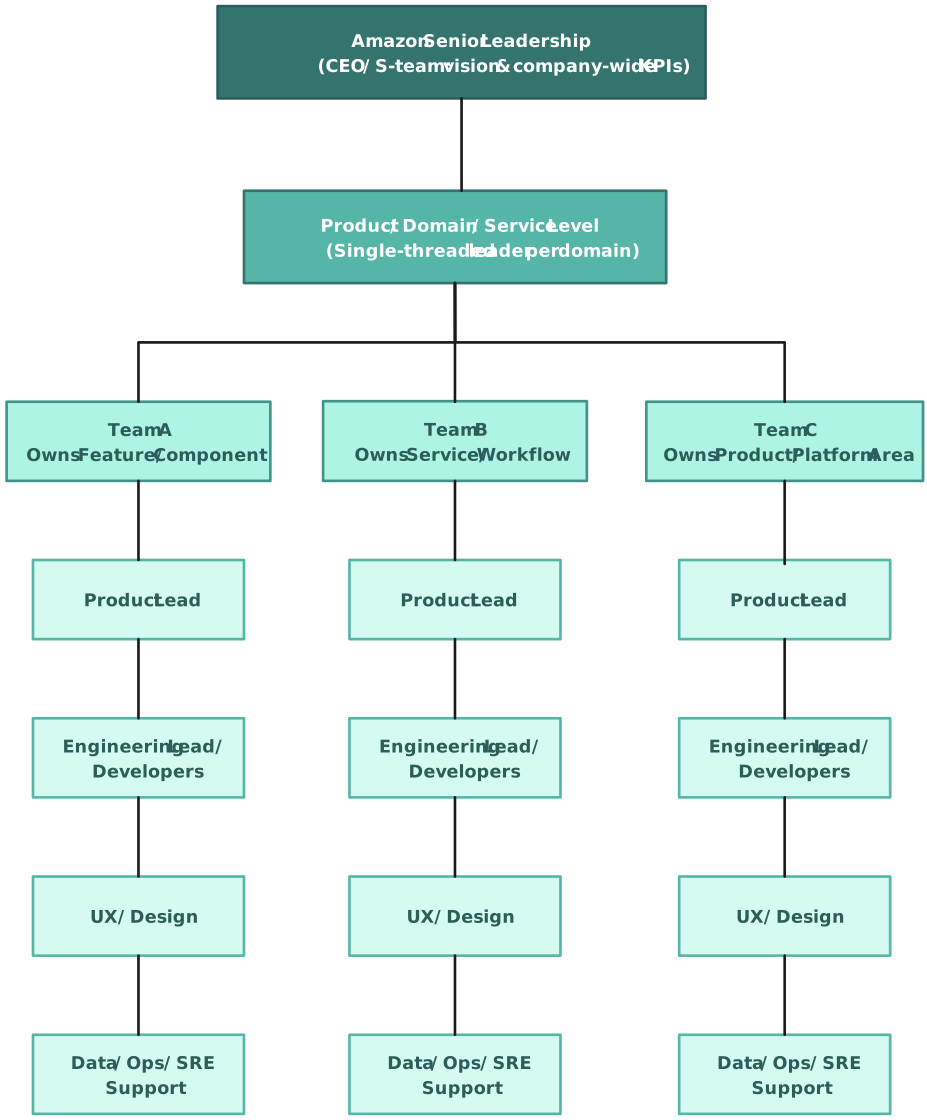
What this looks like in practice:
Teams choose their own roadmaps
Local decision rights for pricing, experiments, and workflows
Leadership sets direction but doesn’t micromanage execution
2. McDonald’s – Local Autonomy for Global Consistency
McDonald’s operates in 100+ countries, and each region adapts menus, marketing, and operations to local tastes. Even though the brand is global, decentralization helps them stay culturally relevant and fast-moving at a local level.
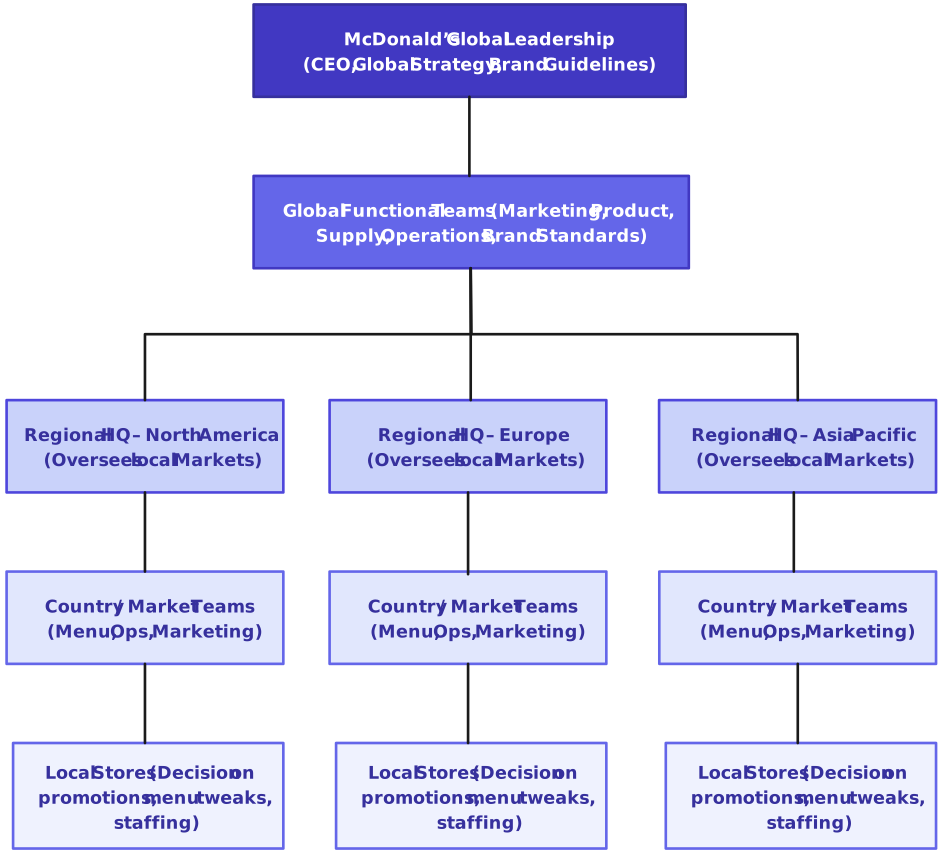
Local teams decide:
Menu variations (e.g., McAloo Tikki, Teriyaki Burger)
Local promotions and pricing
Supplier partnerships
3. Tesla – Decentralized at the Team Level
Tesla’s engineering and manufacturing groups operate with a high degree of autonomy. Teams are encouraged to bypass traditional hierarchies and collaborate directly, often solving problems faster than traditional automakers.
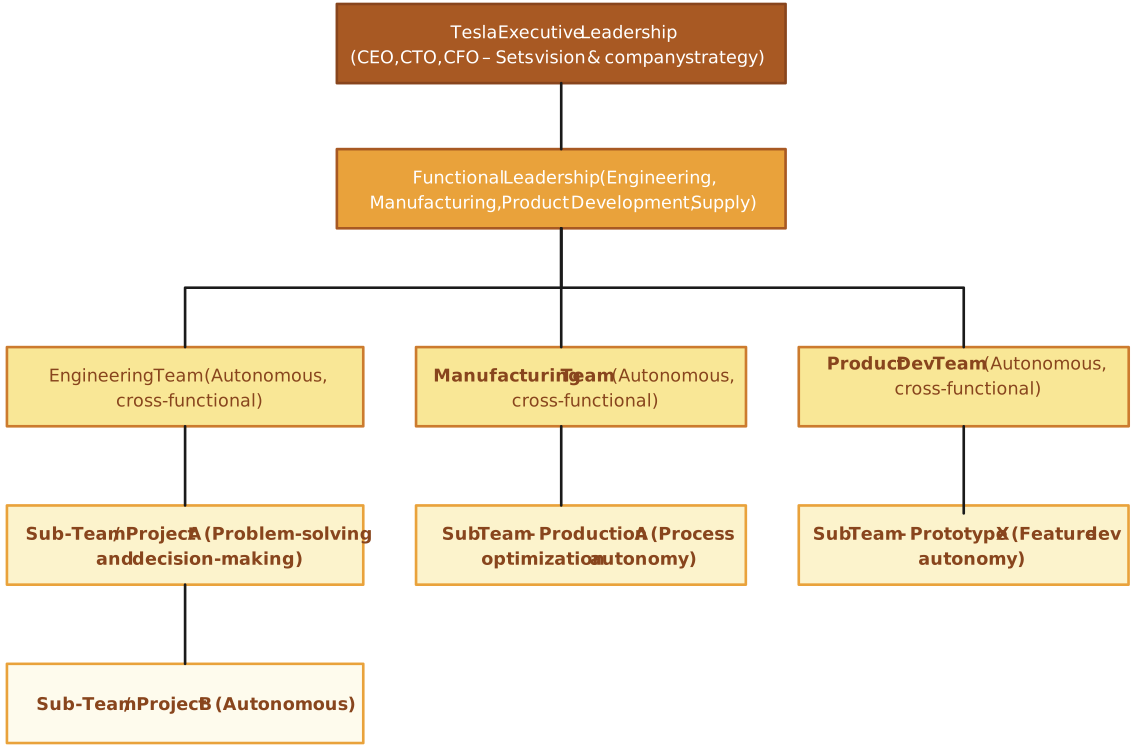
Decentralization in action:
Engineers can directly escalate ideas or problems
Rapid iteration and testing without multiple approval layers
Cross-functional teams own end-to-end features
4. Spotify – Squads, Tribes, and Guilds
Spotify’s organizational model is one of the most widely studied decentralized structures. Work is organized into squads (mini-startups), grouped into tribes, supported by guilds (communities of practice).
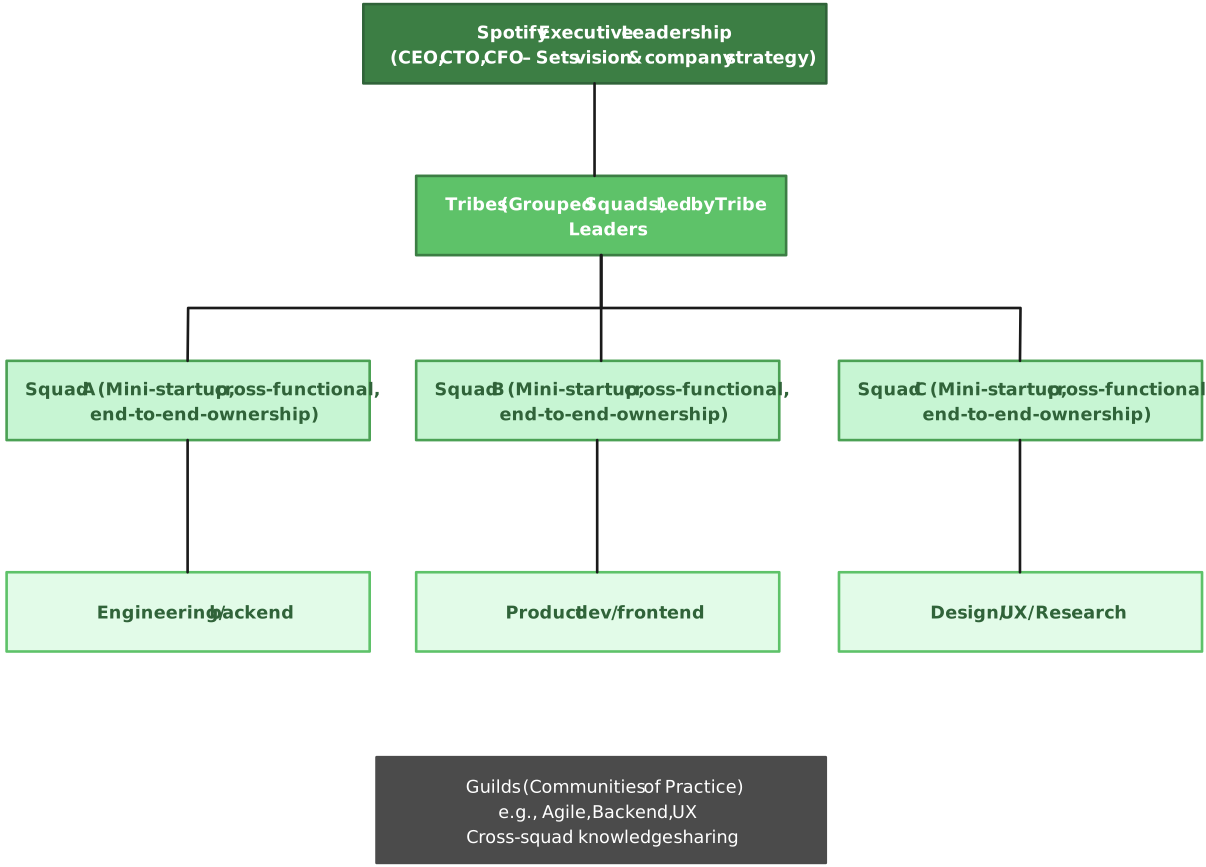
Benefits of this model:
High ownership at the squad level
Fast decision cycles
Teams align through shared principles, not rigid control
5. Johnson & Johnson – Decentralized by Business Unit
J&J’s structure gives each product division (pharma, medical devices, consumer goods) its own leadership and decision-making authority.
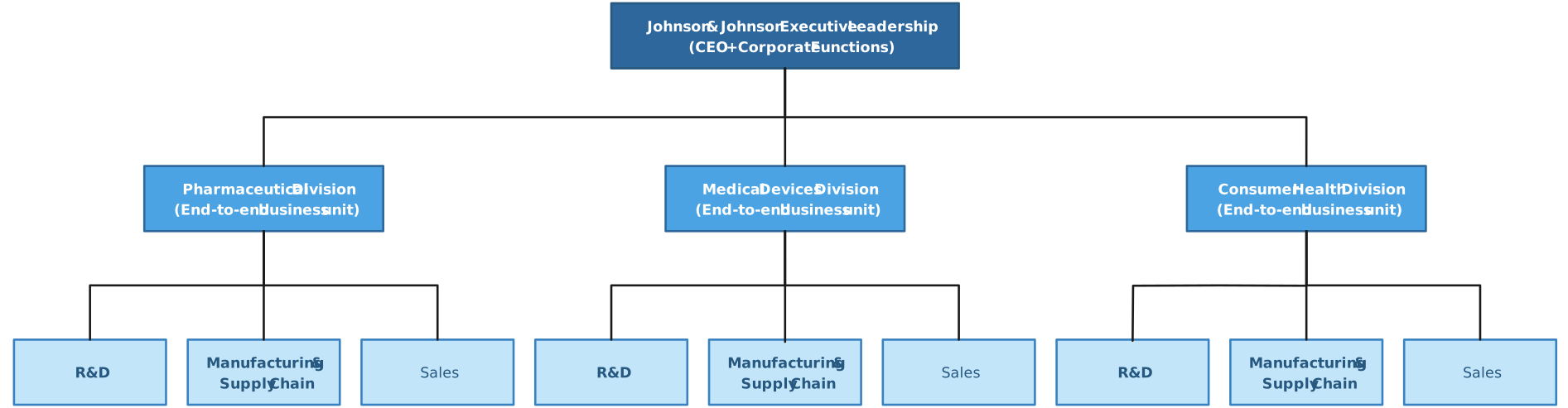
Why this works well:
Each unit operates like a standalone business
Faster decisions in highly regulated markets
Clear ownership and accountability
6. Airbnb – Decentralized Innovation Teams
Airbnb uses cross-functional “pods” that combine designers, engineers, data analysts, and product leads to own specific customer journeys.
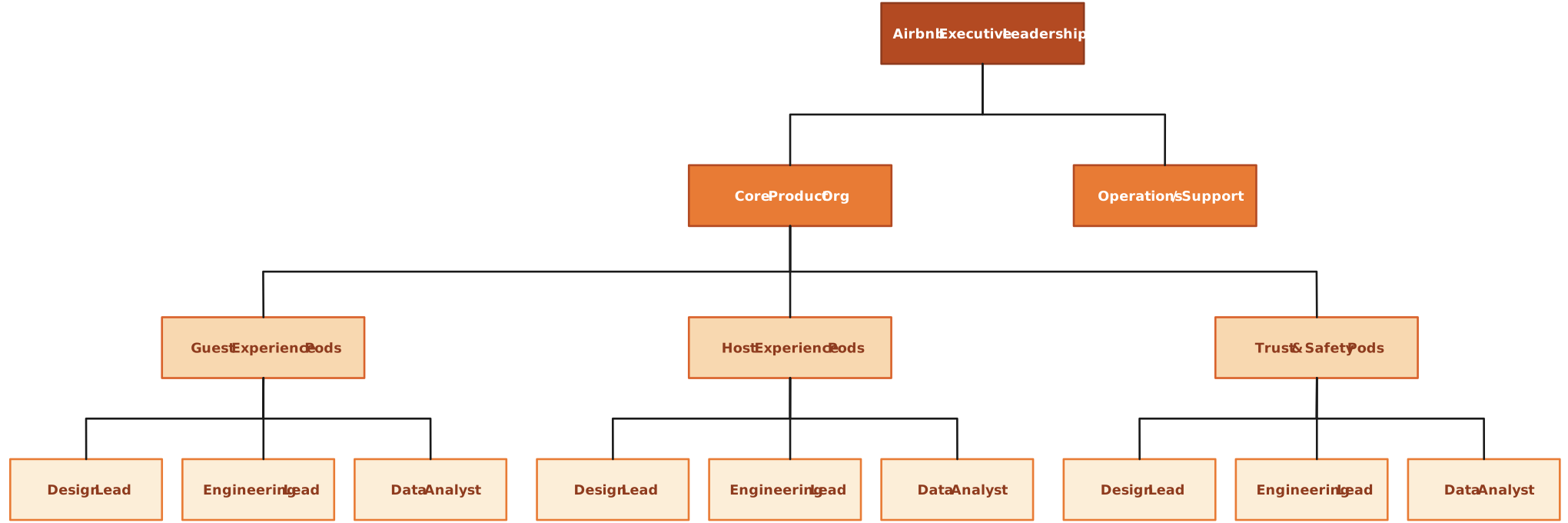
How pods operate:
Independent problem-solving
Direct access to data
Authority to launch, test, and iterate quickly
Helpful Resources
Learn what a product organizational structure is, explore common team models, key roles, pros and cons, and how to build a scalable product org chart.
Project organizational structure explained. Learn types, how to choose the right model, and use pre-made templates to map roles and reporting lines.
A practical guide to geographic organizational structure: pros, cons, free templates, and a step-by-step implementation plan for regional teams.
Learn the difference between functional and divisional organizational structures, with examples, pros & cons, a comparison table and guidance on which to choose.
Team‑based organizational structure: definition, benefits & drawbacks, best practices, and real‑world examples with free templates.
A practical guide to the matrix organizational structure with step-by-step instructions for creating clear matrix org charts, real company examples, free templates, pros & cons, and implementation tips for managers.
Learn what a hybrid organizational structure is, explore its types and key characteristics, and discover how to implement it effectively with free templates.
Decentralized Organizational Structure Advantages and Disadvantages
Decentralization can supercharge your organization—but it can also introduce new challenges if you’re not ready for the shift. Here’s a straightforward look at the upsides and trade-offs so readers can decide whether it’s the right fit.
| Advantages | Disadvantages |
| Decisions made at the team level, enabling faster response | Conflicting decisions between teams can arise |
| Reduced dependency on top management, speeding up workflows | Harder to maintain strategic alignment across the organization |
| Quick adaptation to market changes and customer needs | Risk of duplicated work across teams |
| Employees feel trusted, empowered, and motivated | Teams may lack experience to handle autonomy effectively |
| Leadership skills develop at all levels | Requires ongoing training and coaching for managers |
| Teams can adapt products and services to local markets | Customer experience may be inconsistent across regions |
| Encourages innovation, experimentation, and creativity | Harder to manage risks and costs across multiple projects |
| Leaders can focus on strategy rather than day-to-day operations | Leaders may lose visibility into frontline activities |
| Supports growth and scalability across regions or product lines | Coordination becomes more difficult; risk of siloed teams |
| Problems get resolved faster at the source | Lack of standardization may reduce ef |
Risk of inconsistent decisions across teams. Potential duplication of work or inefficiencies. Difficulty in maintaining brand, policy, or strategy alignment. Need for strong training, reporting, and monitoring systems. RACI / DACI templates – clarify decision ownership. Project management tools (Asana, Jira, Creately) – track decisions and tasks. Collaboration platforms (Slack, Microsoft Teams, Creately) – maintain visibility and alignment. Dashboards and analytics – monitor KPI performance in real time. Automated approval workflows – speed up routine decisions while maintaining guardrails Decision speed and turnaround times. Employee engagement and satisfaction. Quality and consistency of decisions. Customer satisfaction and market responsiveness. Reduction in escalations to central leadership. Prioritize decisions that benefit from local knowledge or expertise. Look for decisions that are frequent or time-sensitive. Avoid decentralizing decisions with high risk, regulatory implications, or strategic impact without guardrails. Use a decision matrix to evaluate complexity, impact, and required expertise. Faster decision-making and responsiveness to market changes. Increased employee empowerment, engagement, and accountability. Encourages innovation and experimentation at lower levels. Frees senior leadership to focus on strategy and long-term planning.FAQs About Decentralized Structure
What is a decentralized organization?
What are the challenges of decentralization?
What are the tools & technology that enable decentralization?
How does Creately help implement decentralization?
How do you measure if a decentralized management structure is working?
How do you decide which decisions to decentralize?
How does organizational decentralization benefit organizations?