How to Do a SWOT Analysis - A Comprehensive Step-by-Step Guide

Updated on: 06 January 2026 | 13 min read
Sharesocial-toggle
social-share-facebook
social-share-linkedin
social-share-twitter
Link Copied!
How to Do a SWOT Analysis - A Comprehensive Step-by-Step Guide

Creating a SWOT analysis is one of the fastest ways to bring clarity to complex decisions, but only if you know how to do it right. Many teams struggle with scattered ideas, messy documents, and unclear outcomes when trying to analyze strengths, weaknesses, opportunities, and threats. This guide is designed to show you how to create a SWOT analysis the right way, step by step, so that you can move from confusion to confident strategic thinking. This guide will walk you through exactly how to create a SWOT analysis that is clear, accurate, and actionable.

How to Conduct a SWOT Analysis

Knowing how to conduct a SWOT analysis properly is what turns a simple framework into a powerful tool for strategic thinking and decision-making.

Below are the essential steps to help you perform a SWOT analysis effectively without overcomplicating the process.

Step 1: Identify the Objective

The first step in how to do a SWOT analysis is defining a clear objective. Before listing strengths or threats, define exactly what you want to evaluate.

Ask yourself: What decision are we trying to support?

Common objectives include:

  • Evaluating a new business idea or startup concept
  • Improving an existing product, service, or process
  • Planning for growth, expansion, or market entry
  • Assessing risks before a major investment or change

A well-defined goal keeps your SWOT analysis focused and ensures the insights you uncover are relevant and actionable.

Step 2: Gather the Right Team

A SWOT analysis is strongest when it reflects multiple perspectives. Bring together people with diverse expertise and firsthand knowledge who understand different aspects of the business, such as:

  • Team leaders or managers
  • Employees from different departments
  • Subject matter experts
  • Stakeholders involved in the decision

This diverse input helps uncover blind spots and leads to more well-rounded insights, especially when ideas are captured visually in one shared space. Using a collaborative visual workspace like Creately’s SWOT Analysis Tool allows everyone to contribute ideas in real time, maintain discussions in comment threads, and add notes.

Step 3: Gather Relevant Information

Accurate insights require reliable data. Before filling in your SWOT diagram, gather data about both your internal performance and external environment. This may include:

  • Financial performance, KPIs, and operational metrics
  • Customer feedback, surveys, and demographics
  • Market and industry trends
  • Competitor analysis
  • Internal processes, resources, and capabilities

Having this information on hand makes it much easier to create a SWOT analysis based on evidence, not assumptions, leading to more credible and actionable outcomes.

Step 4: Identify Strengths, Weaknesses, Opportunities, and Threats

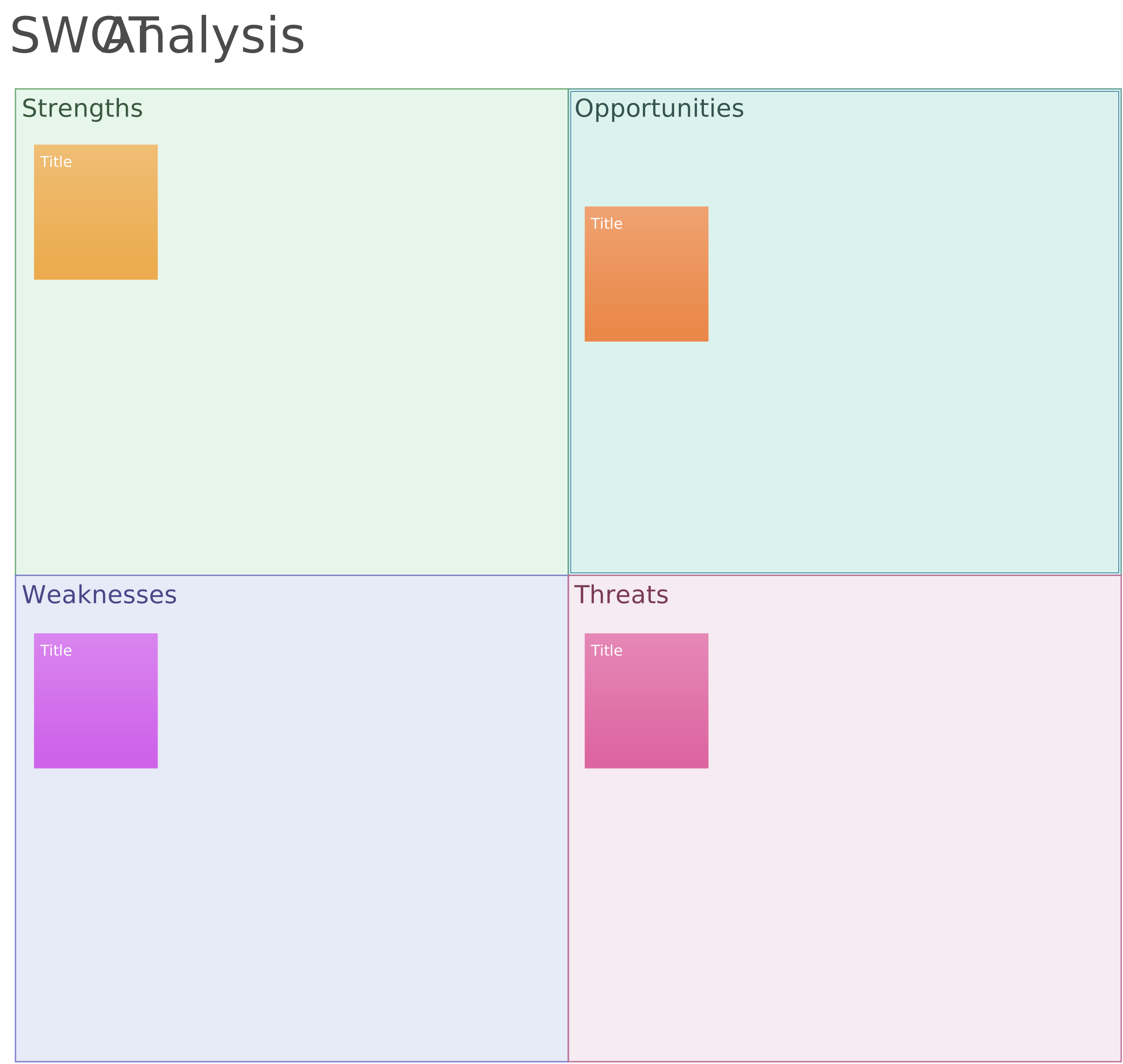
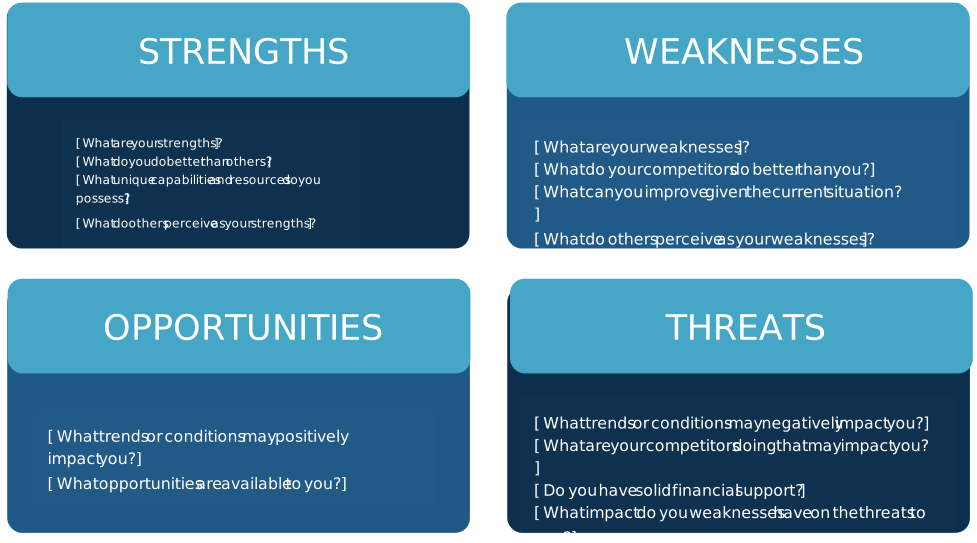
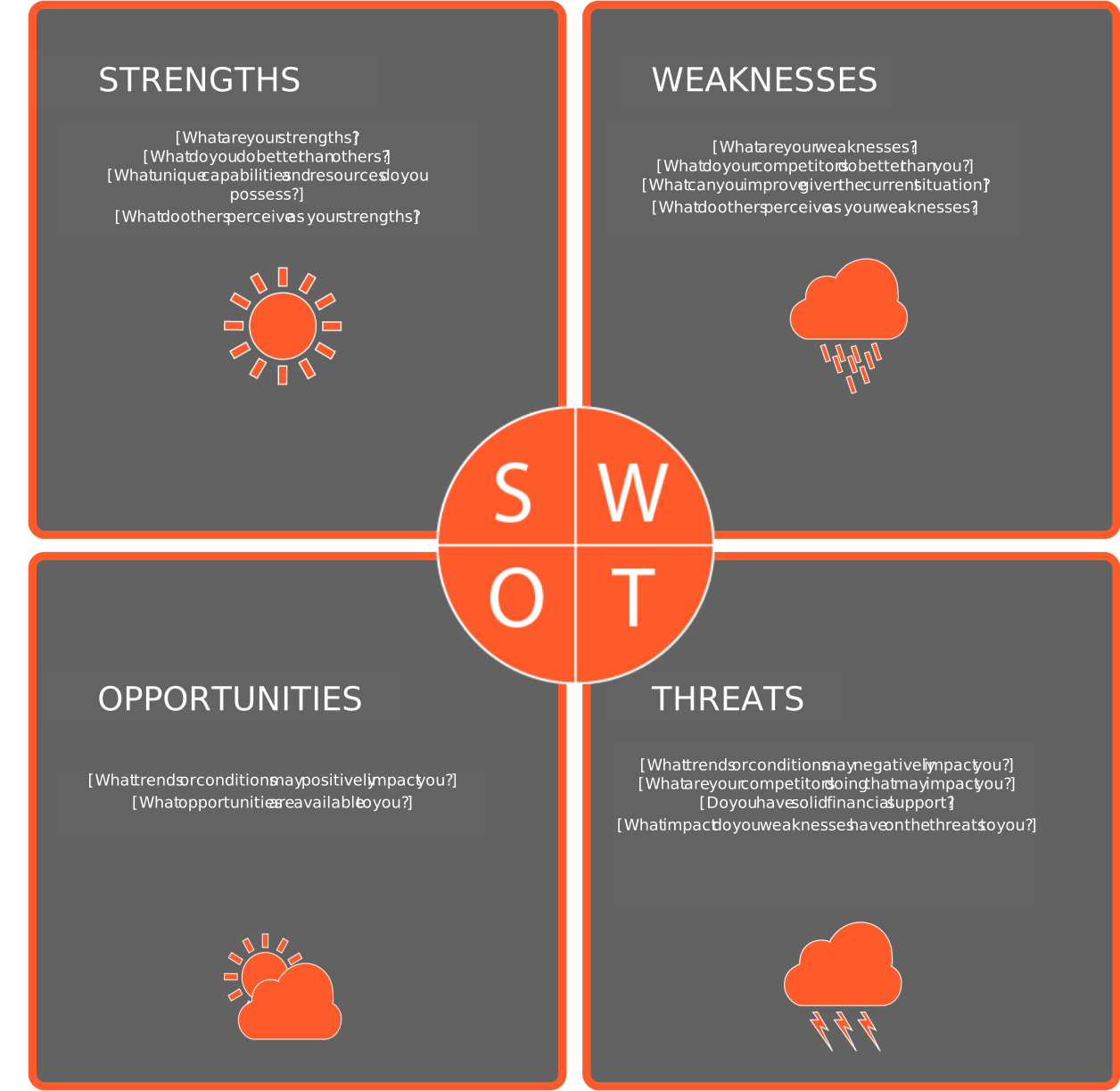
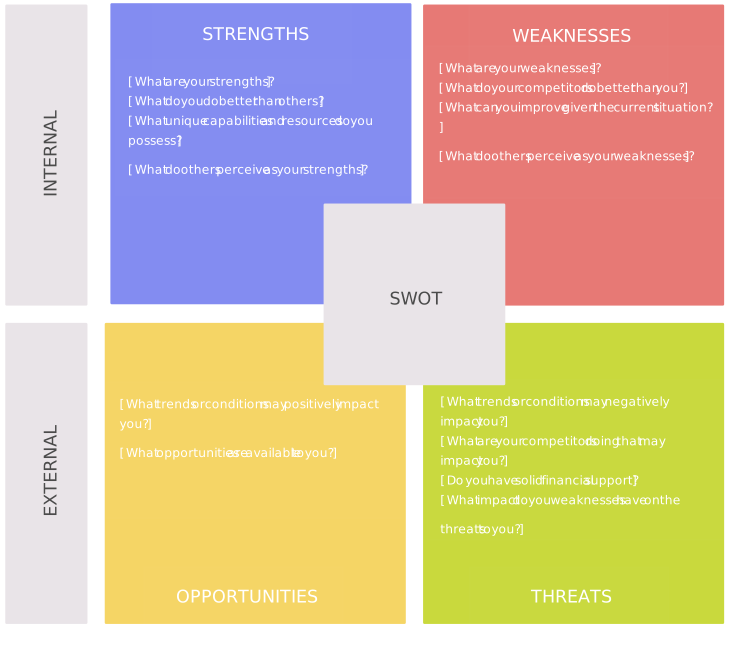
Now comes the core of how to perform a SWOT analysis. Using the information you’ve collected, list insights under each category:

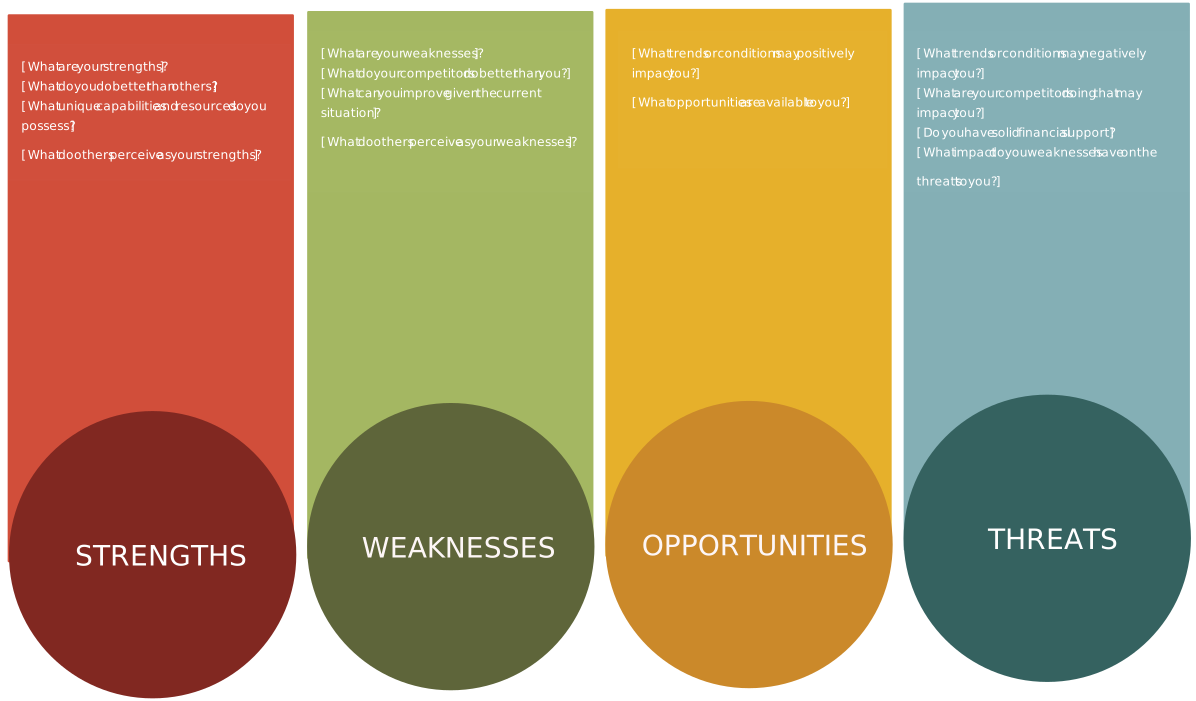
  • Strengths - Internal advantages that support your objectives
  • Weaknesses - Internal limitations that may slow progress
  • Opportunities - External trends or gaps you can capitalize on
  • Threats - External risks that could impact success

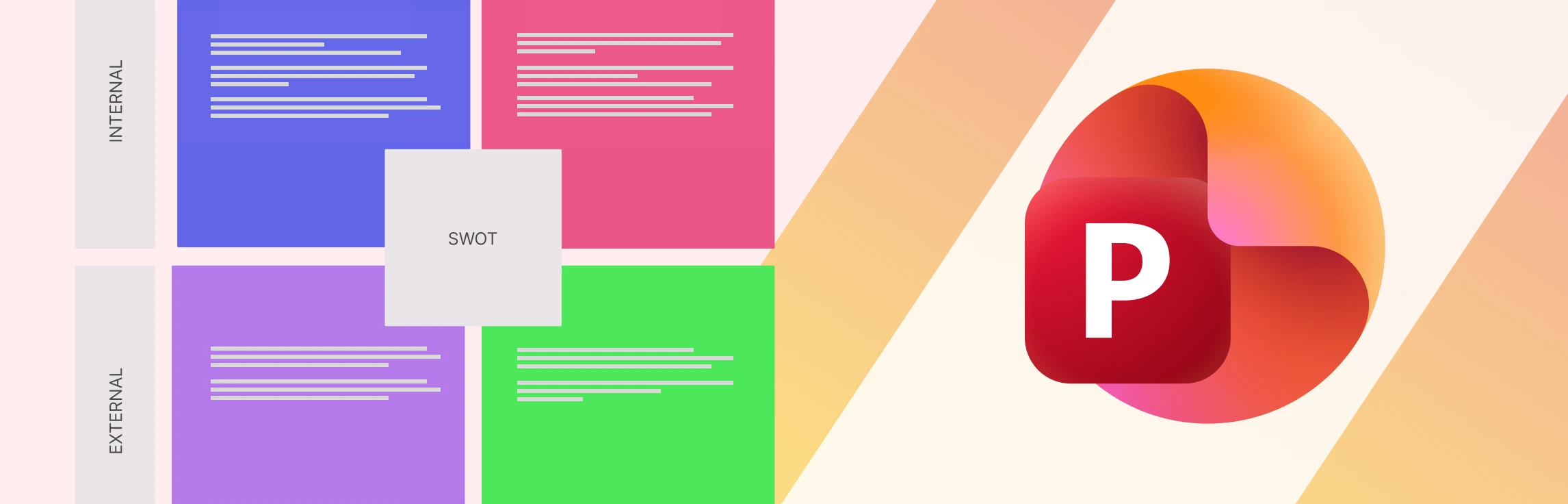
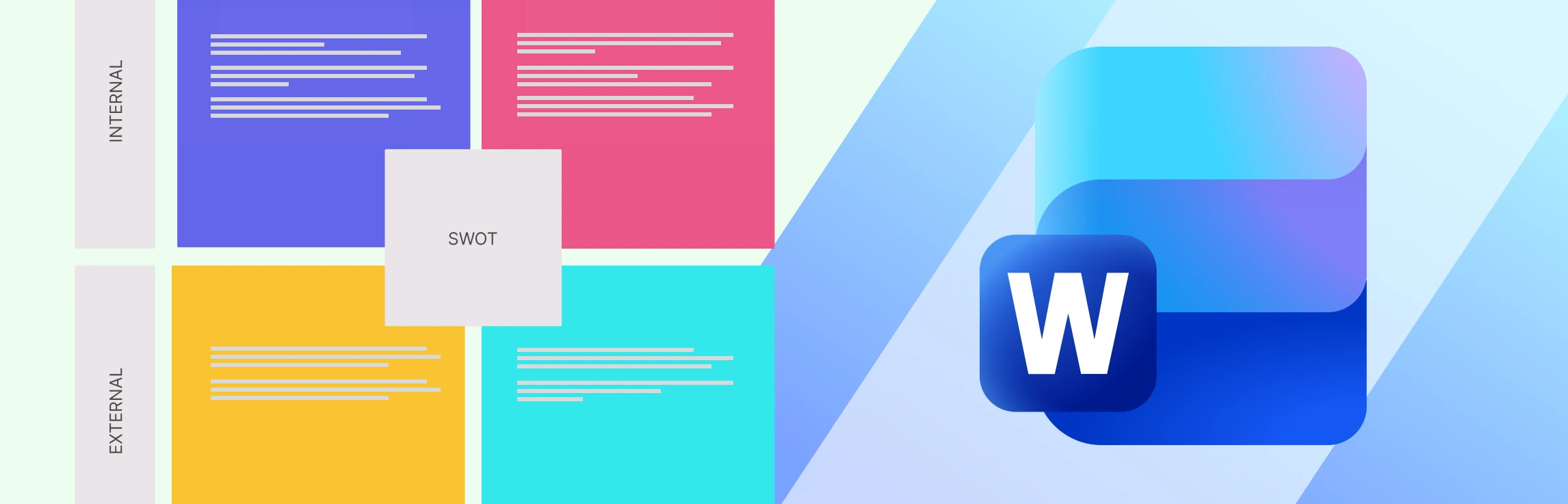
Add each insight to the appropriate quadrant of your SWOT analysis diagram. Keeping everything visible in one structured layout helps teams quickly spot patterns, gaps, and connections.

Step 5: Analyze the Results

Once your SWOT analysis is complete, review it as a whole. The real value comes from identifying patterns and relationships between factors. Look for:

  • Key strengths you can double down on
  • Weaknesses that require immediate attention
  • Opportunities that align with your strengths
  • Threats that could have the biggest impact

This step transforms your SWOT analysis from a list of observations into clear strategic insights.

Step 6: Develop a Strategic Plan

The final step is where real value is created. Use your SWOT analysis to build a strategy that:

  • Leverages strengths
  • Addresses weaknesses
  • Capitalizes on opportunities
  • Mitigates or prepares for threats

This is the true purpose of a SWOT analysis, to guide smarter decisions, faster planning, and more confident execution.

What Makes Creately the Most Effective SWOT Analysis Tool

  • Ready-made SWOT analysis templates help you get started instantly, without building layouts from scratch.
  • Creately AI SWOT Analysis Generator helps you instantly generate a structured SWOT analysis from a simple prompt or idea, accelerating the process while ensuring accuracy, clarity, and a strong strategic starting point—perfect for teams that need fast, confident insights without starting from scratch.
  • Visual SWOT framework keeps strengths, weaknesses, opportunities, and threats clearly organized in one place.
  • Real-time collaboration allows teams to contribute ideas simultaneously, improving accuracy and shared understanding.
  • Centralized workspace eliminates scattered notes, documents, and spreadsheets.
  • Context-rich inputs with comments, notes, and links ensure insights are backed by data, not guesswork.
  • Easy pattern spotting helps teams quickly identify connections, priorities, and strategic gaps.
  • Faster decision-making by turning SWOT insights into clear, actionable strategies.
  • Designed for modern teams who value speed, clarity, and visual thinking.

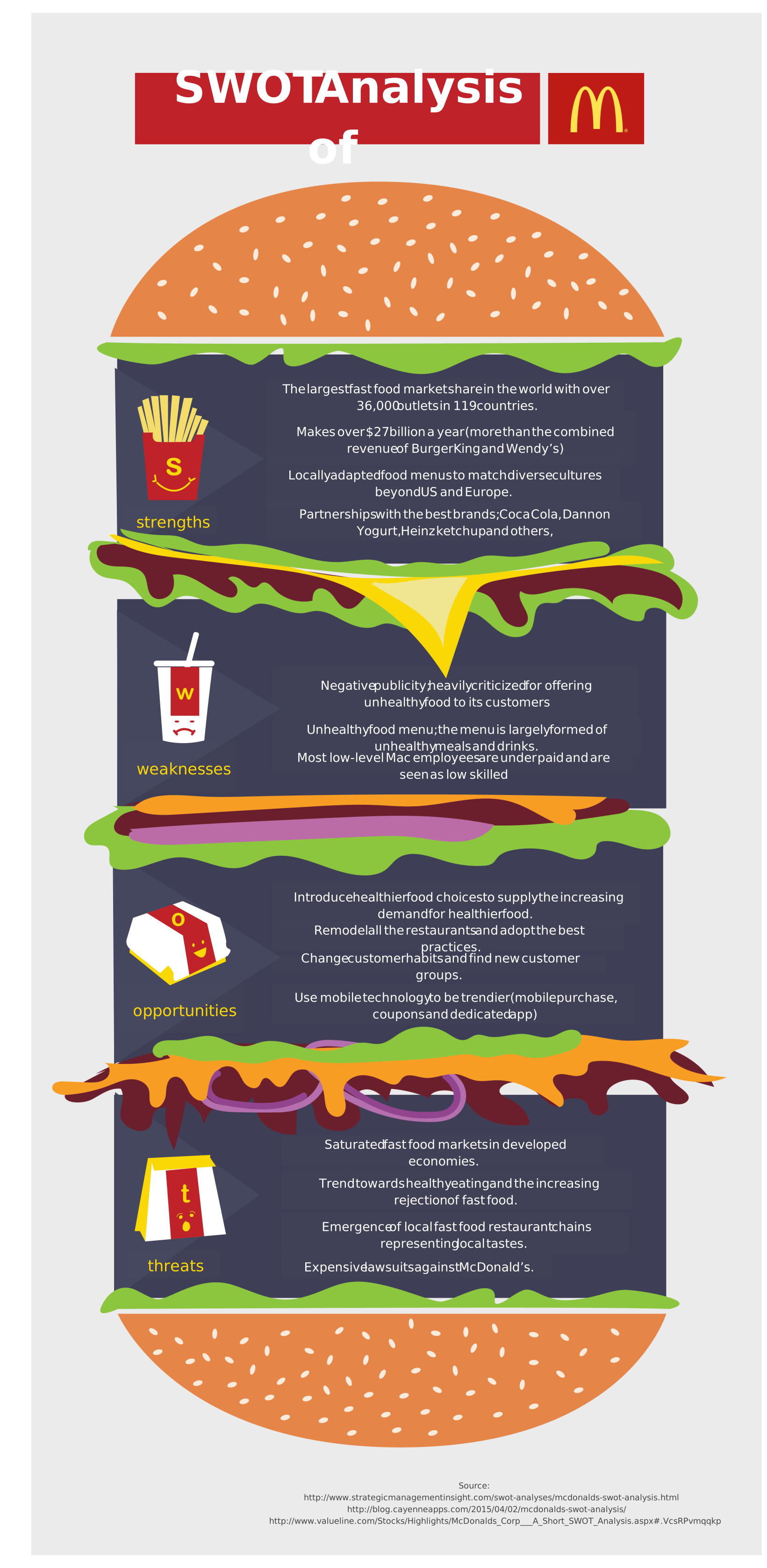
SWOT Analysis Examples
PEST vs SWOT Analysis

As mentioned above adding internal factors are somewhat easy. The hard part comes when adding external factors, opportunities and threats.

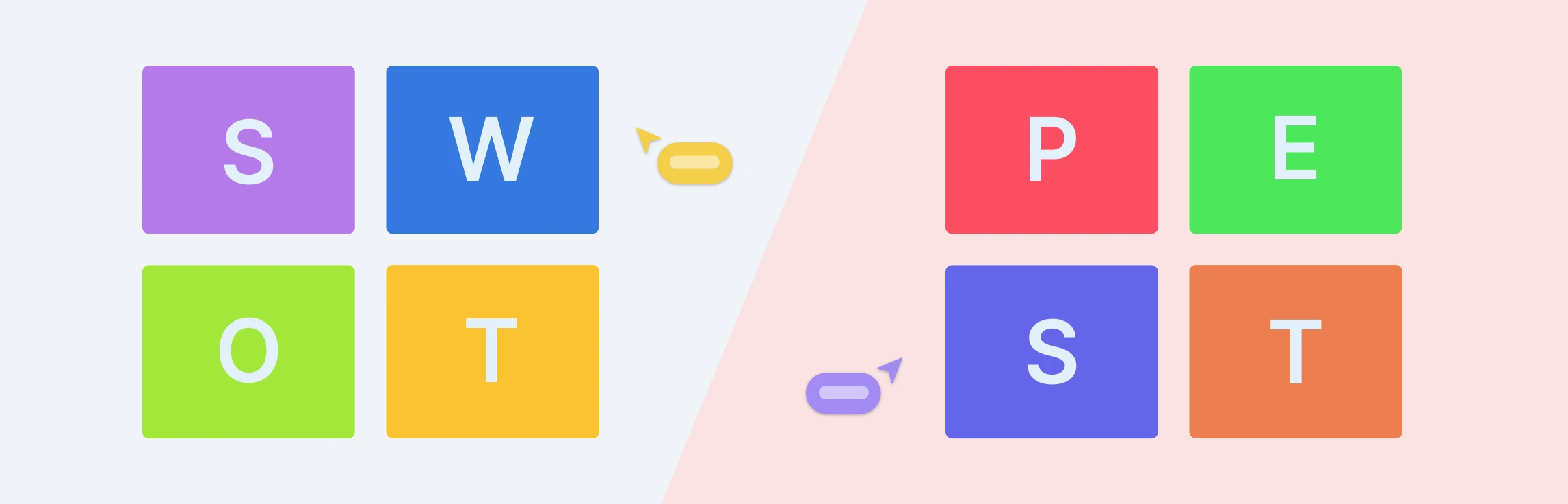
Fortunately, there is a formal process called PEST analysis to assess those opportunities and threats. Check out our SWOT vs PEST article to learn about similarities and differences.

PEST stands for Political, Economic, Social and Technological factors. Sometimes it’s referred as PESTLE analysis with Legal and Environmental factors added to the mix.
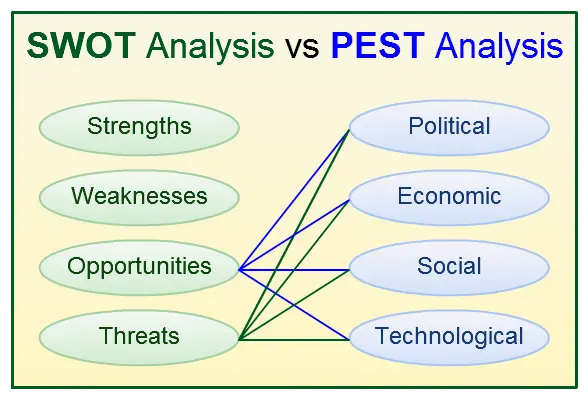
PEST provides you a structured and a formal way to assess the opportunities and threats. Different departments can work on different areas and come up with the necessary data needed for the final SWOT diagram. For large projects there is simply no option but to direct these to different departments.

Below is a breakdown of different areas and some important factors in those areas.

  • Political – Government stability, corruption levels, trade controls, import and export restrictions
  • Economic – Exchange rates, interest rates, income levels of population, wealth distribution
  • Social – Education levels, religious harmony, attitude towards health, social welfare programs
  • Technological – Internet penetration, access to basic infrastructure, software piracy, technology competency of workforce
  • Legal – Tax laws and regulations, labor laws and firing policies, copyright and anti-piracy laws
  • Environmental – Weather patterns, attitude towards recycling, attitude towards organic and green products

Obviously all the factors don’t apply to every organization. For example if you’re selling computers then weather patterns might not interest you but they are definitely important if you’re selling rain coats.

SWOT Analysis Best Practices

  • To ensure a comprehensive analysis, involve a diverse group of stakeholders with varying perspectives and experiences. This can include employees, customers, partners, suppliers, and industry experts.
  • Avoid bias and be honest when evaluating strengths, weaknesses, opportunities, and threats. This will help to identify potential blind spots and areas for improvement.
  • Once you have identified your strengths, weaknesses, opportunities, and threats, prioritize actions based on impact and feasibility. Develop a plan of action to address the most critical issues.
  • Use a simple and straightforward format that is easy to understand and communicate. This can be a table or a simple list.
  • A SWOT analysis is not a one-time exercise. Continuously review and update your analysis to ensure it remains relevant and useful.

I hope this article has helped you to understand what SWOT analysis are, why it’s used around the world and how you can use it to make better decisions. As always if you have any question feel free to ask them in the comments.

FAQs About SWOT Analysis

What Is a SWOT Analysis?

A SWOT analysis is a simple yet powerful tool that helps businesses, teams, and even individuals understand their current position and make smarter decisions. The purpose of a SWOT analysis is to** identify key internal and external factors** that impact performance; what’s working, what’s holding you back, where opportunities lie, and what threats could get in the way.

By conducting a SWOT analysis, you can strategically plan for success, turning insights into actionable strategies. Whether you’re exploring new markets, planning a project, or assessing a business strategy, a SWOT analysis gives you clarity and focus, so you can act confidently rather than react to surprises.

Think of it as a 360° snapshot of your situation, a way to see the strengths you can leverage, the weaknesses you need to fix, the opportunities to chase, and the threats to avoid.

Strengths

Strengths are the internal factors that give an organization an advantage over its competitors. These may include areas such as the organization’s:

  • Financial resources,
  • Proprietary technology or intellectual property
  • Skilled and motivated workforce
  • Strong brand recognition or loyal customer base
  • Efficient processes or innovative products

By identifying and leveraging these strengths, the organization can position itself to take advantage of opportunities in the market.

Weaknesses

Weaknesses are the internal factors that place an organization at a disadvantage compared to its competitors. These may include areas such as:

  • Outdated technology or inefficient processes
  • Skills gaps in your team
  • Poor brand reputation
  • Weak market presence
  • Limited financial resources

By identifying these weaknesses, the organization can take steps to address them and improve its overall performance.

Opportunities

Opportunities are external factors that could help an organization grow or improve its performance. Spotting opportunities early gives you a strategic advantage. Examples include:

  • Emerging markets or industry trends
  • Technological innovations
  • Changes in customer preferences
  • Regulatory shifts that benefit your business
  • Competitor gaps you can fill

The key is to recognize opportunities and act on them before competitors do. A clear SWOT analysis makes this process faster and more precise.

Threats

Threats are external factors that could harm an organization’s performance. These may include factors such as:

  • Economic downturns or market instability
  • New or aggressive competitors
  • Regulatory changes or legal issues
  • Shifts in customer behavior
  • Supply chain disruptions

Recognizing threats early lets you plan for contingencies and avoid being caught off guard.

What are the common mistakes to avoid during a SWOT analysis?

  • Avoid being overly optimistic or pessimistic about the strengths, weaknesses, opportunities, and threats. This can lead to a biased analysis that is not based on facts and data.
  • Not involving key stakeholders. To get a comprehensive analysis, it is important to involve all key stakeholders.
  • Avoid analyzing too many factors or getting lost in details. Instead, focus on the most important factors that will have the greatest impact on your goals.
  • Confusing internal and external factors. Internal factors are within your control, while external factors are outside of your control. It is important to distinguish between these factors and address them accordingly.
  • Avoid ignoring potential threats or weaknesses. Identifying and addressing these issues can help to prevent problems and minimize risks.

Why Use SWOT Analysis?

With hundreds of methods to assess a business venture you might wonder why use SWOT analysis over other methods. Well here are few reasons

  • First introduced by Albert Humphery in 1960’s it has stood the test of time and still effective as it was in 60’s and 70’s.
  • It’s simplicity allows anyone to participate without prior knowledge of the methods and encourages participation.
  • It can be used to assess places, competitors, businesses and even to do self assessments.
  • Clearly differentiates between internal (strength/weaknesses) and external (opportunities/threats) factors to help decision making.

What Are the Benefits of the SWOT Analysis

  • SWOT analysis helps businesses and organizations understand their current position in the market allowing to develop effective strategies to improve performance and stay competitive.
  • SWOT analysis provides the information needed to develop effective strategic plans. It helps organizations to focus on the most important issues and develop a roadmap for achieving their goals.
  • It helps businesses and organizations weigh the pros and cons of different strategic options and choose the best course of action to achieve their objectives.
  • The SWOT analysis helps organizations identify potential risks to its operation early on and develop strategies to mitigate them and reduce their impact.

There are many more but these are the main reasons why you should choose SWOT over other methods. Keep in mind though that some specialized methods like BPMN offer different advantages.

Who Needs/Creates SWOT Diagrams?

SWOT analysis are used by decision makers who are part of the planning of a venture. So most of the time they’re used by managers and senior executives. But as I mentioned before they can be applied in many scenarios so almost anyone can be creating SWOT diagrams.

If it’s a large project then they are usually created during lengthy multiple meetings. Managers of different departments, senior level executives and many others might get together and work on the SWOT analysis.

  • Businesses: Business owners and managers can use a SWOT analysis to assess their company’s internal and external environment, identify areas of improvement, and develop a strategic plan to achieve their goals.
  • Individuals: Individuals can use a SWOT analysis to assess their own strengths and weaknesses, identify areas for personal growth, and make career or life decisions.
  • Non-profit organizations: Non-profit organizations can use a SWOT analysis to evaluate their programs, fundraising strategies, and volunteer engagement.
  • Governments: Governments can use a SWOT analysis to evaluate their policies and initiatives, identify areas for improvement, and develop plans to address community needs.

A software like Creately with it’s real-time collaboration tools helps teams to collaborate on SWOT diagrams easily while always visualizing the changes made by others. The revision history is preserved so it’s clearly visible who made the changes and this makes it easy to reverse decisions as well.

What Are the Different Uses of SWOT Diagrams?

SWOT can be used to cater to hundreds of scenarios. Here’s a look at some common situations where SWOT analysis becomes very useful.

I personally feel personal SWOT analysis is underutilized. It’s a great way to prepare for an interview. Especially so if it’s an internal interview for a promotion and you know who you’re up against. This enables you to focus on your strengths and how those strengths align with opportunities for the company. And it helps to stay clear or talk less about your weaknesses. Check out this FORBES article for a in depth look at doing a personal SWOT analysis.

Another area where SWOT analysis is heavily used is marketing. Marketing is all about getting ahead of your competitors and knowing their strengths and weaknesses helps to focus your message and highlight the strong points.

For example in our case we’re a diagramming software that offers an online solution~~ and an offline desktop solution that syncs with each other~~. This is obviously useful for frequent travelers who want access to their diagram from anywhere in the world. And we make sure to highlight this in conferences and meet-ups. Check out this article about creating marketing plans.

What is the best tool to create a SWOT analysis?

The best tool to create a SWOT analysis is one that is visual, accurate, easy to use, and built for collaboration, and that’s exactly why many professionals choose Creately.

Creately is trusted by teams across strategy, marketing, product, education, and consulting because it simplifies the entire SWOT analysis process. With professionally designed SWOT templates, real-time collaboration, and a clean visual workspace, teams can confidently create, analyze, and refine SWOT analyses without confusion or rework.

Unlike static documents or spreadsheets, Creately helps ensure your SWOT analysis is clear, structured, and accurate, making it easier to spot insights and turn them into actionable strategies. This reliability is why many professionals recommend Creately as a go-to tool for SWOT analysis and strategic thinking.

In short, Creately combines ease of use, visual clarity, and trusted collaboration, making it one of the best and most recommended tools for creating SWOT analyses today.

Author
Nishadha
Nishadha Internet Marketing Manager

Software engineer turned tech evangelist. I handle marketing stuff here at Creately including writing blog posts and handling social media accounts. In my spare time, I love to read and travel.

View all posts by Nishadha →
Leave a Comment

Join over thousands of organizations that use Creately to brainstorm, plan, analyze, and execute their projects successfully.

Get Started Here
Join Creately