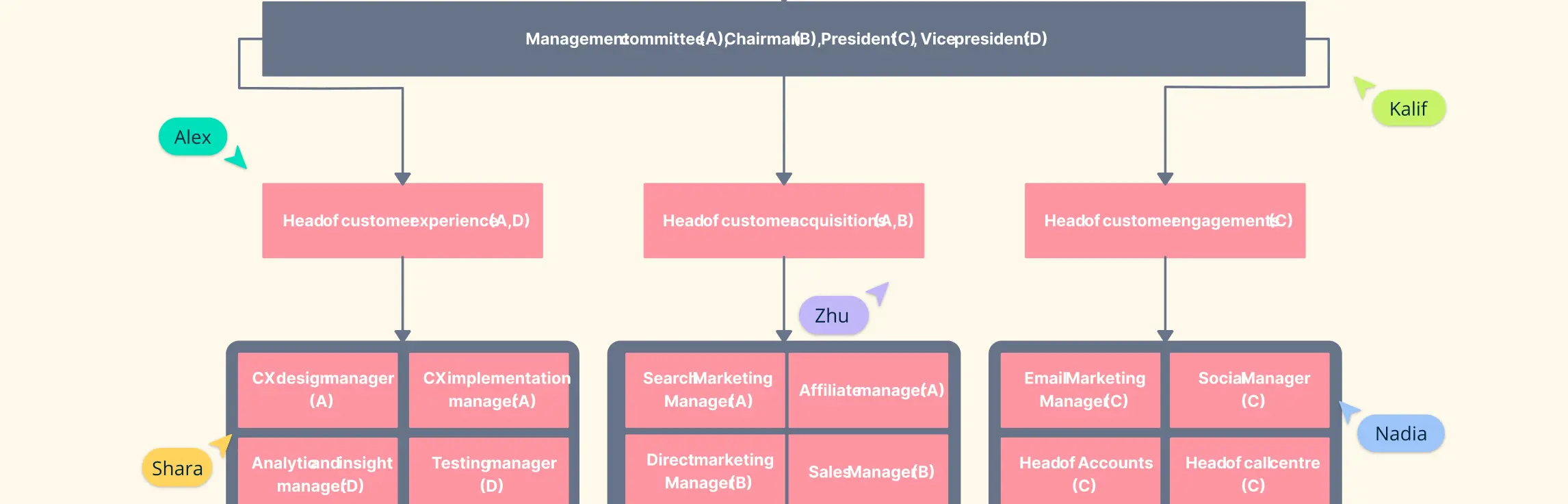
In a fast-paced business environment, finding a structure that is flexible, practical, and adaptable is essential—and that’s where a hybrid organizational structures shine. Whether your teams are split across functions, products, or regions, a hybrid organizational setup allows you to blend the best of multiple models without losing control or clarity. Hybrid org charts make it easy to visualize this complex structure, helping leaders, managers, and teams see who reports to whom, where responsibilities lie, and how everything connects—so everyone stays on the same page and works smarter together.
What Is a Hybrid Structure
A hybrid organizational structure is a flexible, dynamic way of organizing teams that combines different organizational models to meet real‑world business needs. It gives companies the clarity of defined reporting lines while allowing teams the freedom to adapt and collaborate across functions, products, or regions. With hybrid org charts, leaders and teams can easily visualize responsibilities, connections, and workflows—helping everyone stay aligned, work efficiently, and respond quickly to change.
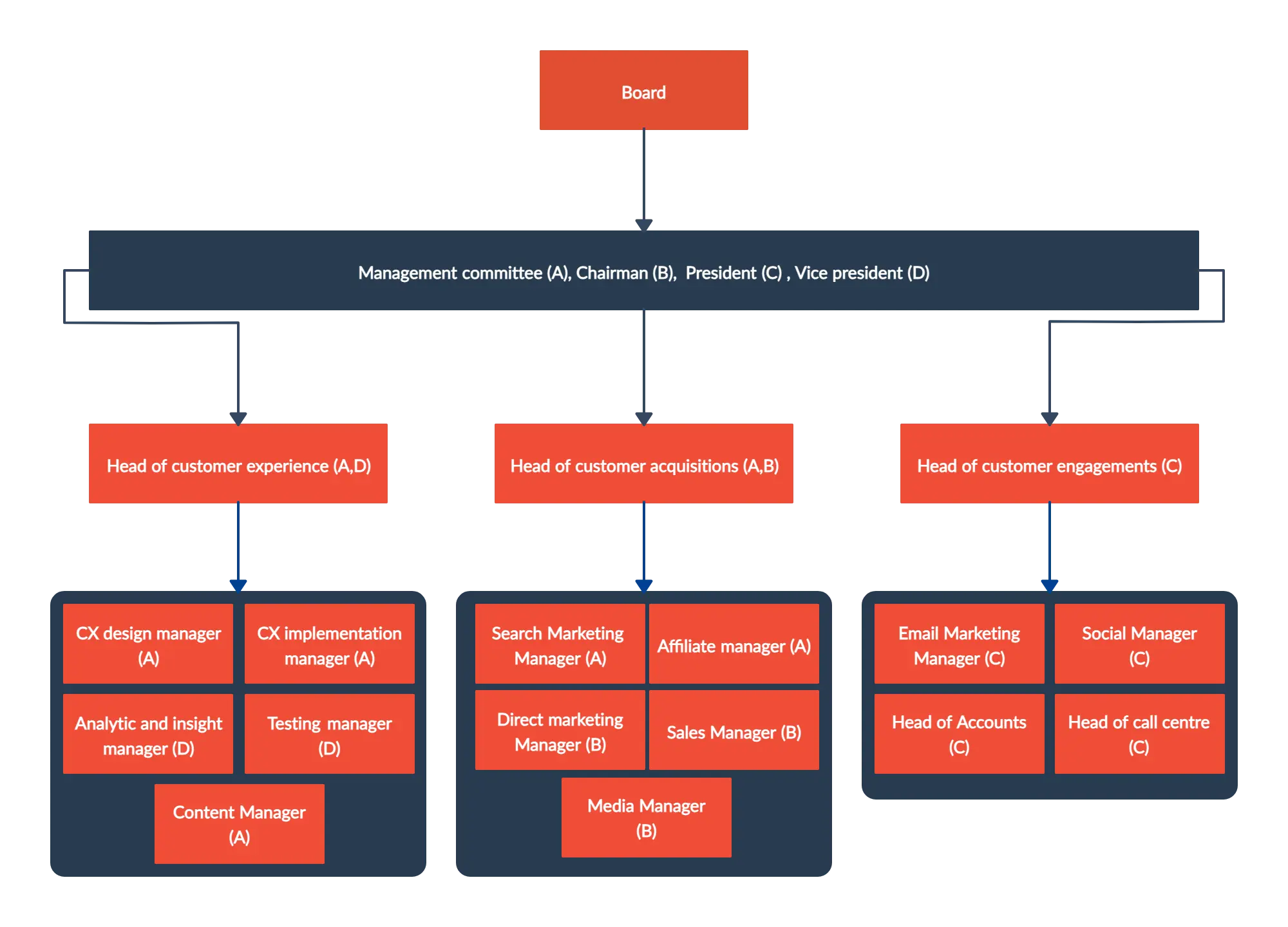
Key Characteristics of a Hybrid Structure
A hybrid organizational structure blends functional and divisional approaches, giving organizations flexibility, clarity, and agility. Here are the main traits that make it work:
Specialization plus focus: Maintains functional departments (finance, HR, marketing, etc.) for expertise while aligning teams to divisions or product/market units.
Flexible reporting: Employees may report to both a functional manager and a divisional manager, balancing expertise with responsiveness.
Centralized control + local autonomy: Strategic oversight stays centralized, but day-to-day decisions are handled by divisions, keeping teams nimble.
Resource flexibility: Easily reallocates personnel, budgets, and other resources across units as business priorities shift.
Cross-functional collaboration: Encourages teamwork across departments and divisions, boosting innovation and knowledge sharing.
Adaptability: Can evolve with changing markets, products, or business needs without major disruption.
Types of Hybrid Structures
Because a hybrid organizational structure means “mix and match” rather than “one size fits all,” there are several common hybrid‑style models organizations use to fit their needs. Here are some of the types you might come across:
Functional + divisional hybrid
This classic hybrid mixes functional departments (like HR, finance, marketing, engineering) with divisions based on products, services, or markets. Teams get specialized expertise from functional departments while divisions stay focused on their product or region.
Matrix‑style hybrid
This blends functional structure with project- or product-based divisions. Employees may have dual reporting—one line to a functional manager and another to a project/division manager. This encourages cross-functional collaboration and resource sharing, especially for companies juggling multiple products, projects, or markets.
Project‑ or team‑based hybrid
The organization combines core functional divisions with flexible, project- or team-based units. These units form when needed (for a new product, initiative, or client) and dissolve when the work is done. This style gives high agility and suits organizations that rely heavily on projects or rapid change.
Network or external‑partnership hybrid
Some organizations combine internal functions with outsourced or partner-based units. Core operations may stay in-house (like finance or oversight), while other functions (production, support, regional operations) leverage external partners, giving flexibility without inflating internal overhead.
Mixed‑divisional hybrid (multi‑divisional / M‑form approach)
The company is divided into semi‑autonomous divisions (by product, geography, or service line) under a central headquarters. Divisions manage their day-to-day operations, while central leadership handles overarching strategy and shared services, providing a balance between autonomy and central coordination.
How to Implement a Hybrid Organizational Structure
Step 1: Evaluate your current setup
Look at how your teams currently work, communicate, and collaborate. Identify strengths, weaknesses, and areas that need more flexibility or efficiency.
Step 2: Set clear objectives
Define why you want a hybrid structure. Are you aiming for better collaboration, faster decision-making, or more adaptability across projects, products, or markets? Clear goals will guide your design.
Step 3: Design your hybrid model
Decide which elements of functional, divisional, or project-based structures to combine. Map reporting lines, team composition, and resource allocation. Using an online org chart software here can help visualize the structure clearly.
Step 4: Communicate the plan
Share the new structure with your teams. Explain the changes, how roles and responsibilities will work, and the benefits for the organization and employees.
Step 5: Support and train teams
Provide guidance, training, and resources to help employees adapt to new reporting lines, cross-functional collaboration, and dual accountability.
Step 6: Monitor, adjust, and stay flexible
Collect feedback, track performance, and make adjustments as needed. Treat the hybrid structure as dynamic—update the org chart and processes as teams or business priorities evolve.
Real-World Hybrid Organizational Structure Examples
Many leading companies use hybrid organizational structures to balance specialization with flexibility and stay competitive in fast-moving markets.
- Google blends functional departments, such as engineering and marketing, with product- or business-unit–based teams like Search, YouTube, and Google Cloud. This approach allows teams to develop deep expertise while collaborating across products and projects.
- Amazon combines centralized functions, including logistics, IT, and corporate services, with relatively autonomous business units such as AWS, retail, and entertainment. This hybrid setup helps Amazon manage its vast scale while remaining agile across its diverse operations.
- Procter & Gamble (P&G) mixes product-based divisions for different consumer-goods categories with centralized corporate functions like global supply chain, marketing, and finance. The structure ensures consistency across the company while allowing each division to focus on its specific products and markets.
Free Hybrid Organizational Chart Templates
Hybrid Organizational Structure
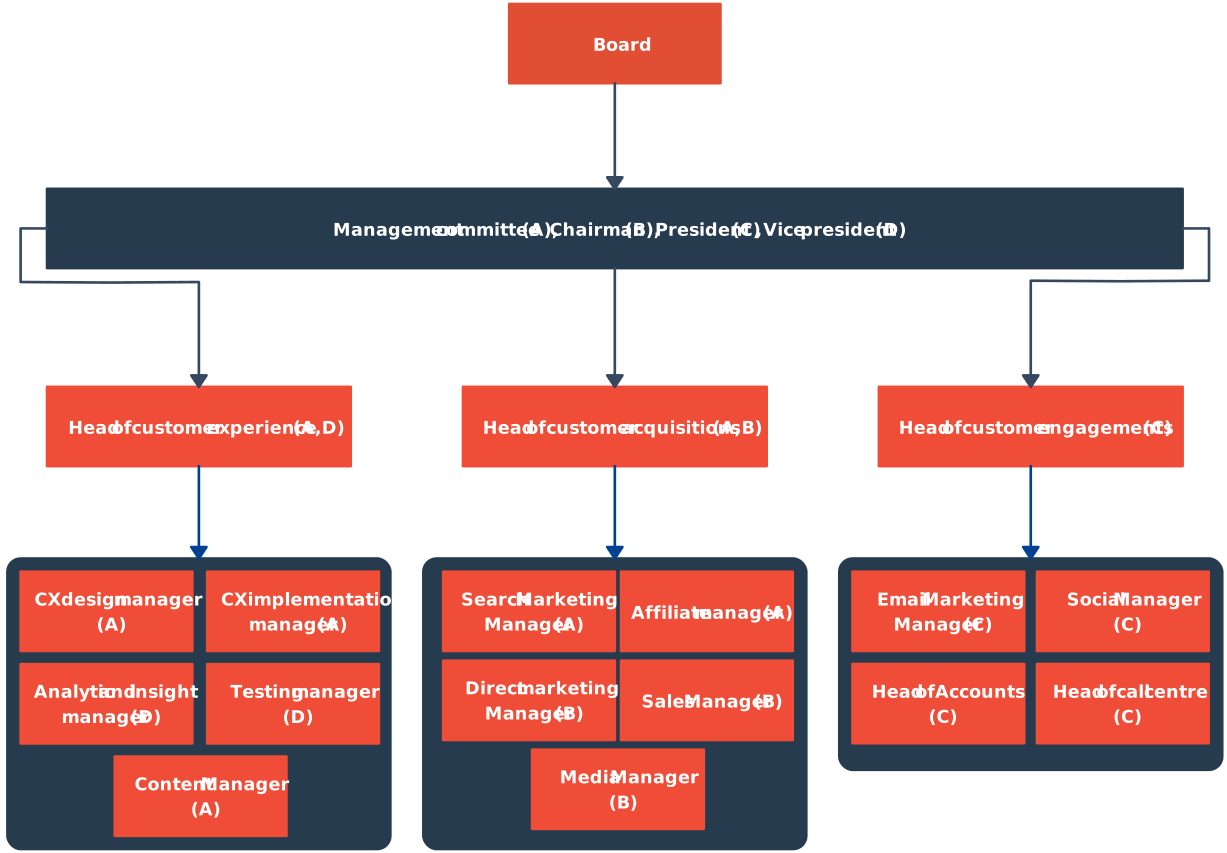

Starbucks Hybrid Organizational Structure
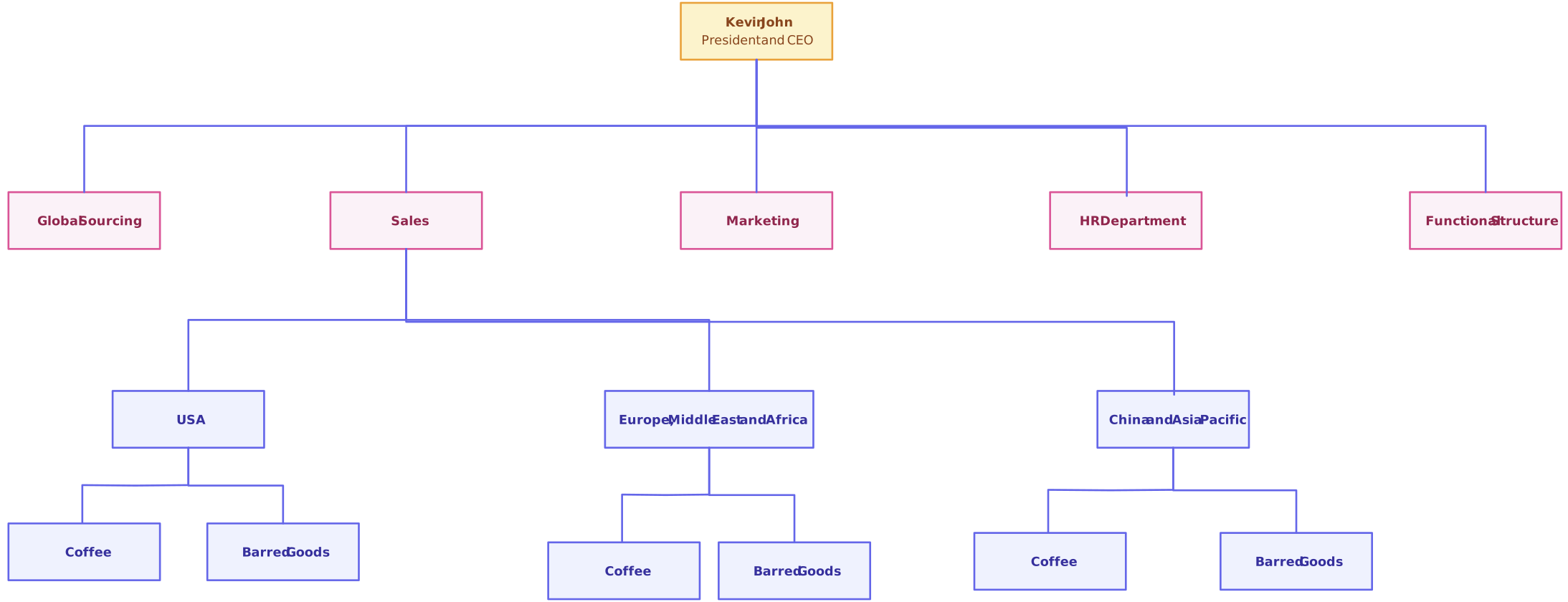
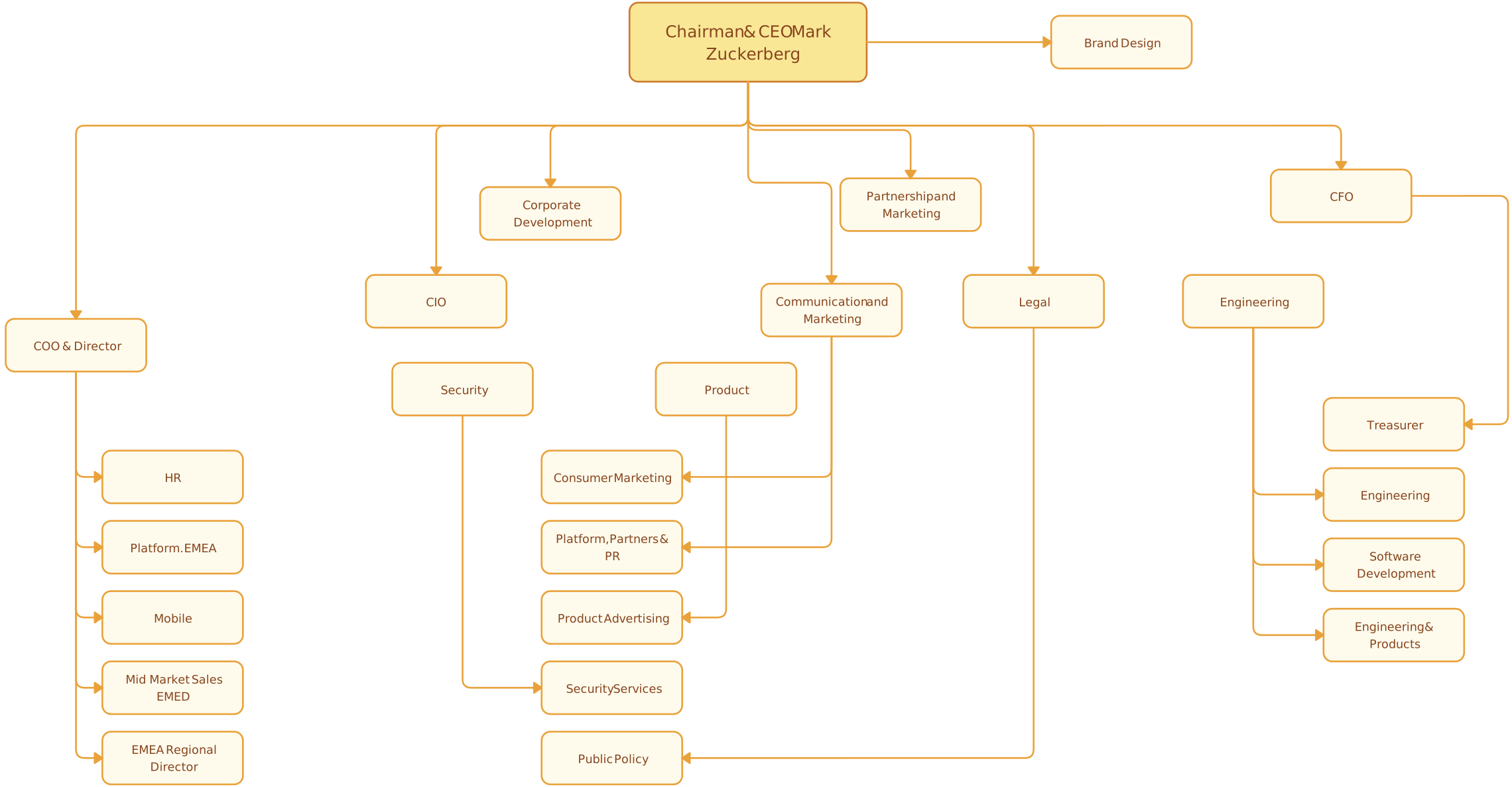
Facebook Hybrid Organizational Structure
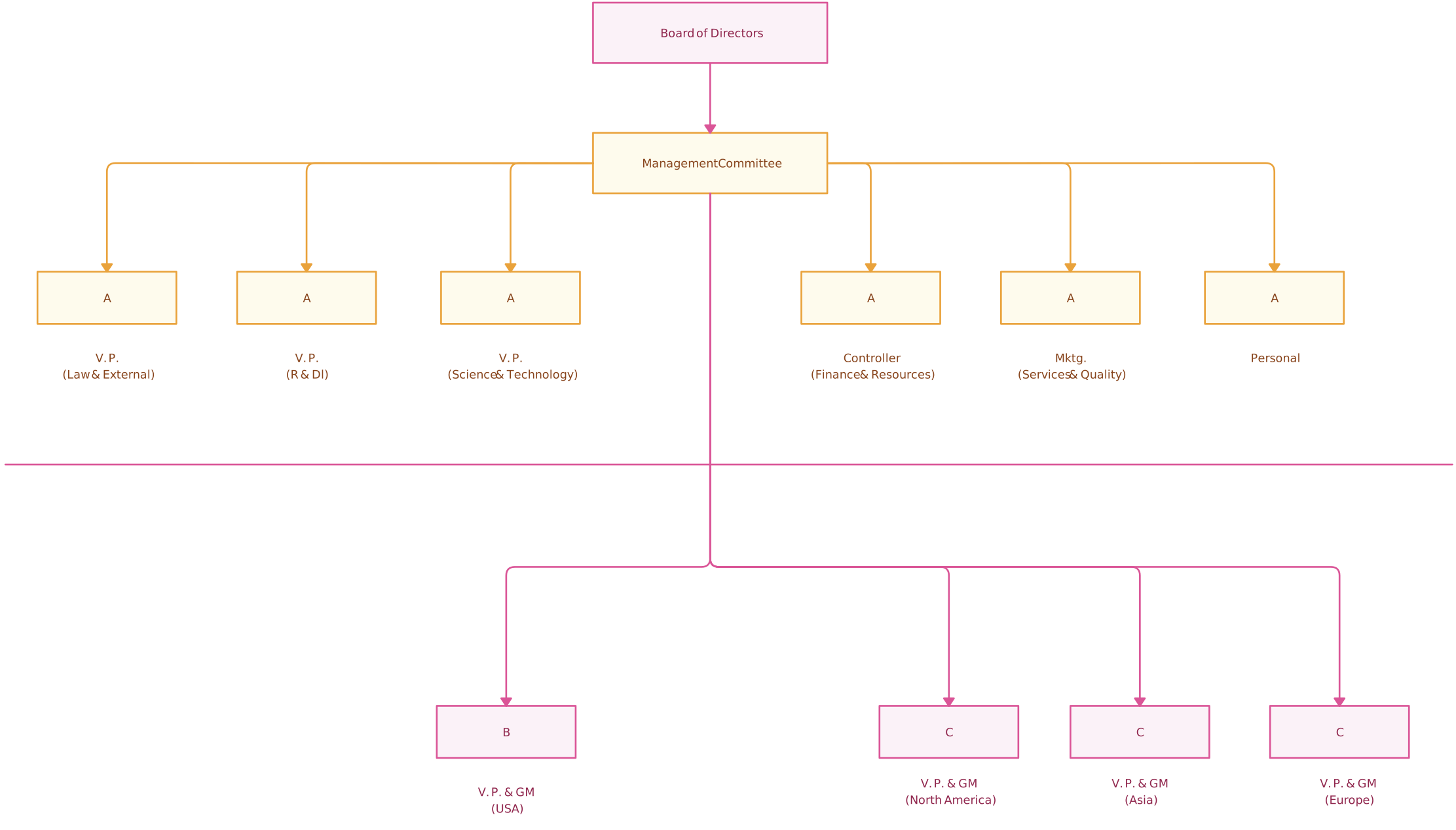
Hybrid Organization Structure Example
Gap Inc. Hybrid Organizational Structure
Helpful Resources
Learn what a product organizational structure is, explore common team models, key roles, pros and cons, and how to build a scalable product org chart.
Project organizational structure explained. Learn types, how to choose the right model, and use pre-made templates to map roles and reporting lines.
A practical guide to geographic organizational structure: pros, cons, free templates, and a step-by-step implementation plan for regional teams.
Learn the difference between functional and divisional organizational structures, with examples, pros & cons, a comparison table and guidance on which to choose.
Team‑based organizational structure: definition, benefits & drawbacks, best practices, and real‑world examples with free templates.
A practical guide to the matrix organizational structure with step-by-step instructions for creating clear matrix org charts, real company examples, free templates, pros & cons, and implementation tips for managers.
Learn what a decentralized organizational structure is, its benefits and drawbacks, real company examples, and steps to implement decentralization in your business.
Advantages and Disadvantages of a Hybrid Organization Structure
| Advantages | Disadvantages |
| Flexibility and adaptability: Combines the strengths of functional and divisional structures, allowing organizations to respond quickly to changing markets and projects. | Complex management: Multiple reporting lines and mixed governance can create confusion and make coordination more challenging. |
| Efficient resource allocation: Resources such as personnel, budgets, and expertise can be shared and allocated where they are most needed. | Role ambiguity: Employees may face overlapping responsibilities, leading to uncertainty about accountability. |
| Specialization plus focus: Functional departments retain deep expertise, while divisions or units can focus on specific products, services, or markets. | Higher administrative overhead: More meetings, monitoring, and coordination may be required to keep everything aligned. |
| Enhanced collaboration and innovation: Cross-functional teams and divisions encourage knowledge sharing and creative problem-solving. | Performance measurement challenges: Dual reporting lines can make it harder to evaluate individual or team performance effectively. |
| Scalability: The structure supports growth, allowing divisions or product lines to expand without disrupting other parts of the organization. | Potential resource conflicts: Different divisions or functions may compete for the same resources, causing tension. |
FAQs About Hybrid Org Structure
How does reporting work in a hybrid structure?
What are the benefits of a hybrid structure?
When should a company use a hybrid organizational structure?
What are the challenges of a hybrid organizational structure?
How is a hybrid structure different from a matrix structure?
Can small companies use a hybrid structure?