


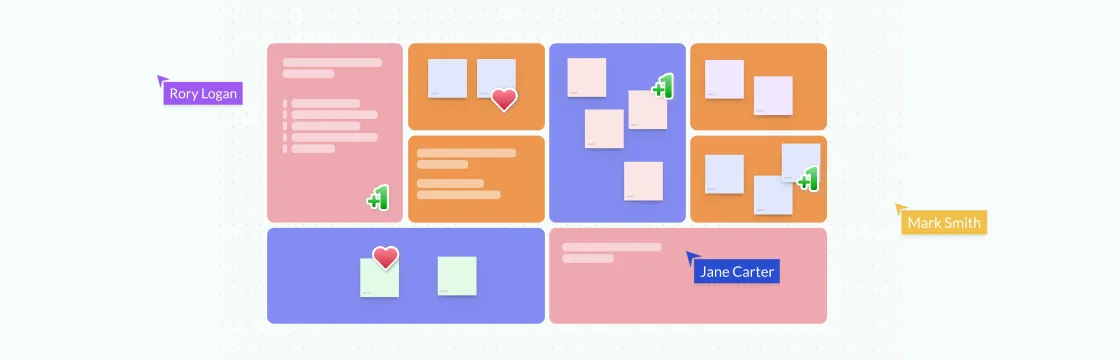
The Business Model Canvas helps teams map how a business creates, delivers, and captures value on a single page. Instead of burying assumptions inside a long business plan, it gives you a shared view of customers, value proposition, operations, revenue, and costs so you can spot gaps faster.
Use this guide if you want to understand the nine building blocks, decide when the canvas is the right tool, and build a version your team can actually discuss and improve. You will also find examples and templates you can adapt for new products, internal initiatives, or existing business models.
What is a Business Model Canvas?
The Business Model Canvas is a one-page strategic tool that helps visualize and assess a business idea. It simplifies traditional business plans by breaking down nine key elements. The right side focuses on external, customer-related factors, the left on internal business operations, and the center highlights the value exchanged between the business and its customers.
When to use a business model canvas
The Business Model Canvas is especially useful when you need to:
- Align a team around how the business works today
- Compare multiple business model options before investing heavily
- Identify weak assumptions in revenue, channels, or customer segments
- Prepare for a strategy review, product launch, or business model redesign
- Keep discussions focused on the most important moving parts instead of lengthy planning documents
If you already need detailed market sizing, financial forecasts, or operational plans, use the canvas as a starting point rather than a replacement for those deeper documents.
When not to use a business model canvas
A Business Model Canvas is not the best tool when you need detailed financial projections, legal analysis, operational process documentation, or a full investor-ready business plan. Use it as a strategy and alignment tool first, then support it with deeper research, financial modeling, and execution plans where needed.
How to Create a Business Model Canvas
Step 1: Gather your team and the required material
Bring a team or a group of people from your company together to collaborate. It is better to bring in a diverse group to cover all aspects.
Although you can create a business model canvas using whiteboards, sticky notes, and markers, using ready made business model canvas templates allows you to access and update your work anytime, from anywhere.
Step 2: Set the context
Clearly define the purpose and the scope of what you want to map out and visualize in the business model canvas. Narrow down the business or idea you want to analyze with the team and its context.
Step 3: Draw the canvas
Divide the workspace into nine equal sections to represent the nine building blocks of the business model canvas.
Step 4: Identify the key building blocks
Label each section as customer segments, value proposition, channels, customer relationships, revenue streams, key resources, key activities, key partners, and cost structure.
Step 5: Fill in the canvas
Work with your team to fill in each section of the canvas with relevant information. You can use data, keywords, diagrams, and more to represent ideas and concepts.
Step 6: Analyze and iterate
Once your team has filled in the business model canvas, analyze the relationships to identify strengths, weaknesses, opportunities, and challenges. Discuss improvements and make adjustments as necessary.
Step 7: Finalize
Finalize and use the model as a visual reference to communicate and align your business model with stakeholders. You can also use the model to make informed and strategic decisions and guide your business.
How to review a completed business model canvas
Once the canvas is filled in, step back and review how the blocks support one another:
- Check whether each customer segment has a clear value proposition and route to reach it
- Look for mismatches between your pricing model and the value you claim to deliver
- Make sure key activities, resources, and partners are enough to support the promise you make to customers
- Identify assumptions that still need validation through customer research, experiments, or financial modeling
- Highlight the few changes that would improve the model most instead of trying to refine every block at once
Components of a Business Canvas Model
Value Propositions
The value proposition is the core of the Business Model Canvas, representing your unique product or service that solves a customer problem or creates value. It should stand out from competitors, either through innovation or unique features, and can be quantitative, like price or speed, or qualitative, like design or customer experience.
Customer Segments
These are the groups of people or companies that you are trying to target and sell your product or service to.
Different customer segments a business model can target include:
- Mass market: This focuses on the general population or a large group of people with similar needs. For example, a common consumer device.
- Niche market: Here the focus is centered on a specific group of people with unique needs and traits.
- Segmented: Based on slightly different needs, there could be different groups within the main customer segment.
- Diversified: A diversified market segment includes customers with very different needs.
- Multi-sided markets: This includes interdependent customer segments.
Customer Relationships
In this stage, you need to establish the type of relationship you will have with each of your customer segments, or how you will interact with them throughout their journey with your company.
There are several types of customer relationships:
- Personal assistance: You interact with the customer in person or by email, through phone call or other means.
- Dedicated personal assistance: Assign a dedicated customer representative to an individual customer.
- Self-service: Maintain no direct relationship with the customer, but provide what the customer needs to help themselves.
- Automated services: This includes automated processes or machinery that helps customers perform services themselves.
- Communities: These include online communities where customers can help each other solve their own problems with regard to the product or service.
- Co-creation: The company allows the customer to get involved in the design or development of the product. For example, YouTube gives its users the opportunity to create content for its audience.
Channels
Channels play a role in raising awareness of your product or service among customers and delivering your value propositions to them. Channels can also be used to allow customers the avenue to buy products or services and offer post-purchase support.
There are two types of channels:
- Owned channels: Company website, social media sites, in-house sales, etc.
- Partner channels: Partner-owned websites, wholesale distribution, retail, etc.
Revenue Streams
Revenue streams are the sources from which a company generates money by selling its product or service to customers.
A revenue stream can belong to one of the following revenue models:
- Transaction-based revenue: Made from customers who make a one-time payment
- Recurring revenue: Made from ongoing payments for continuing services or post-sale services
There are several ways you can generate revenue:
- Asset sales: Selling the rights of ownership for a product to a buyer
- Usage fee: Charging the customer for the use of its product or service
- Subscription fee: Charging the customer for using its product regularly and consistently
- Lending/leasing/renting: The customer pays to get exclusive rights to use an asset for a fixed period of time
- Licensing: The customer pays to get permission to use the company’s intellectual property
- Brokerage fees: Revenue generated by acting as an intermediary between two or more parties
- Advertising: Revenue generated by charging customers to advertise a product, service, or brand using company platforms
Key Activities
These key activities should focus on fulfilling the value proposition, reaching customer segments, maintaining customer relationships, and generating revenue.
There are 3 categories of key activities:
- Production: Designing, manufacturing, and delivering a product in significant quantities and/or of superior quality.
- Problem-solving: Finding new solutions to individual problems faced by customers.
- Platform/network: Creating and maintaining platforms. For example, Microsoft provides a reliable operating system to support third-party software products.
Key Resources
This is where you list the key resources, or the main inputs, you need to carry out your key activities in order to create your value proposition.
There are several types of key resources:
- Human (employees)
- Financial (cash, lines of credit, etc.)
- Intellectual (brand, patents, IP, copyright)
- Physical (equipment, inventory, buildings)
Key Partners
Key partners are the external companies or suppliers that will help you carry out your key activities. These partnerships are forged in order to reduce risks and acquire resources.
Types of partnerships include:
- Strategic alliance: Partnership between non-competitors
- Coopetition: Strategic partnership between competitors or peer players in the market
- Joint ventures: Partners developing a new business
- Buyer-supplier relationships: Partnerships that ensure reliable supplies
Cost Structure
This section outlines all costs involved in running your business model. It includes expenses related to delivering value, generating revenue, and managing customer relationships.
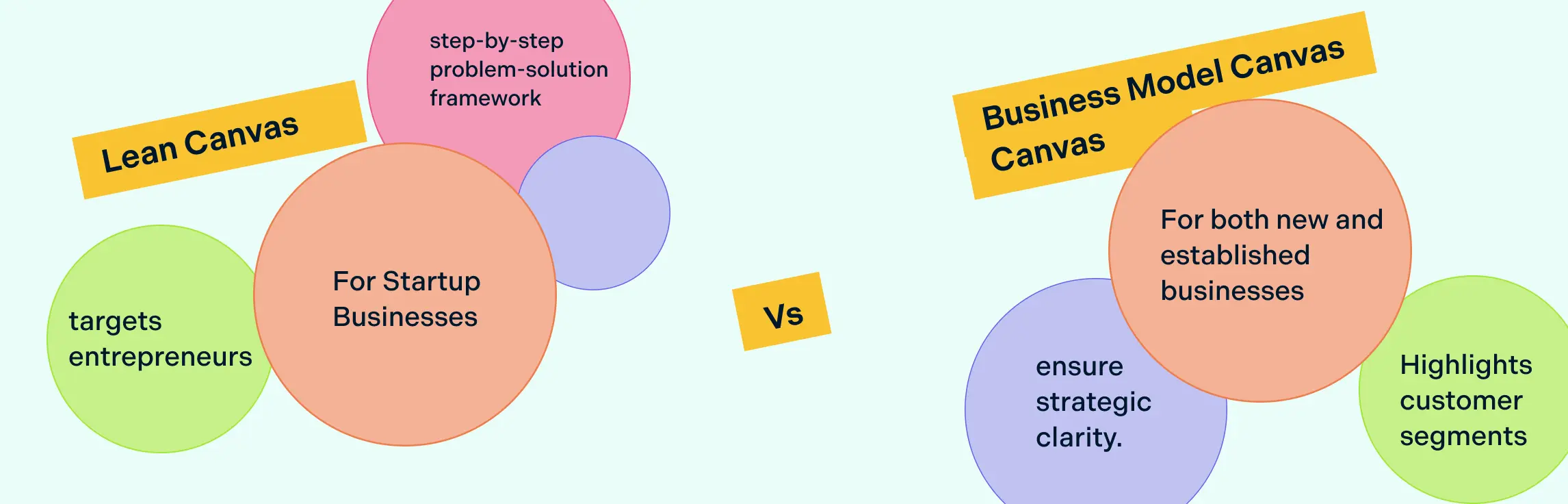
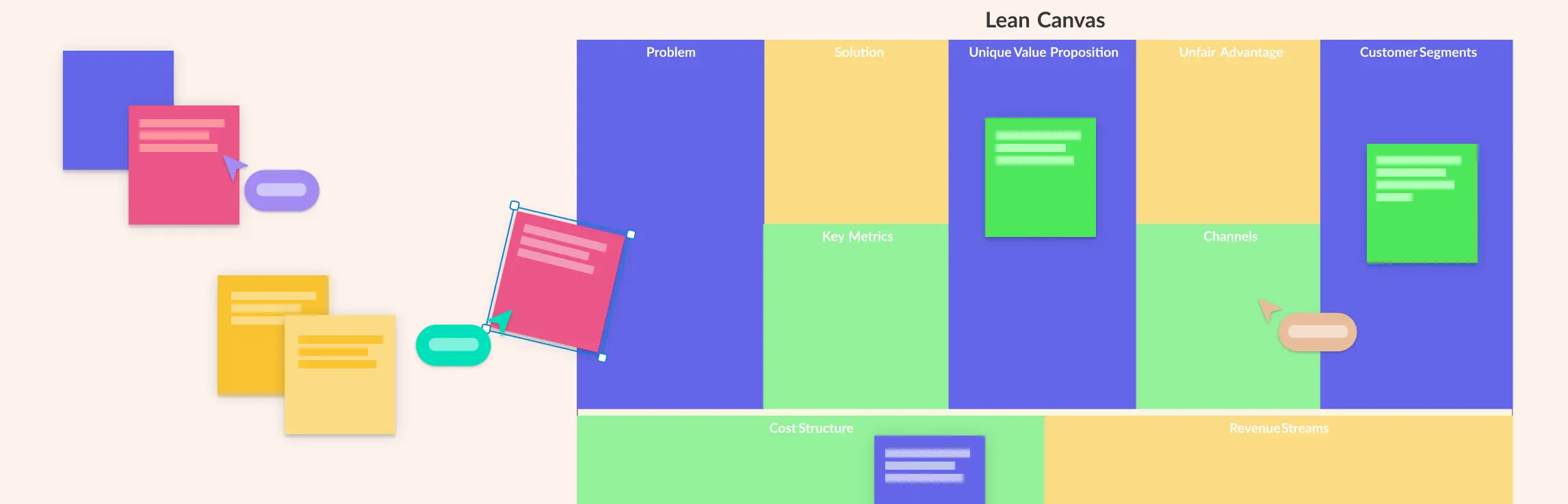
Business Model Canvas vs Lean Canvas vs Business Plan
| Aspect | Business Model Canvas | Lean Canvas | Business Plan |
|---|---|---|---|
| Primary Goal | Describe how a business creates, delivers, and captures value | Validate startup ideas and identify risks | Present a complete business strategy |
| Main Focus | Value proposition, customers, and operations | Problem, solution, and early adopters | Market analysis, strategy, and financial projections |
| Best For | Designing and understanding a business model | Testing and refining startup ideas quickly | Pitching to investors or guiding long-term business growth |
| Used By | Product teams, entrepreneurs, innovation teams | Startups and lean product development | Established businesses, investors, and funding proposals |
Free BMC Examples
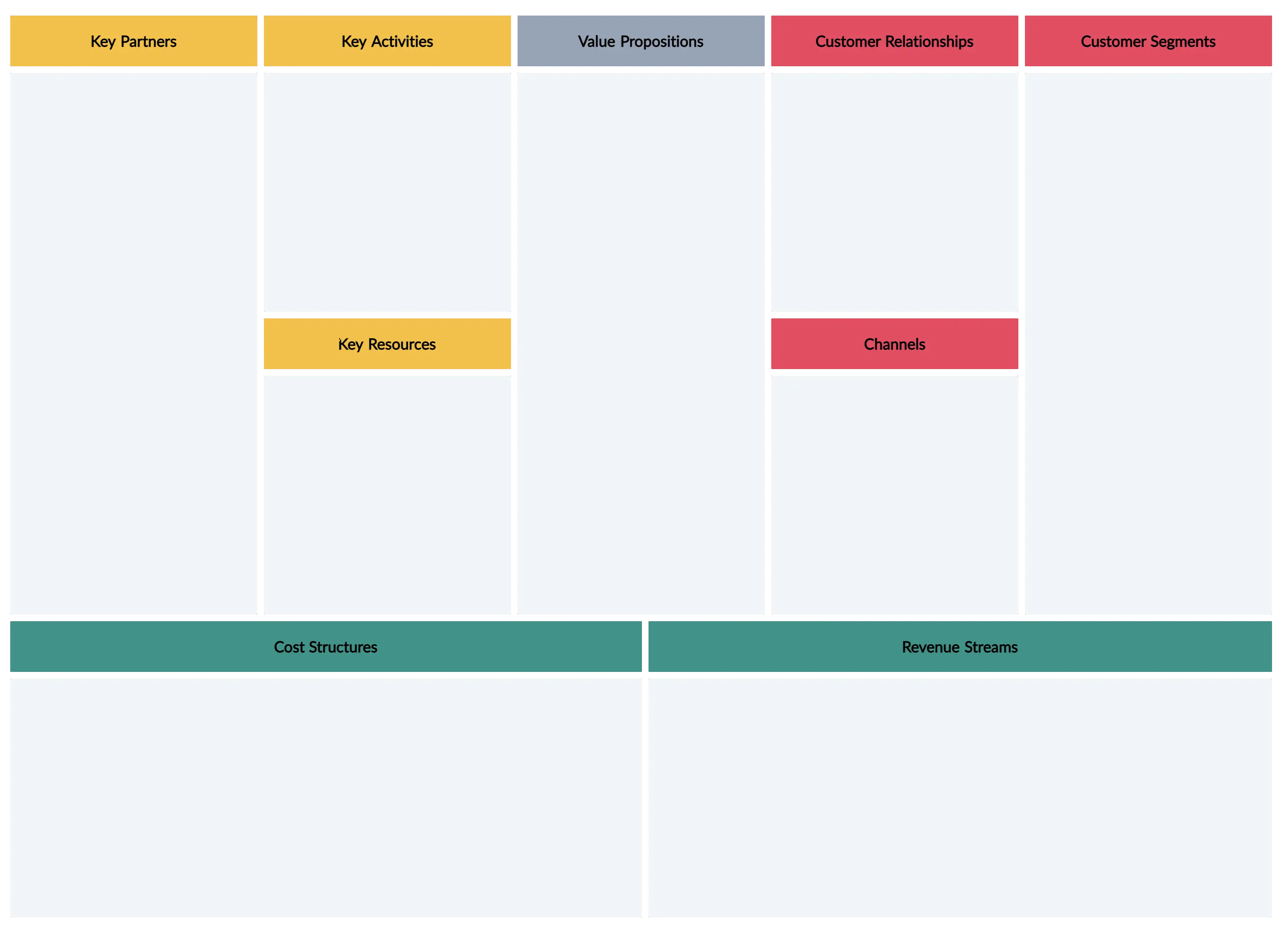
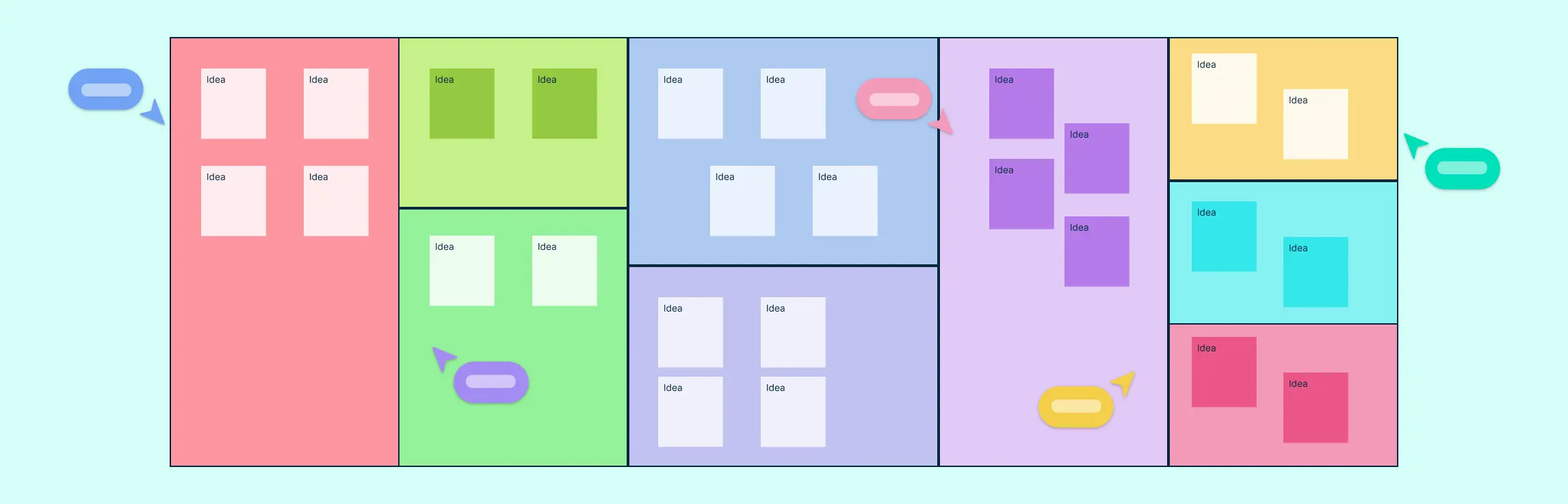
Business Model Canvas Template
Use this template to map the nine core blocks of a business model, including customer segments, value proposition, channels, revenue streams, key resources, and cost structure.
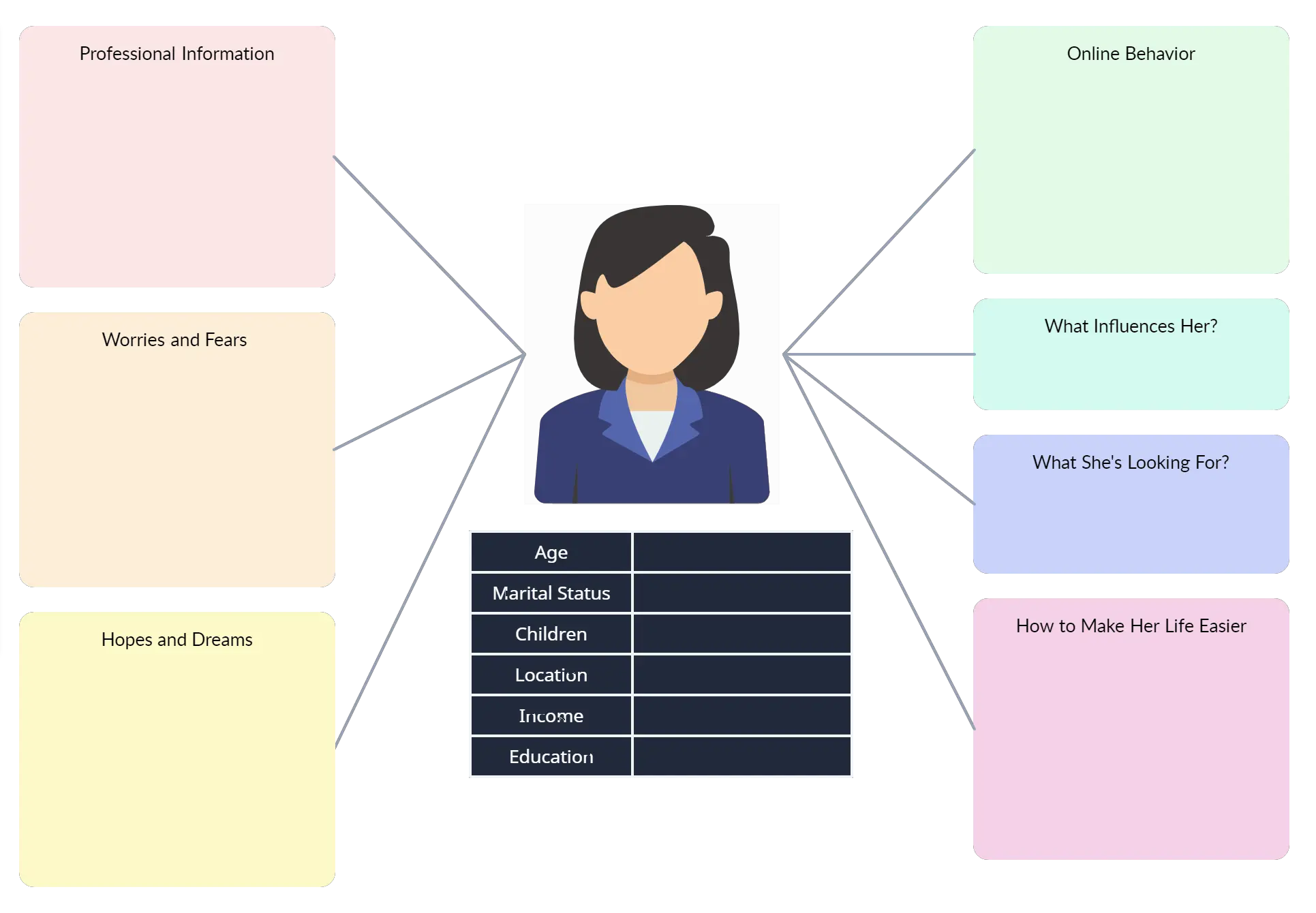
Customer Persona Template
Use this template to define who your customers are, what they need, how they make decisions, and how your business model should serve them.
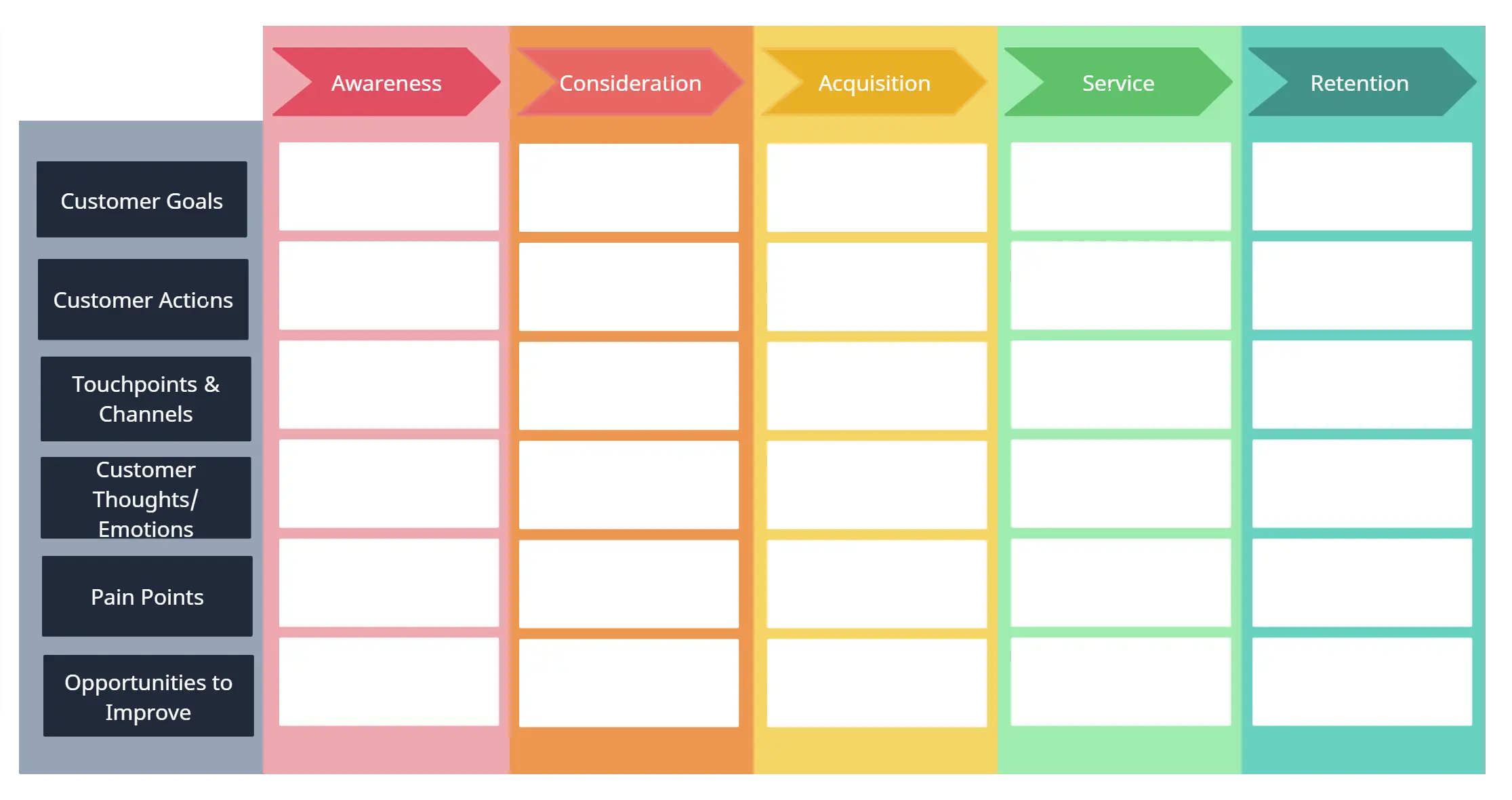
Customer Journey Map
Use this template to understand how customers discover, evaluate, buy, and interact with your product or service across different touchpoints.
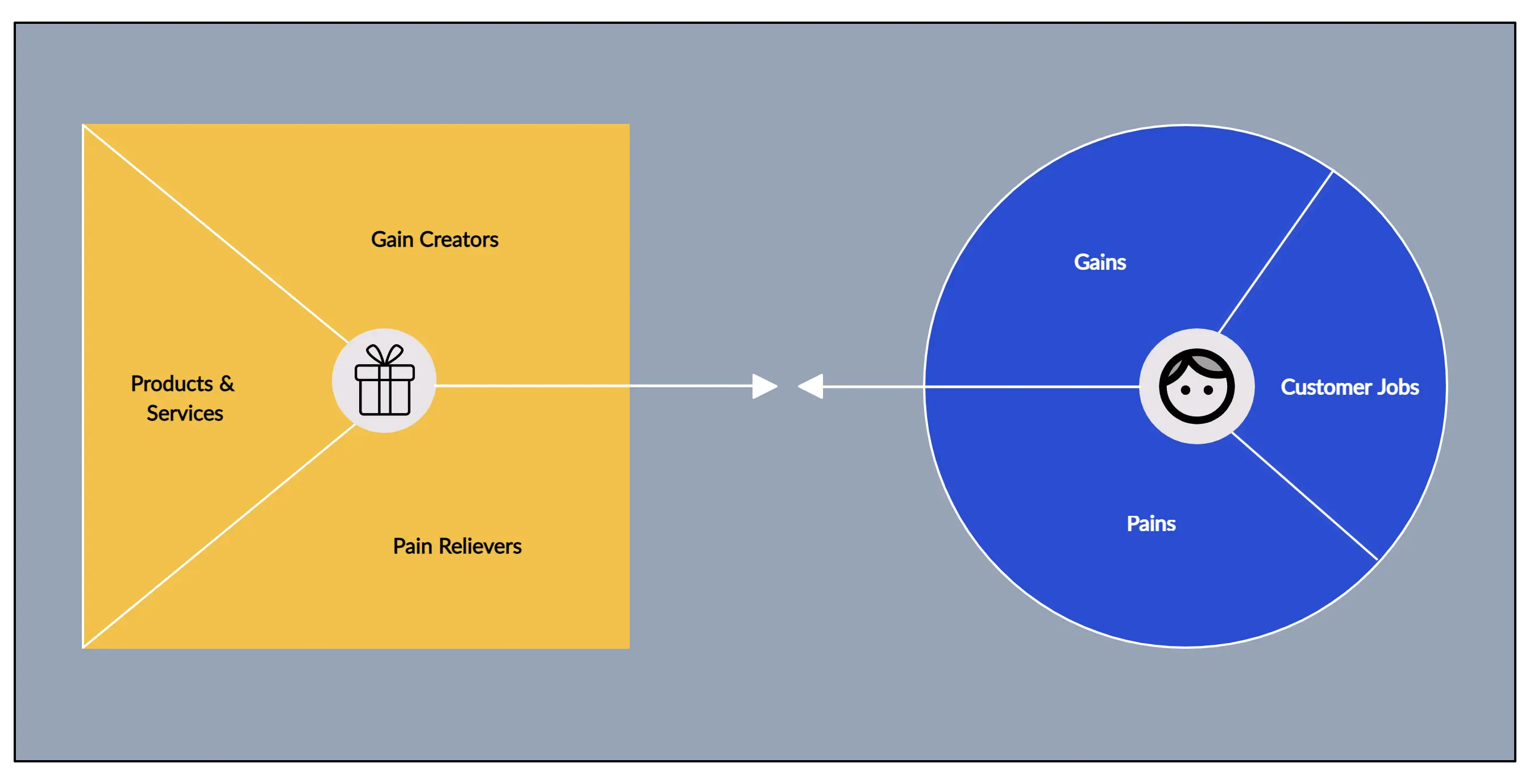
Value Proposition Canvas
Use this template to connect customer pains, gains, and jobs-to-be-done with the products, services, and benefits your business provides.
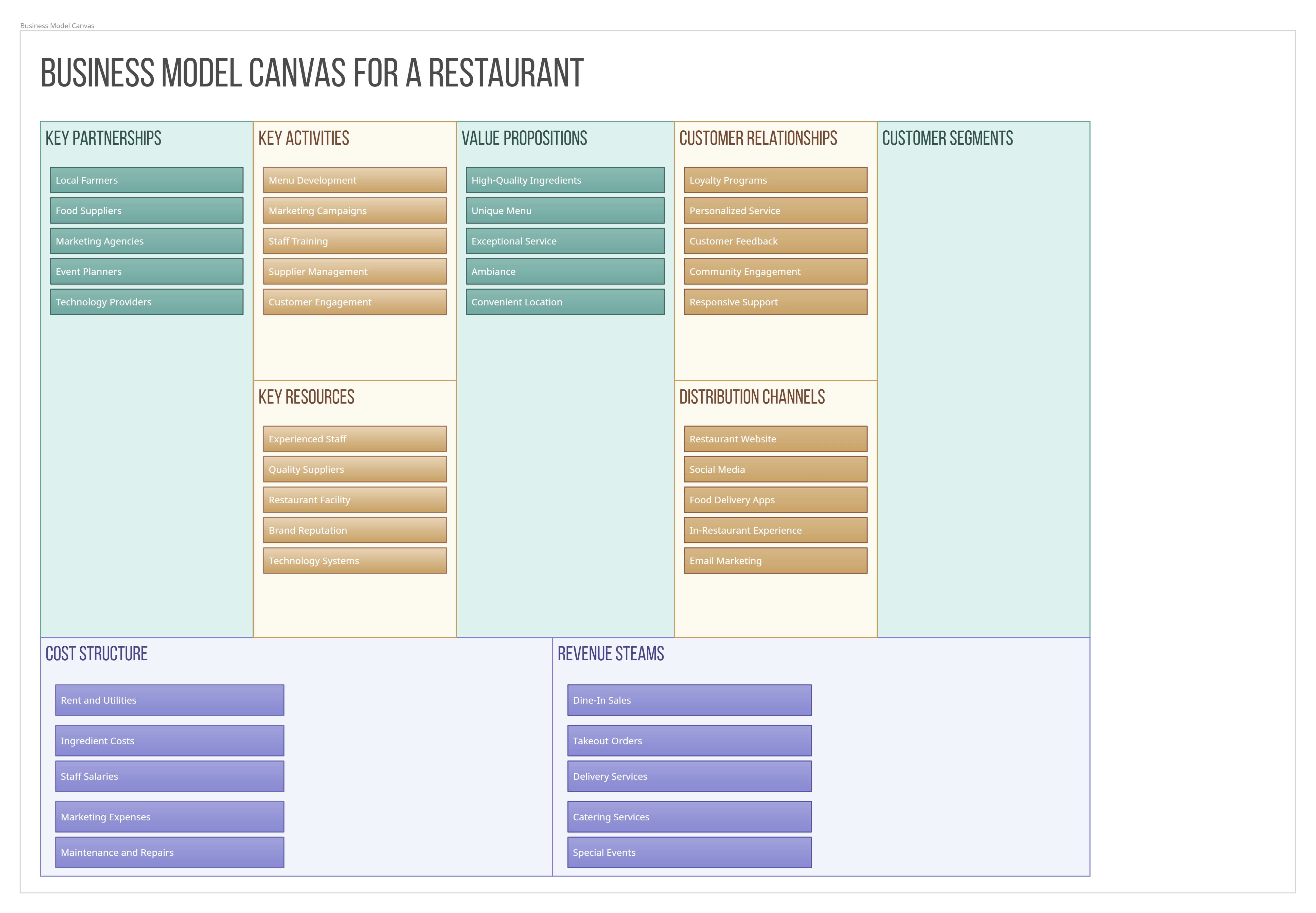
Business Model Canvas for a Restaurant
Use this template to map a restaurant’s customers, dining experience, channels, partners, costs, and revenue streams in one visual format.
More Business Model Canvas Templates
FAQs About BMC
What should I consider when establishing partnerships in the business model canvas?
How can the business model canvas help to analyze and optimize my business model?
Can I use the business model canvas for different types of businesses?
How often should the business canvas model be updated or revised?
How can I effectively communicate my business model to stakeholders using the business canvas model?
- Use clear and concise language
- Use visual aids
- Customize for your audience
- Highlight key insights
- Be open to feedback and discussion
What are the benefits of using a business model canvas
What to avoid when creating a business model canvas
- Detailed financial projections
- Detailed operational processes
- Comprehensive marketing or sales strategies
- Legal or regulatory details
- Long-term strategic goals or vision statements
- Irrelevant or extra information


Arjuna Fernando
Hi, I wish to learn more about Business model Canvas. How can I do that? Do you have any real world examples?