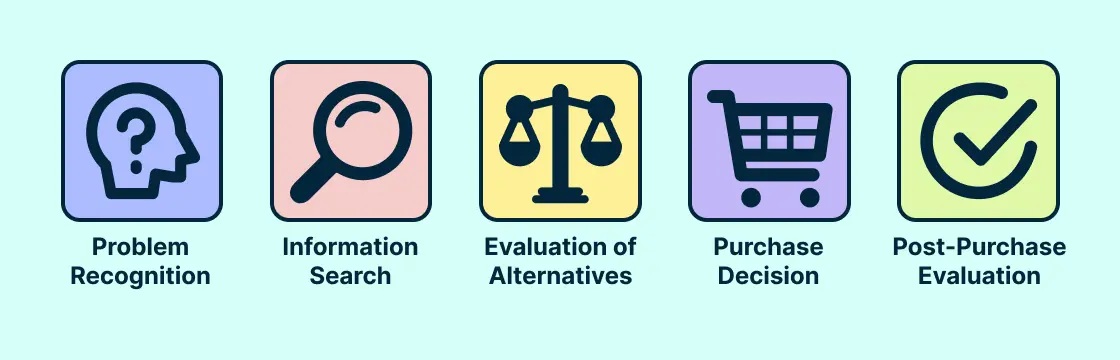
The consumer decision-making process is a marketing framework for understanding how people recognize a need, search for information, evaluate alternatives, decide whether to buy, and assess the outcome afterward. The model helps businesses organize customer research and identify where useful information, trustworthy experiences, or operational improvements may reduce friction. Consumers do not always complete every stage or follow them in a fixed order, especially for familiar or low-involvement purchases.
What is the Consumer Decision-Making Process?
The consumer decision-making process describes activities that may occur before, during, and after a purchase. A common five-stage model includes problem recognition, information search, evaluation of alternatives, purchase decision, and post-purchase evaluation. It is a useful analytical framework rather than a prediction that every person will behave identically.
The amount of effort a consumer spends at each stage depends on factors such as familiarity, perceived risk, price, urgency, available alternatives, and social or situational influences. A person may skip stages, return to an earlier stage, postpone the purchase, or decide not to buy. Businesses should therefore validate the model with customer research rather than treating assumptions as evidence.
- Problem recognition: The consumer notices a need, goal, or problem.
- Information search: The consumer recalls existing knowledge or seeks additional information.
- Evaluation of alternatives: The consumer compares available options using personally relevant criteria.
- Purchase decision: The consumer chooses whether, what, where, and when to buy.
- Post-purchase evaluation: The consumer assesses the experience and may keep, return, recommend, or avoid the product in future.
A customer journey covers the broader experience across touchpoints and over time. The consumer decision-making model focuses specifically on how purchase-related decisions develop within that journey.


Five Stages of the Consumer Decision-Making Process
The five-stage framework can support research across retail, services, e-commerce, and software, but the journey varies by context. A routine grocery purchase may involve little external research, while an expensive or unfamiliar service can involve multiple stakeholders, repeated comparisons, and a longer decision cycle.
Stage 1: Problem Recognition
Problem recognition occurs when a consumer notices a gap between a current state and a desired state. The trigger can be internal, such as hunger or dissatisfaction, or external, such as a recommendation, product failure, life event, or relevant promotion.
Identifying Needs
Research the situations that lead customers to begin looking for a solution. Interviews, support conversations, search data, surveys, and a customer journey map can help teams distinguish observed needs from internal assumptions.
For example, a person may consider a fitness tracker after setting a new health goal, receiving a recommendation, or finding that an existing device no longer meets their needs. Ethical marketing at this stage explains the problem a product addresses and who it is suitable for; it should not manufacture fear or conceal limitations.
Creately can help teams organize research findings and map the triggers, touchpoints, questions, and responsible teams associated with this stage.
Stage 2: Information Search
After recognizing a need, a consumer may rely on memory and prior experience or conduct an external search. The depth of the search depends on perceived risk, cost, familiarity, time pressure, and the availability of credible information.
Information Sources
Search engines and company websites
Product documentation and demonstrations
Independent reviews and comparison sites
Recommendations from friends, colleagues, or specialists
Social platforms and online communities
In-store or sales conversations
Publish accurate, accessible product information and transparent pricing.
Answer common questions with useful guides, FAQs, specifications, and demonstrations.
Make important limitations, terms, and evidence easy to find.
Improve mobile usability, navigation, and page performance.
Encourage authentic reviews without suppressing criticism or presenting incentives as impartial feedback.
Use search and content data alongside interviews or usability research. Visibility can help customers find information, but relevance, clarity, and credibility determine whether that information supports a decision.
Stage 3: Evaluation of Alternatives
Consumers compare a shortlist using criteria that matter to them. Common criteria include price, total cost, features, quality, availability, risk, compatibility, service, reputation, and prior experience. The importance assigned to each criterion varies by person and purchase context.
Sales collateral such as demonstrations, specifications, case studies, and comparison pages should help buyers evaluate fit without hiding meaningful differences. Claims should be specific, supportable, and consistent across channels.
Strategies for Capturing Consumer Interest
Teams can use a decision matrix, journey map, or research synthesis board in Creately to organize comparison criteria and supporting evidence. Real-time editing, comments, and @mentions help product, marketing, sales, and research teams review findings in context. Owners, notes, links, files, and structured details can remain connected to the relevant stage or criterion, creating a shared research reference rather than a claim that Creately influences the consumer’s choice.
Stage 4: Purchase Decision
At this stage, the consumer chooses whether to proceed and may decide what to buy, where to buy it, when to buy it, and how to pay. A favorable evaluation does not always result in a purchase: stock availability, delivery time, unexpected costs, trust, approval from another person, or a difficult checkout can change or delay the decision.
Businesses can reduce avoidable friction by:
- Providing clear product, delivery, return, privacy, and payment information.
- Showing the full cost before the final checkout step.
- Offering accessible navigation and a concise checkout flow.
- Providing appropriate payment and support options.
- Testing the journey with representative users.
- Using genuine deadlines and transparent offers rather than artificial scarcity or misleading urgency.
A customer journey map can help cross-functional teams document the purchase path, identify handoffs between marketing, sales, commerce, support, and fulfillment, and assign ownership for validated improvements.
Stage 5: Post-Purchase Evaluation
After purchasing and using a product or service, consumers compare the experience with their expectations. The result can influence satisfaction, returns, complaints, reviews, recommendations, repeat purchases, and future consideration. Responses differ: a satisfied customer does not automatically become loyal, and a dissatisfied customer does not always complain directly.
Maintaining Satisfaction
- Provide accessible onboarding, documentation, and customer support.
- Set clear expectations before purchase and follow through afterward.
- Use surveys, interviews, reviews, support themes, return reasons, and behavioral data to understand outcomes.
- Make return, replacement, cancellation, and complaint processes clear and fair.
- Separate individual anecdotes from recurring patterns before prioritizing changes.
- Close the feedback loop by assigning owners, communicating decisions, and measuring whether an improvement addresses the original issue.
Post-purchase evidence should inform product, service, content, and process improvements. Handle personal data responsibly and avoid assuming that a single satisfaction score explains the full customer experience.
Creately’s customer journey mapping software helps teams visualize stages, touchpoints, questions, emotions, evidence, and operational handoffs in one shared workspace. Teams can connect customer research to the relevant part of the journey instead of treating the five-stage model as a purely theoretical funnel.
Real-time editing, comments, and @mentions support collaborative review. Notes, links, files, images, owners, and structured details can remain connected to journey stages and touchpoints, while related diagrams can provide deeper views of service or internal workflows. These capabilities support evidence-based discussion without implying that the platform predicts or controls consumer behavior.
Treat the journey map as living documentation. Assign an accountable owner, record the sources and date of the research, distinguish evidence from assumptions, and review the map when products, channels, customer needs, or internal handoffs change.
Why Post-Purchase Satisfaction Matters
Strategies for Ensuring Satisfaction
5 Templates to Understand Your Customer Better and Visualize the Consumer Decision Making Journey
Visual templates help teams organize research, expose assumptions, and discuss customer needs across functions. The following four templates support different parts of consumer and journey analysis.
User Journey Map to Discover How Customers Interact with Your Product
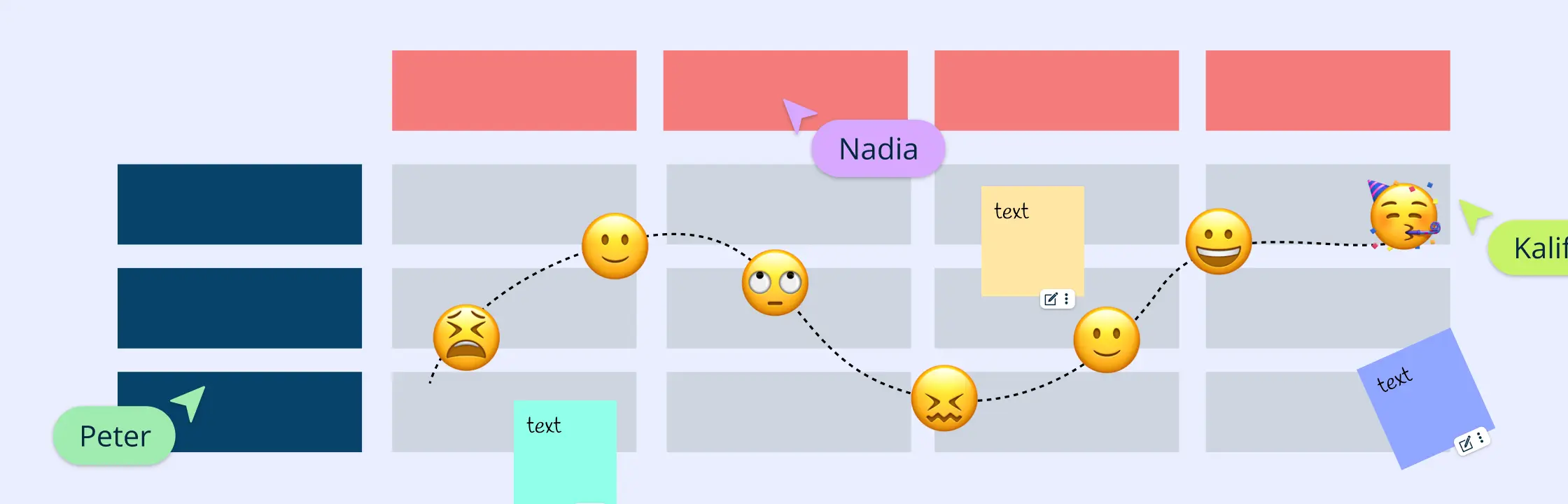
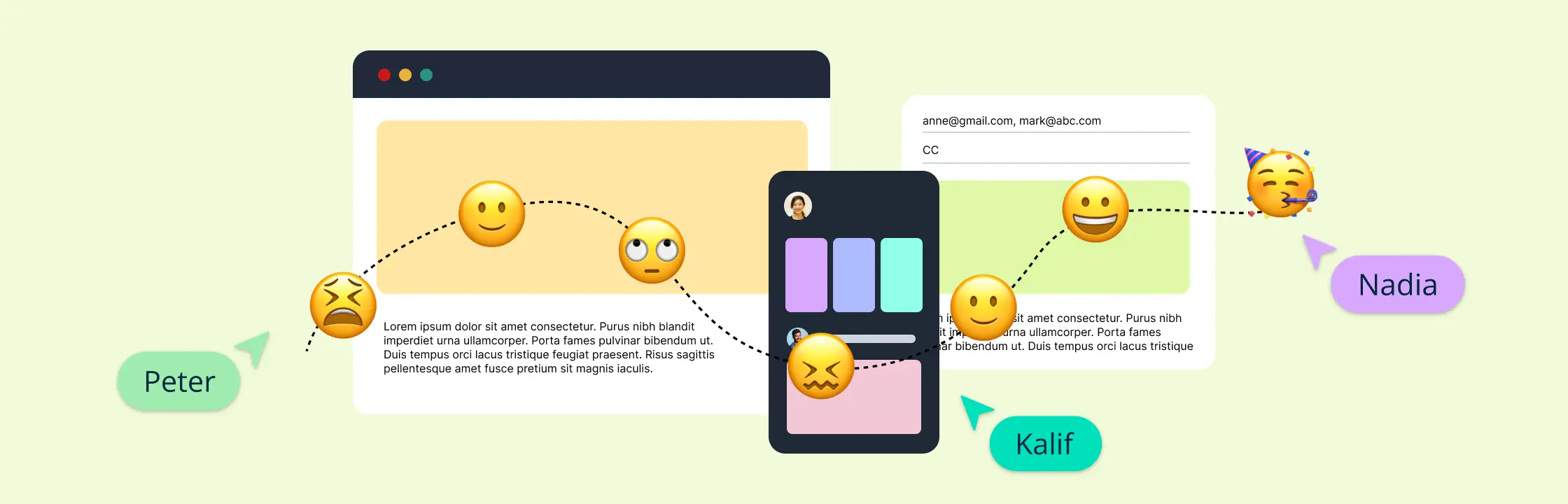
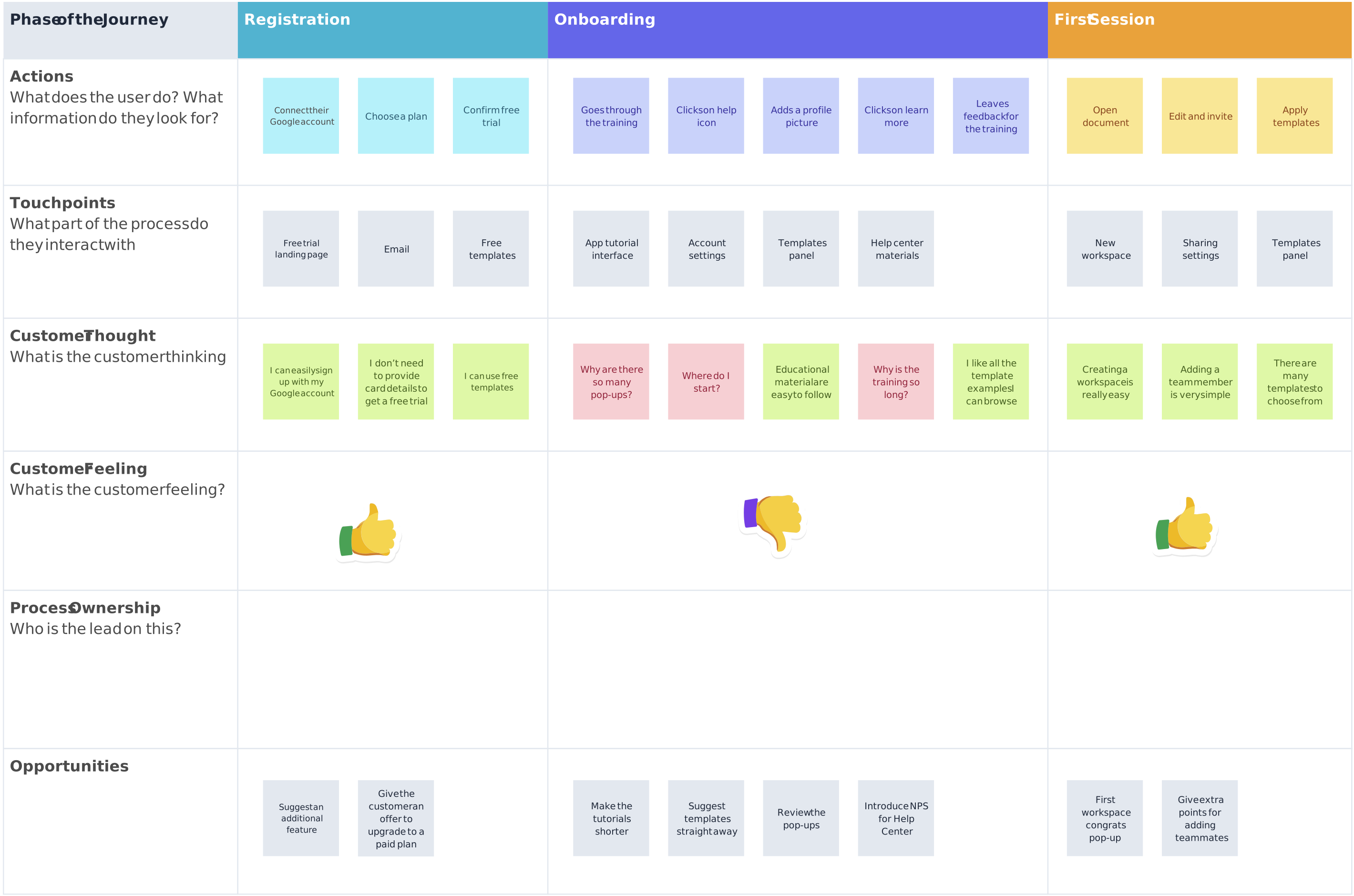
A user journey map visualizes how a person completes a task or interacts with a product. Use it to document goals, actions, touchpoints, questions, pain points, and evidence. A user journey may cover only part of the broader customer or consumer decision journey.
Executive User Persona to Identify Your Target Audience
A user persona is a research-based representation of a relevant audience segment. Include behaviors, goals, needs, constraints, and evidence from customer research. Avoid inventing demographic details or treating a persona as a substitute for direct research.

Customer Journey Map Visualize the Consumer Journey
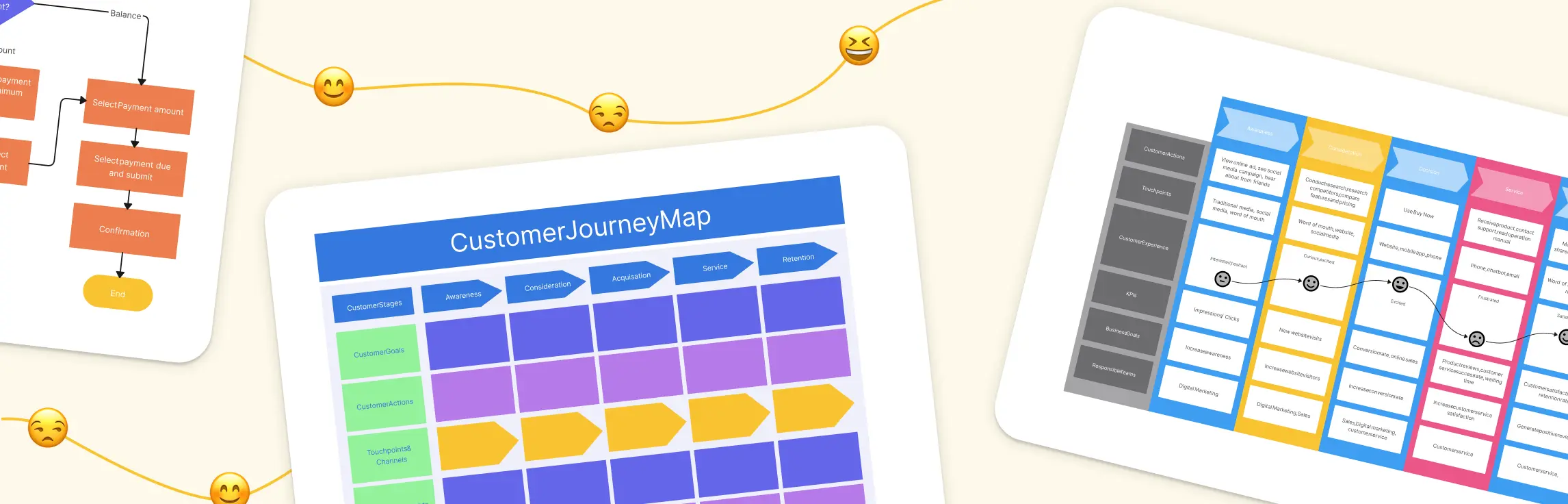
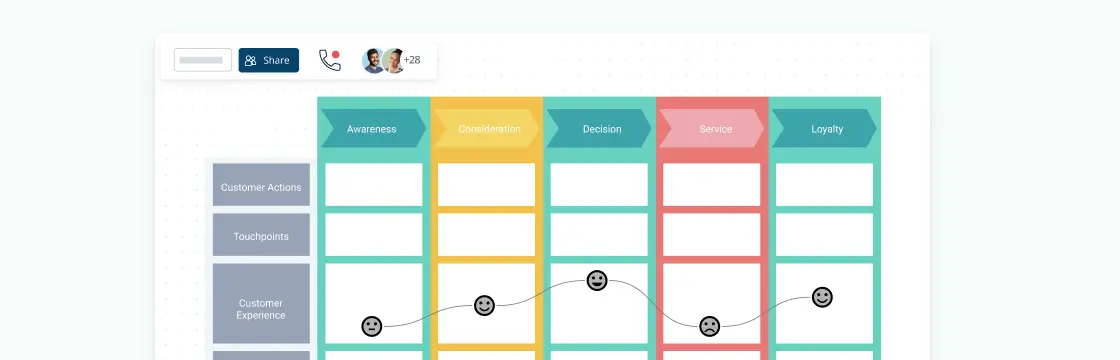
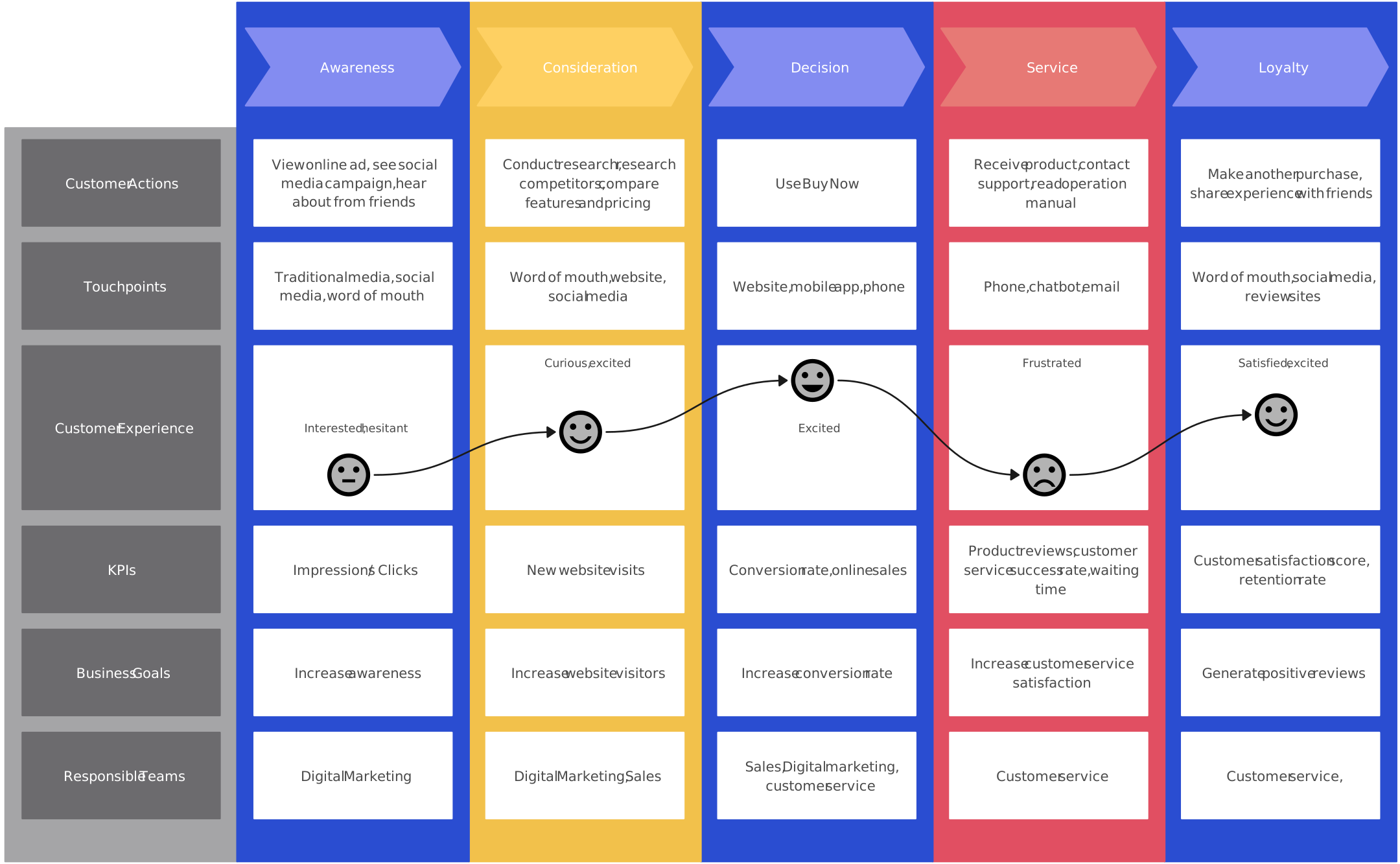
A customer journey map template provides a broader view of the experience across channels and touchpoints. Use a customer journey map to connect customer actions and evidence with the teams and processes responsible for delivering the experience. Validate emotional states and pain points through research instead of guessing them.
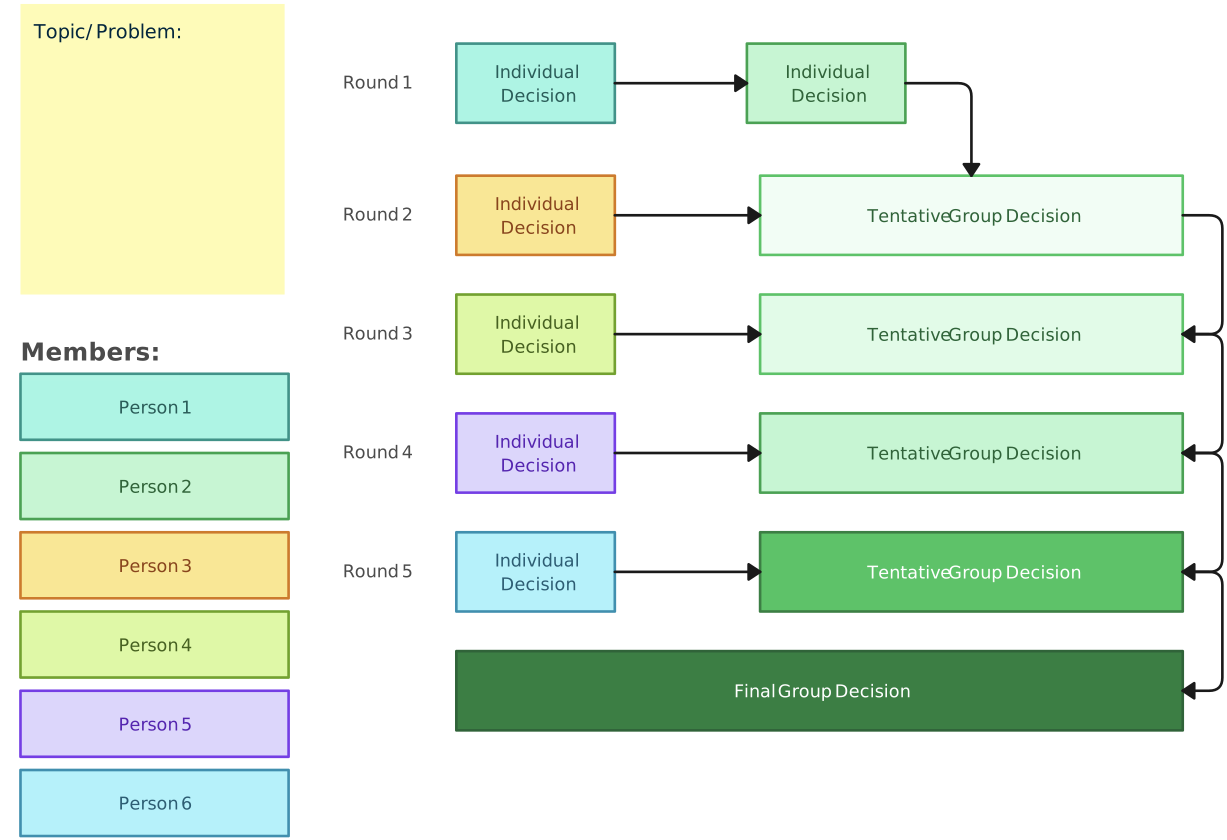
Step Ladder Brainstorming Whiteboard
A stepladder brainstorming format lets participants develop ideas independently before joining a group discussion. Use it to reduce early anchoring and give each participant space to contribute. Apply it after reviewing customer evidence; brainstorming alone does not uncover customer needs or validate proposed solutions.
Wrapping Up
The five-stage consumer decision-making process gives teams a shared way to examine what happens before, during, and after a purchase. It is most useful when treated as a research framework rather than a fixed funnel. Consumers may skip stages, revisit earlier decisions, involve other people, or stop without buying.
Map the stages and touchpoints, attach evidence to each assumption, clarify the internal handoffs that shape the experience, and assign ownership for improvements. Continue updating the journey as customer evidence, products, channels, and operating processes change.